What Is a Title Chain? How to Trace the Ownership History of a Property
Table of Contents
- What Is a Title Chain? How to Trace the Ownership History of a Property
- What is Chain of Title
- What is the Purpose of a Chain of Title?
- Chain of Title Example
- How to Trace the Ownership History of a Property
- FAQs
- How far back should you trace a property’s ownership history?
- Can I look up a chain of title myself online?
- What’s the difference between an abstract of title vs chain of title?
- What does it mean if there’s a break in the chain of title?
There can be considerable confusion over who actually owns a property. Some people mistakenly believe that inheritance automatically transfers ownership, or there may have been a mistake when filing the paperwork after a sale.
Buyers must be sure that the person they are dealing with is the legal property owner with the right to sell. Verifying the chain of title will show whether there were any transactions in the property’s history that could cast doubt on the current owner.
What is Chain of Title
The chain of title refers to the paper trail documenting a property’s past owners and the changes in ownership. It is called a chain because buyers want the link to be “unbroken,” meaning that there are no unexplained gaps or unrecorded transfers in the ownership history.
Knowing all past owners allows a buyer to confirm they are purchasing a property from the legal owner. Sellers can also learn about potential title issues and address them before listing the property.
What is the Purpose of a Chain of Title?
The government maintains a chain of title for every property to prove ownership through public records. If these records did not exist, then anybody could show up and claim the land.
For example, someone could say that their grandfather owned the house twenty years ago, and never legally sold the deed. Without a traceable chain of title, the government and new owners cannot disprove that claim.
Property sellers and buyers can also look into the chain of title to help in real estate transactions.
The chain of title will confirm whether the seller has the authority to transfer the property. Aside from scam artists, some people do not realize that they do not own their house. It may have been left to them by a deceased relative, but they never bothered to put the deed in their name.
These sellers do not have the right to sell the property. Reviewing the chain of title will show that the deed is still in the deceased person’s name and that the seller must complete probate before selling the house.
Sellers can use information in a title chain to identify red flags that could turn off potential buyers. A clean title not only helps sell the property but also makes it easier to refinance.
Chain of Title Example
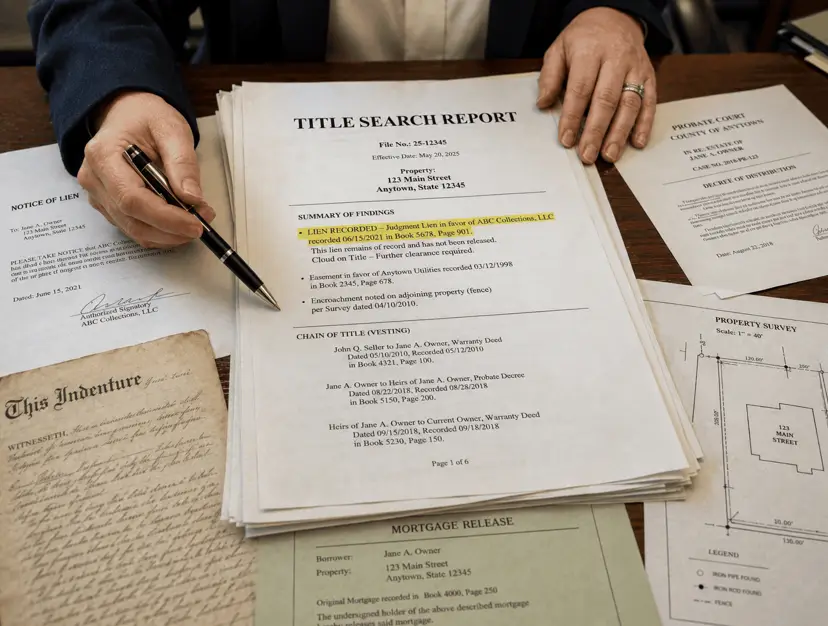
Several documents appear when searching for a title chain. You will uncover information regarding the property’s deed, title, and filed encumbrances. Together, these documents show everyone who has ever had a right over how the property is used.
For example, a simple ownership timeline in a title chain may look like the following:
- March 1999: Developer sells the land grant to John H. Lee.
- December 2000: Contractor places a mechanic’s lien on the property title.
- April 2001: Lien release filed.
- June 2012: John H. Lee sells the property to Herbert J. Williams.
- November 2024: Easement provided to neighbor for driveway use.
This timeline is created from information provided in public records. A lawyer or real estate agent will check documents such as lien records, deed transfers, and easement agreements to support these events.
Simplifying these documents into this format allows you to quickly recognize red flags. For example, one event may state the creation of a lien, but there isn’t one that shows whether that lien was paid.
Another red flag is whether the most recent deed transfer involves the person claiming ownership of the property. This means the seller cannot complete the transaction, and you must work through the most recently listed owner instead.
How to Trace the Ownership History of a Property
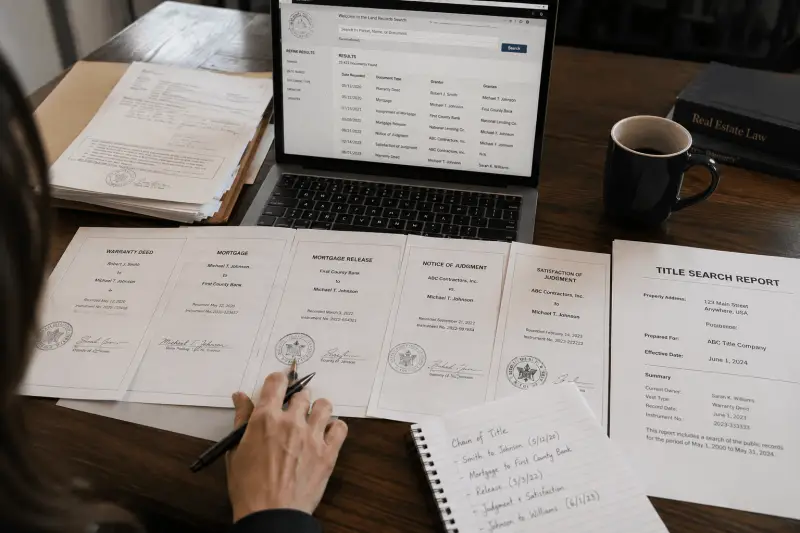
Anyone can trace a property's ownership history. Property records are public records and are accessible through the county clerk’s land recordings. Many counties offer an online database, in which you can view all records attached to an address, including:
- Deeds transferring ownership with names
- Mortgages and their releases
- Liens or judgments, and whether they were cleared
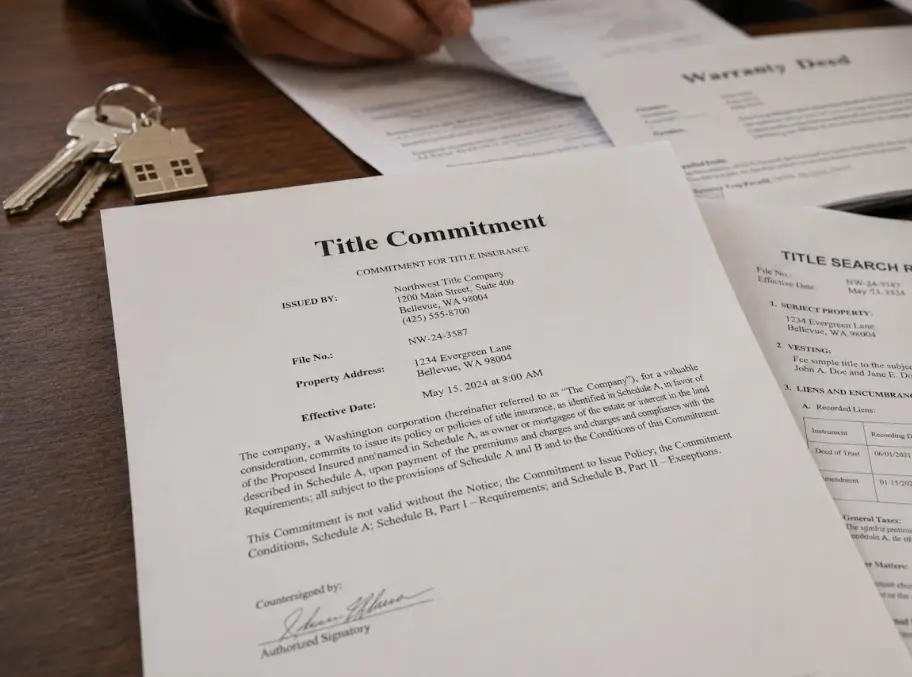
However, the most convenient way to obtain a chain of title is through a title search. Title insurance companies typically perform a title search before creating a policy. Part of that title search will report the ownership history and any special rights associated with the land, such as easements.
The company will identify if there is a problem in the title chain or any other issue that could cloud the title.
FAQs
How far back should you trace a property’s ownership history?
You should go as far back as records are available to ensure there are no problems. Most title searches go back at least 30 years, but title companies often have their own guidelines.
Can I look up a chain of title myself online?
Yes, property records are available through your local county recorder’s office. Many counties also offer online databases with scans of the relevant documents.
What’s the difference between an abstract of title vs chain of title?
These terms are similar, but an abstract of title is a physical document that outlines a property’s entire history. The chain of title refers to the intangible paper trail from the first to the current owner, but it is not a physical document.
What does it mean if there’s a break in the chain of title?
Breaks in the chain of title mean that ownership was not properly documented at some point.
Property sales should be handled with the highest care. The chain of title includes every event in which any party gained ownership of the property. Buyers want an unbroken chain of title that ensures that no other party may claim an interest in the title. Confirming this in advance can save you from costly ownership disputes in the future.

Elena Novak leads real estate research and analysis at PropertyChecker.com, where she digs into housing trends, tracks property data, and unpacks investment strategies across the U.S. With a background in flipping homes and a degree in Business and Real Estate Development, she brings a practical, hands-on approach to market analysis. Elena is especially skilled at uncovering hidden property value and guiding both homeowners and investors through shifting market conditions. She's also passionate about sustainable design and smart home innovation. When she's not analyzing the market, she's probably knee-deep in a DIY project, scouting vintage décor, or building something new in her workshop.
Search Property & Deed Records
Table of Contents
- What Is a Title Chain? How to Trace the Ownership History of a Property
- What is Chain of Title
- What is the Purpose of a Chain of Title?
- Chain of Title Example
- How to Trace the Ownership History of a Property
- FAQs
- How far back should you trace a property’s ownership history?
- Can I look up a chain of title myself online?
- What’s the difference between an abstract of title vs chain of title?
- What does it mean if there’s a break in the chain of title?