Dome Homes Pros, Cons, Cost and How Long They Last
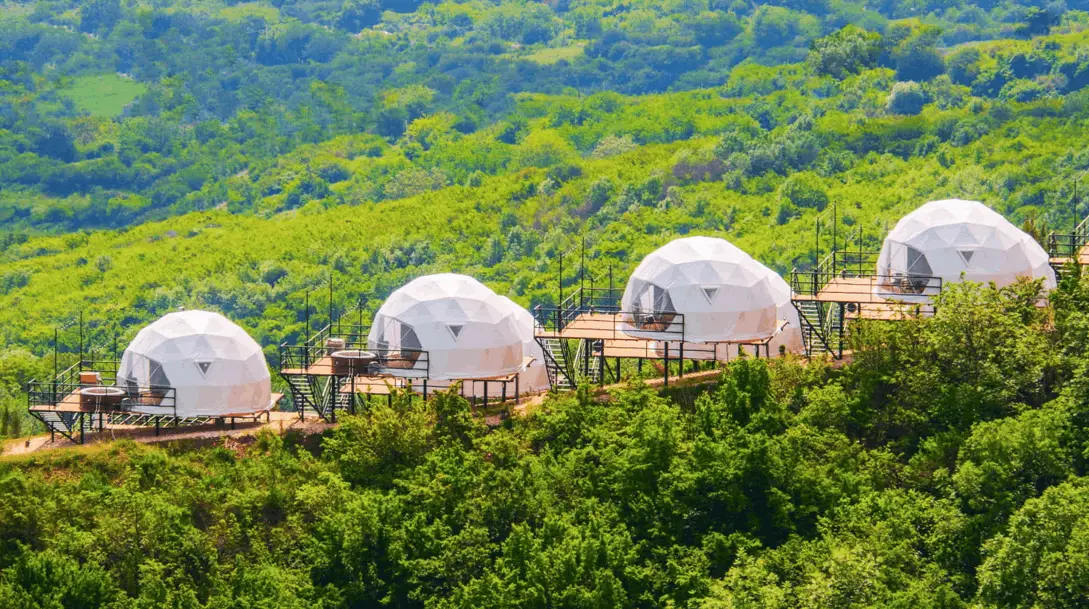
Table of Contents
- Dome Homes Pros, Cons, Cost and How Long They Last
- Geodesic Dome Homes vs. Monolithic Dome Homes
- What Is It Like Living Inside Dome Homes?
- Benefits of Dome Homes
- Drawbacks and Common Challenges of Dome Homes
- How Much Do Dome Homes Cost?
- Where to Find Dome Homes for Sale
- What Should You Check Before Buying or Building a Dome Home?
- FAQs
- Do dome homes need special permits or zoning approval?
- How long do geodesic and monolithic dome homes typically last?
- Are dome homes hard to finance or insure?
- Are dome homes good for extreme weather areas?
- Are dome homes harder to resell than traditional houses?
Dome-style housing refers to homes built in a rounded or domed shape rather than in a rectangular wall layout like traditional homes. Such structures have existed for many years in various forms. However, they come with their own set of pros and cons worth knowing before you start your search.
There are multiple ways to build these homes; for example, both geodesic dome homes and monolithic dome homes are dome-shaped, but they’re constructed in very different ways, which will provide very different living experiences. It is very important that you understand how each home will be constructed before you begin any planning or shopping.
Geodesic Dome Homes vs. Monolithic Dome Homes
A geodesic dome consists of triangular-shaped panels, or struts, that form a roof resembling a sphere. Architect Buckminster Fuller popularized these types of buildings in the 1950s, and they are still used today. The frame distributes all of the load of the structure over the entire outer surface of the sphere, making the structure very strong compared to its weight.
These types of structures are most commonly available as kits and can be assembled by the buyer with the assistance of professional builders, or the buyer may choose to assemble them themselves. The inner “feel” of the structure is an open and light space, but the angled walls created by the triangles can make it more challenging to furnish and finish than a traditional rectangular room.
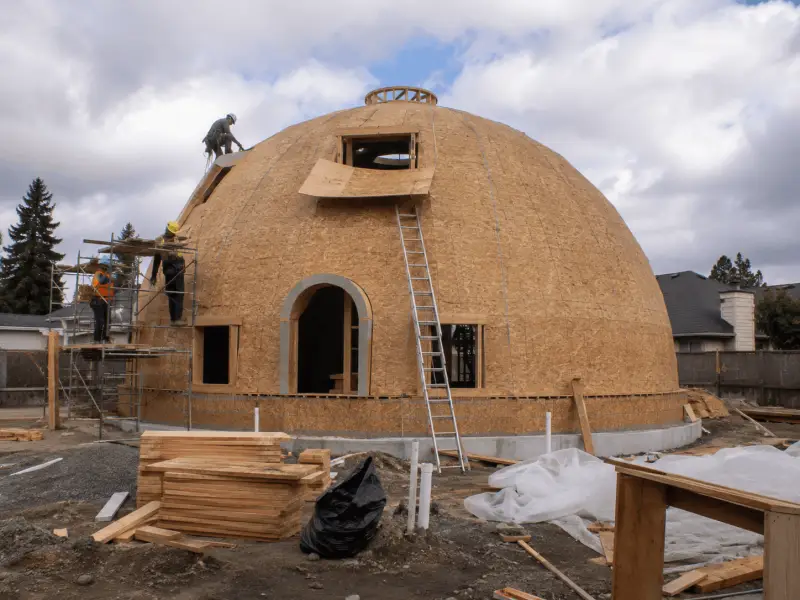
Monolithic dome homes are built in a very different way. An airform (a large inflatable form) is set out on a foundation and then sprayed on the inside with several layers of polyurethane foam and steel-reinforced concrete. After the concrete cures and the airform is removed, you will be left with a seamless concrete shell.
This method produces an extremely solid structure with smooth, curved walls that feel completely different from the faceted interiors of a geodesic dome. Although monolithic domes are often built to be permanent and more costly to construct, they are an excellent choice for a variety of reasons. They have superior insulation and resistance to severe weather, and are therefore often chosen for homes in climates with extreme weather events.
What Is It Like Living Inside Dome Homes?
Living in a dome home feels very different from a traditional house. While it can take some time to adjust, many homeowners say they quickly get used to the space and enjoy the unique environment.
One of the most noticeable differences is the openness. The curved shape creates a wide, uninterrupted interior with no sharp corners. Natural light can spread more evenly throughout the space, especially when skylights or upper-level windows are used. Air circulation is also efficient, as warm air naturally rises and can be managed from a central point.
Sound behaves differently as well. Curved surfaces can cause echoes or make noise travel more than expected, especially in larger or minimally furnished spaces. Most homeowners reduce this effect with rugs, furniture, and soft materials.
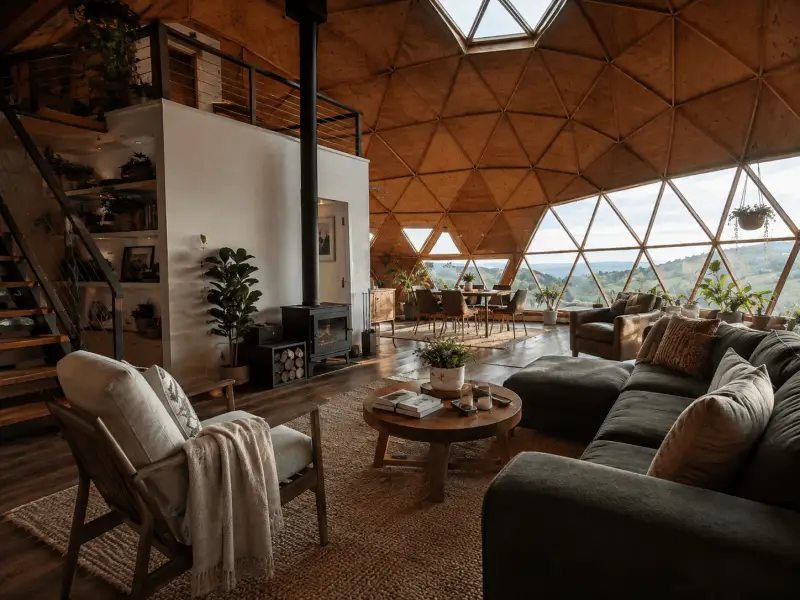
Furnishing a dome home requires a different approach. Because there are no flat walls, standard furniture doesn’t always fit neatly against the structure. Many owners choose built-in or custom solutions to make better use of the space, which can add to the overall cost.
Benefits of Dome Homes
Dome homes offer several advantages that make them appealing to buyers looking for something different from traditional housing.
- Energy efficiency
Dome homes have a smaller surface area compared to traditional rectangular buildings, which helps reduce heat loss and gain. When properly insulated, they can be more cost-effective to heat and cool.
- Strong weather resistance
The curved shape allows wind to flow around the structure rather than push against it. This makes dome homes especially suitable for areas prone to hurricanes, strong winds, or heavy snow, as the design also helps shed snow more easily.
- Open and flexible interior space
With fewer or no load-bearing interior walls, dome homes offer more flexibility in layout and design. The open space can feel larger and more adaptable than in a traditional home.
- Unique design and appearance
Dome homes stand out visually and appeal to buyers looking for something unconventional. Their design can make a property more distinctive in the market.
- Potential for faster construction
Some dome homes, especially geodesic kits, can be assembled more quickly than traditional houses, which may help reduce overall construction time and costs.
Drawbacks and Common Challenges of Dome Homes
Dome homes come with unique advantages, but they also present challenges that buyers should consider before building or purchasing.
- Permitting and zoning issues
Approval can be more complicated than for traditional homes. Some local authorities are not familiar with dome construction, which can slow the process or lead to restrictions. In some areas, building codes may favor conventional designs, making approval more difficult.
- Limited contractor availability
Finding builders with experience in dome construction can be challenging. Many contractors specialize in standard framing, so dome projects may require hiring specialists, which can increase costs and coordination.
- Resale challenges
Dome homes appeal to a smaller group of buyers, which can make resale more difficult. Appraisers may also struggle to determine value due to a lack of comparable properties.
- Insulation and moisture concerns
In geodesic domes, panel joints can become weak points if not properly sealed. Poor insulation or construction can lead to heat loss or condensation issues that are costly to fix.
- Higher customization costs
Standard doors, windows, and furniture are designed for flat walls. Adapting them to curved surfaces often requires custom solutions, which can increase overall costs.
How Much Do Dome Homes Cost?
The gap between a dome kit price and a move-in-ready home cost is significant, and this is where many first-time buyers miscalculate. A basic geodesic dome kit might start at $5,000 to $30,000 for the structural components alone. A finished, fully liveable geodesic dome home typically runs from $50,000 to $150,000 or more, depending on size and how it is fitted out.
Monolithic dome homes cost more because of the specialized construction process. Expect to budget $100,000 to $300,000, or more, for a full build. The foam and concrete shell alone account for a significant portion of that before any interior work begins.
Site preparation, foundation work, and utility connections add to the total regardless of build type. In remote locations, getting services to the site can add tens of thousands to the overall cost. Climate also plays a role. A dome in a harsh winter region will need a higher level of insulation investment than one in a mild climate.
Where to Find Dome Homes for Sale
Finding dome homes for sale takes more effort than browsing standard real estate listings, but they are available if you know where to look. Major platforms like Zillow and Realtor.com occasionally list dome properties, especially if you search using terms like “dome home” in the description.
Specialty marketplaces and communities focused on alternative housing can be a better starting point. These platforms often feature listings, classifieds, and connections to builders or owners who may have properties available.
Some dome home manufacturers and builders also keep records of completed homes that return to the market. Companies like Pacific Domes, Timberline Geodesics, and the Monolithic Dome Institute are well-known in this space and may help connect buyers with available properties.
What Should You Check Before Buying or Building a Dome Home?
Zoning and permits should be one of the first things to look into. Before buying land or choosing a design, check with your local planning or building department to confirm whether dome structures are allowed and what requirements apply. In some areas, approval is straightforward, while in others it can take time.
The land itself is just as important. Dome foundations need to be level and properly engineered, so factors like soil quality, drainage, and slope can affect both feasibility and cost. For monolithic domes, flat and accessible ground is especially important due to the construction process.
Utility access is another key factor. Make sure the property has access to water, electricity, and sewage systems, or be prepared for the added cost of installing them, especially in remote locations.
If you’re buying an existing dome home, it’s a good idea to have it inspected by someone familiar with this type of construction. Pay close attention to panel joints, insulation, waterproofing, and overall structural condition.
It’s also worth reviewing property records before making a decision. This can help confirm ownership details, zoning classification, and any restrictions or encumbrances that may affect the property.
FAQs
Do dome homes need special permits or zoning approval?
Yes, in most cases. Dome homes fall outside standard residential construction codes in many areas, which means the permitting process can be more complex or uncertain than for a conventional build. Always check with your local authority before purchasing land or starting a project.
How long do geodesic and monolithic dome homes typically last?
Both can last well over 50 years with proper construction and maintenance. Monolithic dome homes, with their reinforced concrete shell, are particularly long-lasting. Geodesic domes depend more on the quality of materials and how well the joints and panels are sealed and maintained over time.
Are dome homes hard to finance or insure?
They can be. Standard lenders and insurers sometimes treat dome homes as non-standard properties, which can mean higher rates, specialist products, or outright refusals. A dome on a permanent foundation with proper permits and a clear build history is easier to finance than an unpermitted or unconventional setup.
Are dome homes good for extreme weather areas?
Yes. The dome shape handles high winds, heavy snow loads, and even seismic activity better than most conventional structures. Monolithic dome homes, in particular, are often cited as some of the most weather-resistant residential structures available. Several have survived direct tornado impacts with minimal damage.
Are dome homes harder to resell than traditional houses?
Generally, yes. The buyer pool for dome homes is smaller than for conventional properties, which can slow down a sale or affect the price you achieve. A well-built, permitted dome in a desirable location will fare better than an unusual or unpermitted structure, but resale is still worth factoring into your decision from the outset.

Elena Novak leads real estate research and analysis at PropertyChecker.com, where she digs into housing trends, tracks property data, and unpacks investment strategies across the U.S. With a background in flipping homes and a degree in Business and Real Estate Development, she brings a practical, hands-on approach to market analysis. Elena is especially skilled at uncovering hidden property value and guiding both homeowners and investors through shifting market conditions. She's also passionate about sustainable design and smart home innovation. When she's not analyzing the market, she's probably knee-deep in a DIY project, scouting vintage décor, or building something new in her workshop.
Search Property & Deed Records
Table of Contents
- Dome Homes Pros, Cons, Cost and How Long They Last
- Geodesic Dome Homes vs. Monolithic Dome Homes
- What Is It Like Living Inside Dome Homes?
- Benefits of Dome Homes
- Drawbacks and Common Challenges of Dome Homes
- How Much Do Dome Homes Cost?
- Where to Find Dome Homes for Sale
- What Should You Check Before Buying or Building a Dome Home?
- FAQs
- Do dome homes need special permits or zoning approval?
- How long do geodesic and monolithic dome homes typically last?
- Are dome homes hard to finance or insure?
- Are dome homes good for extreme weather areas?
- Are dome homes harder to resell than traditional houses?