What Happens If Your House Doesn’t Have a Certificate of Occupancy?
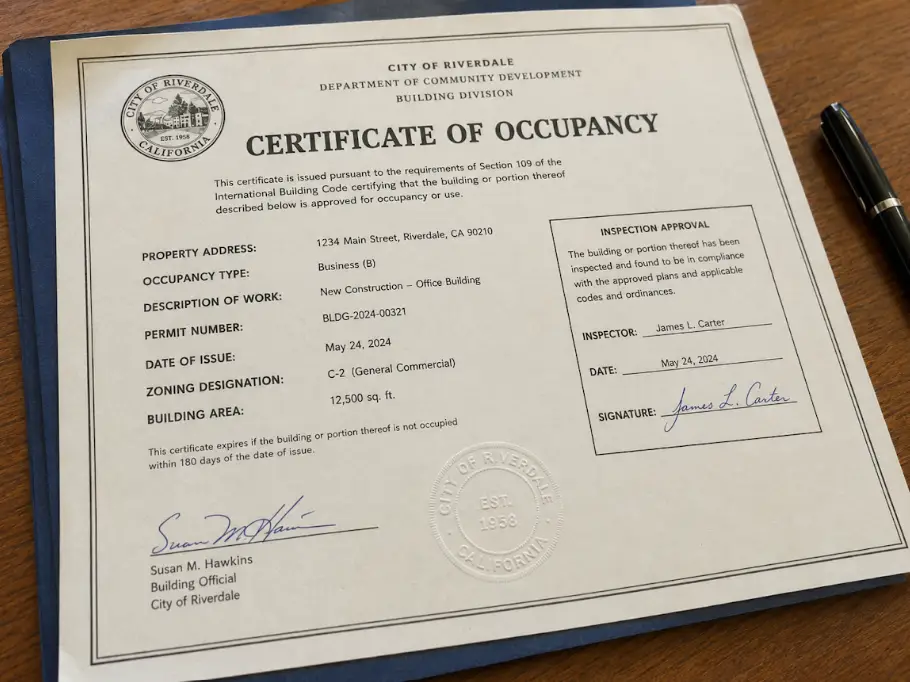
Table of Contents
- What Happens If Your House Doesn’t Have a Certificate of Occupancy?
- What Is a Certificate of Occupancy?
- Temporary CO vs Full Certificate of Occupancy
- Can You Buy a House Without a Certificate of Occupancy?
- Risks of Not Having a Certificate of Occupancy
- Delays
- Fines and Legal Charges
- Insurance and Safety Issues
- What to Do If a House Doesn’t Have a CO
- What to do if the House is Already Compliant
- What to do if the House is not Compliant
- Who Fixes the Issue?
- Can You Move In Before a Certificate of Occupancy?
- How to Confirm a Home’s CO Status
Sellers have a lot to think about before putting their house on the market. They hunt for a good real estate agent, estimate a selling point, and repair problem areas to make the property more appealing. However, many don’t consider whether they need a Certificate of Occupancy (CO).
A missing CO can delay a property sale in multiple ways. Lenders may refuse to finance the buyer’s mortgage, or the municipality may refuse to approve the title transfer. Suddenly, a done deal fizzles out, and you have to search for a new buyer from scratch.
Beyond the sale, a missing CO raises questions about a property’s safety and legality. Understanding when you need to obtain or renew a CO ensures homeowners stay in compliance with the zoning code and avoid costly fines.
What Is a Certificate of Occupancy?
Many home buyers don’t know what a CO is before closing on their first home. A Certificate of Occupancy is a legal document that verifies that a property complies with all local building codes and safety standards. It is required for all types of properties, including residential units, business buildings, and even industrial complexes.
The city inspects the property to ensure it complies with its zoning laws for its intended purpose. For example, a single-family home will have different requirements than a multi-family unit. It is only after passing this inspection that a CO is issued, and people are legally allowed to move in.
COs are required when building a new residence, but homeowners must renew it in specific circumstances. Performing major renovations on the property often requires the homeowner to obtain a new CO.
The same stands if the homeowner changes the use of a portion of the property. For example, converting a garage into an extra bedroom.
Buyers often assume that a house on the market is fully legal. However, the current owners may not have known they needed to update their CO. Therefore, checking for this certificate must be included in any buyer’s due diligence.
Temporary CO vs Full Certificate of Occupancy
There are situations in which a house is not fully in compliance with zoning standards, but people are still allowed to live there. This typically occurs when the property is undergoing minor renovations.
For example, transforming a basement into a bedroom does not make the rest of the house uninhabitable. Forcing the family to move out until the renovation is complete would create an avoidable financial burden. In these cases, the homeowner can get a Temporary Certificate of Occupancy (TCO).
A TCO allows people to live in a property while their home is temporarily outside compliance. This covers minor work such as landscaping, exterior finishing, or renovations contained to one area of the home. TCOs are typically available only for processes that do not affect residents’ safety.
In most cases, a TCO charges a fee attached to the full CO. It also only lasts for a designated period and cannot be extended under normal circumstances.
A full Certificate of Occupancy is issued once all construction is complete and the property passes inspection. This CO means that there are no deadlines or conditions for people living on the property, like with a TCO.
Can You Buy a House Without a Certificate of Occupancy?
In most places, it is legal to purchase a house without a Certificate of Occupancy. However, there are many other issues and roadblocks outside the written law.
First of all, most traditional lenders will not accept a mortgage application for a property that lacks a CO. Lenders view a home that cannot be legally occupied as poor collateral because it will be harder to sell in case of a default.
Cash buyers can get around the lack of lending opportunities, but they still assume the risk. Zoning laws are designed to protect inhabitants or ensure a certain quality of life. Buying a home that is not fully compliant with these laws is inherently risky. Some municipalities even prohibit title transfers for properties with unresolved occupancy issues.
Even if you pay in cash, you still cannot move into the house without a CO. The lack of a CO can also prevent other uses of the property, such as renting it for passive income or refinancing.
Some areas may have ways around these problems, but it is generally easier to obtain a CO or avoid buying such a property in the first place.
Risks of Not Having a Certificate of Occupancy
A missing Certificate of Occupancy isn’t something you brush off until later. It has significant drawbacks that buyers must consider before closing.
Delays
One of the most immediate risks is that you won’t be allowed to move into the house after purchasing it. Obtaining a CO can take a long time, even longer if the house fails its first inspection. Owners must pull permits, schedule inspections, and wait for repairs before getting a CO.
Fines and Legal Charges
There are also potential fines or penalties from local authorities. Government offices can issue citations for occupying a property that is deemed unsafe. Punishments vary by area, but penalties can range from minor fines to criminal prosecution.
Insurance and Safety Issues
Insurance is also more challenging to secure without a CO. Many insurance companies require proof of a CO before honoring a home insurance policy.
Insurers want to see a CO because it shows they have confidence the house is in good condition. Lacking a CO may indicate that work was completed without permits, inspections were skipped, or that the homeowner will need to file a claim to address a code violation.
What to Do If a House Doesn’t Have a CO
You have a few options if you learn that a house doesn’t have a CO. Some real estate deals will fall apart from this news, but that doesn’t always have to be the case.
What to do if the House is Already Compliant
Either the seller or the buyer should start by figuring out why the CO isn’t in place. In many cases, the house is fully compliant, but the homeowner did not update the documentation after a renovation.
These mistakes are easy to address with a simple inspection. Contact your local zoning department and apply for an inspection. Someone will come out to confirm that everything is structurally sound and code-compliant.
You may need to provide architectural plans, renovation permit receipts, and other requested documents.
What to do if the House is not Compliant
Things become more difficult if the house cannot pass a CO inspection. The homeowner starts by figuring out what is preventing approval. An inspector will typically provide a violations list that describes the minimum required changes to pass.
Fixes can range from minor things like missing smoke detectors to major ones like unpermitted garages or improper electrical wiring. You can request another inspection from the zoning department after making the necessary repairs.
Who Fixes the Issue?
Many real estate transactions negotiate who is responsible for the issue. Buyers often want the homeowner to obtain the CO before closing. It is easier for the current owner to find information about past renovations or compliance issues in the house.
If the seller cannot obtain the CO, buyers should factor in the cost and timeline when deciding whether to proceed with the transaction. They will face additional problems, such as increased difficulty securing financing and move-in delays.
At the very least, a buyer must demand an inspection of the house. The inspector will report what changes must be made to obtain the CO, allowing the buyer to get cost estimates from contractors before committing to the property.
Some insurance policies include an add-on called Ordinance and Law Coverage. This feature provides funding to bring a house into compliance with zoning regulations. Homeowners should check their policies to see if this is an option.
Can You Move In Before a Certificate of Occupancy?

In most cases, moving into a house without a Certificate of Occupancy is not allowed. The jurisdiction may assign fines or orders to vacate as penalties. This restriction protects people from moving into a house with potential safety defects.
Some people try to move into the property in secret before obtaining a CO. Doing so puts them in a dangerous position. Aside from the physical danger, they will likely not be covered by their insurance in the event of an accident.
New owners may be able to obtain a Temporary Certificate of Occupancy to move in early. They can apply for this exception with their local zoning department for the exact details.
How to Confirm a Home’s CO Status
Checking for a Certificate of Occupancy is not difficult, but you need to know where to ask. All counties have some sort of zoning department or code enforcement office. These locations maintain records of issued real estate documents, including an active CO.
Homeowners can call to request the information, but there may also be a publicly available online database. For example, Dallas has a database searchable by address, land use, issuance date, and code district.
Insurance companies and lenders may also find out whether a property has a CO during their title searches. These searches check the property’s publicly available records to ensure that all paperwork is properly filed and there are no outstanding title issues.
A Certificate of Occupancy plays a critical role in protecting people from an unsafe environment. It confirms that a property meets local safety standards and building codes, and is legally approved for occupancy.
When a CO is missing, the consequences can ripple through financing options, insurance, and even cancel the entire real estate transaction. What seems like one missing document can quickly become a major obstacle.
By understanding how to verify a CO status early, buyers and property owners can avoid costly delays and legal headaches. At the end of the day, a valid CO provides peace of mind that the home is not just standing, but legally and safely ready to be lived in.

Elena Novak leads real estate research and analysis at PropertyChecker.com, where she digs into housing trends, tracks property data, and unpacks investment strategies across the U.S. With a background in flipping homes and a degree in Business and Real Estate Development, she brings a practical, hands-on approach to market analysis. Elena is especially skilled at uncovering hidden property value and guiding both homeowners and investors through shifting market conditions. She's also passionate about sustainable design and smart home innovation. When she's not analyzing the market, she's probably knee-deep in a DIY project, scouting vintage décor, or building something new in her workshop.
Search Property & Deed Records
Table of Contents
- What Happens If Your House Doesn’t Have a Certificate of Occupancy?
- What Is a Certificate of Occupancy?
- Temporary CO vs Full Certificate of Occupancy
- Can You Buy a House Without a Certificate of Occupancy?
- Risks of Not Having a Certificate of Occupancy
- Delays
- Fines and Legal Charges
- Insurance and Safety Issues
- What to Do If a House Doesn’t Have a CO
- What to do if the House is Already Compliant
- What to do if the House is not Compliant
- Who Fixes the Issue?
- Can You Move In Before a Certificate of Occupancy?
- How to Confirm a Home’s CO Status