What Is a Title Commitment and Who Pays for It?
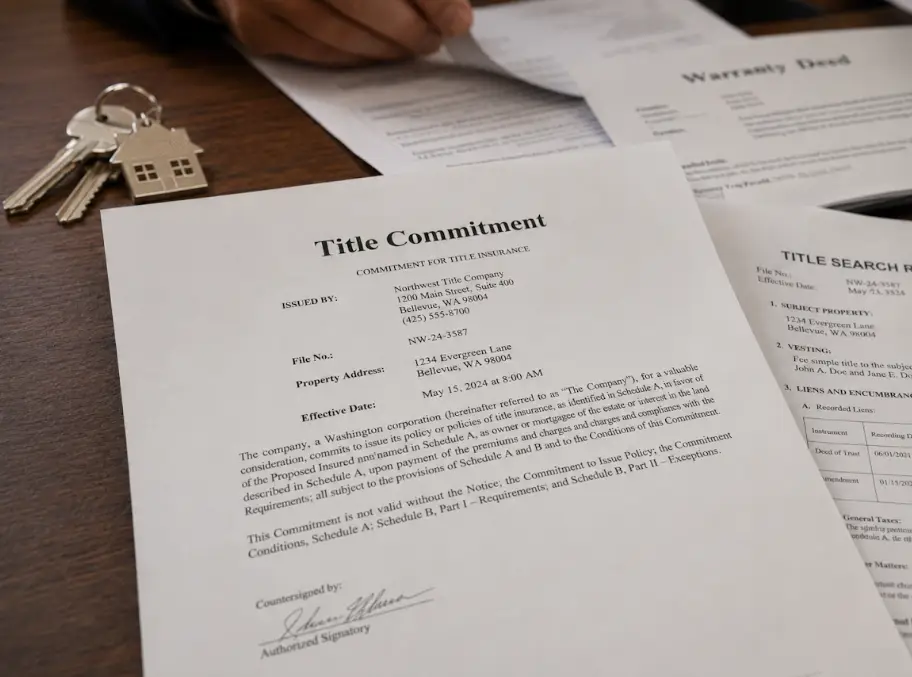
Table of Contents
- What Is a Title Commitment and Who Pays for It?
- What Is a Title Commitment?
- What Information Is Included in a Title Commitment?
- Schedule A
- Schedule B - Requirements
- Schedule B - Exceptions
- Title Commitment vs. Title Policy
- What Happens After You Receive a Title Commitment?
- Who Pays for the Title Commitment?
- FAQs
- What is a title commitment in simple terms?
- Is a title commitment the same as title insurance?
- What is the difference between a title commitment and a title policy?
- Do I need to review the title commitment carefully?
- Can issues listed in a title commitment be fixed before closing?
- Does a title commitment mean the title is clear?
Many new home buyers are confused about their next steps after receiving their title commitment. Reading through it can feel like an extra step before completing your property transaction.
This document contains essential infortmation on how your future title insurance will protect you after closing. However, nothing is set in stone. You have the power to discuss the terms and work out any potential title issues with the seller before accepting the commitment.
What Is a Title Commitment?
Insurance companies send a title commitment to buyers before a real estate transaction is completed. This notice outlines and promises certain terms for the buyer’s title insurance, provided they go through with the purchase.
However, the buyer and property must meet several conditions at the time of closing for the commitment to hold. If these conditions are not met, then the insurer has the right to rescind or alter the policy’s terms.
The title commitment offers immediate benefits beyond learning about your future insurance. As part of their due process, the insurance company performs a thorough title search. The results will indicate any third-party interests in the title that may dissuade you from completing the sale.
What Information Is Included in a Title Commitment?
Title commitments can generally be split into three parts: Schedule A, Schedule B, and the Requirements section. Together, these segments tell the buyer and seller what must be done before the policy is activated.
Schedule A
Schedule A lists the policy terms that the insurance company is “committing” to. Buyers learn what title issues are covered, the proposed insurance amounts, the current property owner, the official property description, and the names of the insured persons.
This section confirms that the insurance will cover the right person and property. It also shows that the seller is the true property owner, rather than somebody who only thinks they own it. Some people inherit properties, but do not bother to legally transfer the deed.
Schedule B - Requirements
Schedule B is split between two parts: requirements and exceptions.
Requirements define the conditions the insurance company must meet to fulfill its commitment. Buyers must inform the insurer of any other parties who will hold an interest in the title, such as co-owners or lenders.
The buyer must also fully complete all the steps for the sale. The insurer must confirm that the purchase payment was processed and that all relevant documents for the title transfer and mortgage were signed and recorded in public records.
Additionally, most insurers will require that all encumbrances on the title are resolved. For example, any liens must be paid off or otherwise removed from the title.
Schedule B - Exceptions
Schedule B’s second section defines what title risks are not covered by your policy. There are “standard exceptions” that affect all properties equally. Standard exceptions are a general list of risks that the insurer will not pay for if they occur.
There are also specific title exceptions that are unique to each property. These exceptions are based on the findings from the insurer’s title search of the property. For example, the insurer might find an existing easement in the public record but is unwilling to pay to have it challenged.
The title commitment informs the buyer of special exemptions in plain terms. This allows the buyer to make an informed decision about whether to purchase the property, even if they have to pay out of pocket for certain title issues.
Title Commitment vs. Title Policy
A title commitment and a title policy are not the same thing, although they are connected. The title commitment is essentially a preview of the title policy’s terms; however, these terms are subject to change.
Additionally, a title commitment is intended to inform the buyer and seller of any issues that arise from the insurer’s title search. Both parties can review the commitment and decide whether to proceed. In short, the commitment protects people against known issues.
In most cases, the insurer will require the buyer or seller to address title issues before issuing a policy. This means that title policies primarily address unforeseen issues that don’t appear on a title search.
What Happens After You Receive a Title Commitment?
Receiving the title commitment is only the beginning. The wording may seem binding, but the terms are negotiable. If you disagree with certain exemptions or pricing, you can have a real estate attorney review the commitment and suggest changes.
The title commitment will also report any issues that arose during the insurer’s title search. These problems can range from tax liens to a surprise heir from the deceased former owner. However, the insurer will require that all these issues be resolved before it finalizes the policy.
Some problems are easy to fix. Others may cause delays, court action, or renegotiation. The earlier the commitment is reviewed, the more time there is to address issues without derailing the transaction.
Who Pays for the Title Commitment?

In most cases, the title commitment fee is baked into the cost of issuing the policy. So, most insurers will only provide a commitment to serious applications because of the cost of performing a dedicated title search.
The standard for who pays for the title policy premium varies. Home sellers who want to reassure buyers may offer to pay for a commitment to speed up the sale. Buyers may front the cost to double-check the seller’s title search. Sometimes, the buyer and seller negotiate to split the cost.
You can ask your real estate agent for local expectations. There may also be a way to bundle the title insurance into the overall closing costs.
FAQs
What is a title commitment in simple terms?
A title commitment is an insurer’s offer of future title policy terms, as long as certain conditions are met by the time of closing.
Is a title commitment the same as title insurance?
No, a title commitment is not an insurance policy. It is a description of a potential policy offer.
What is the difference between a title commitment and a title policy?
A title commitment does not protect the homeowner like a title insurance policy. The commitment also outlines outstanding title issues and other requirements that must be met before a policy is opened.
Do I need to review the title commitment carefully?
Yes. The commitment includes important information that must be verified, such as current title issues, the insured person’s name, the property description, and the current property owner’s identity.
Can issues listed in a title commitment be fixed before closing?
It depends on the timeline. Some title issues can take months to address, requiring court action. However, others can be corrected in a single visit to the county recorder’s office.
Does a title commitment mean the title is clear?
No. The title commitment will report issues discovered in a title search. It is the seller’s and buyer’s responsibilities to clear the title.
A title commitment is not a guarantee of insurance coverage. It is a detailed outline of the coverage you can expect after closing, under certain conditions. Home sellers and buyers must work together to meet these conditions and secure coverage.
However, the commitment’s terms are not immutable. A real estate attorney can negotiate the terms to improve your coverage and price. When reviewed early, the title commitment becomes a roadmap that ensures you go into a property transaction with your eyes wide open.

Elena Novak leads real estate research and analysis at PropertyChecker.com, where she digs into housing trends, tracks property data, and unpacks investment strategies across the U.S. With a background in flipping homes and a degree in Business and Real Estate Development, she brings a practical, hands-on approach to market analysis. Elena is especially skilled at uncovering hidden property value and guiding both homeowners and investors through shifting market conditions. She's also passionate about sustainable design and smart home innovation. When she's not analyzing the market, she's probably knee-deep in a DIY project, scouting vintage décor, or building something new in her workshop.
Search Property & Deed Records
Table of Contents
- What Is a Title Commitment and Who Pays for It?
- What Is a Title Commitment?
- What Information Is Included in a Title Commitment?
- Schedule A
- Schedule B - Requirements
- Schedule B - Exceptions
- Title Commitment vs. Title Policy
- What Happens After You Receive a Title Commitment?
- Who Pays for the Title Commitment?
- FAQs
- What is a title commitment in simple terms?
- Is a title commitment the same as title insurance?
- What is the difference between a title commitment and a title policy?
- Do I need to review the title commitment carefully?
- Can issues listed in a title commitment be fixed before closing?
- Does a title commitment mean the title is clear?