Satisfaction Rate
99%
We help you stay ahead of important changes.
Get notified about deed changes, liens, loans, ownership updates, and other critical title records, so you can protect your property and your peace of mind.
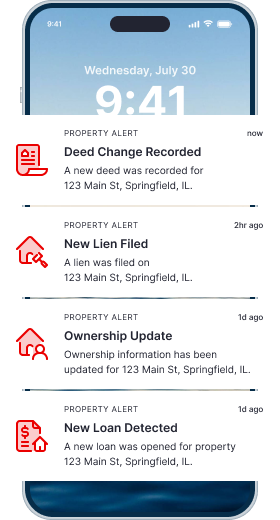











PropertyChecker compiles property data from thousands of public and private data sources to help users access detailed property insights faster. With nationwide coverage across all 50 states and more than 3,000 counties, PropertyChecker makes it easier to search, review, and monitor property records from one platform.
Title monitoring builds on that data by helping users keep an eye on important records tied to ownership, title activity, liens, loans, and other property-related filings.
Deed Changes Monitor available deed records that may show ownership transfers, quitclaim deeds, warranty deeds, grantor and grantee details, recording dates, and document references.
Ownership Updates Stay aware of changes involving current owners, past owners, trusts, LLCs, corporations, or other entities tied to the property.
Lien Records Identify available lien filings connected to the property, including tax liens, mechanic's liens, judgment liens, HOA liens, and other recorded claims when available.
Loan and Mortgage Records Review available mortgage and loan records that may include lender information, loan amounts, recording dates, and related document details.
Foreclosure Activity Track available foreclosure-related records, notices, filings, and other distressed-property data that may indicate financial or legal activity involving a property.
Tax and Assessment Records Access property tax details, assessed values, parcel information, and other county-level records that help you understand the property's public-record profile.
Property Value Changes Review estimated property values, sale history, purchase records, and market-related data that may help you monitor changes over time.
Recording Details Find document numbers, filing dates, recorder references, and other details that help you trace when and where property records were filed.
Building Permit Activity Monitor available building permit records that may show new construction, renovations, additions, repairs, demolitions, permit types, issue dates, project descriptions, contractor details, and permit status.
Property-related filings can affect ownership clarity, financing, resale, inheritance, and long-term property security. A new deed, lien, loan record, or foreclosure filing may not always be obvious right away.
Title monitoring gives property owners a simple way to stay alert to available public-record changes connected to their property.
It can be useful for:

Enter the property address, parcel ID, or owner name to find available public records connected to the property.
Access available ownership, deed, lien, loan, tax, foreclosure, and property details in one organized report.
Set up monitoring for the property so you can stay informed about important available record changes.
Instead of searching multiple county offices or databases manually, use PropertyChecker to review key property records from one place.
PropertyChecker makes it easy to access detailed property records through a single search. Rather than spending time checking multiple county offices or public databases, our platform compiles key information, such as ownership history, liens, permits, property characteristics, and valuation data, into one organized report. Whether you're a homebuyer, investor, or property owner, PropertyChecker provides the insights you need to make informed decisions with fast, convenient access to reliable property data.
 Homeowners
 Monitor your own property and stay aware of available public-record changes that may involve your title, ownership, liens, or recorded documents.
 Real Estate Investors
 Track properties in your portfolio and review important ownership, deed, lien, loan, and foreclosure details from one place.
 Buyers and Sellers
 Review title-related records before making major property decisions, including purchases, sales, transfers, or refinancing.
 Families and Heirs
 Monitor inherited property, estate-related transfers, trust ownership, and recorded changes that may affect a property's ownership history.
Title monitoring does not replace legal advice, title insurance, or a professional title search, but it can help you stay more aware of what appears in available public records. By monitoring your property, you may be able to identify important activity sooner, including:
Property title monitoring is a service that helps users track available public-record changes connected to a property's title, ownership, deed records, liens, loans, and other related filings.
Monitoring your title can help you stay aware of important property record changes. This may include deed transfers, lien filings, loan records, foreclosure activity, or other updates that could affect your property's public-record profile.
Title monitoring cannot prevent fraud, guarantee protection, or replace title insurance. However, it can help you identify available public-record changes sooner so you can investigate unexpected activity.
Available records may include deeds, ownership records, liens, loan records, mortgage details, tax records, foreclosure records, parcel information, sale history, and recording references.
Many property title records are public and are recorded at the county level through recorder offices, registries of deeds, tax assessors, and other local agencies.
Yes. Property monitoring can be useful for homeowners, investors, landlords, and anyone managing multiple properties.
No. PropertyChecker provides access to available property data and monitoring tools, but it does not replace legal advice, title insurance, a title company, or a professional title search.
Start by searching the property address, parcel ID, or owner name. Once you find the property, you can review available records and begin monitoring title-related activity.
Our team is available 24/7 whenever you need us.

