The Most Iconic Christmas Movie Houses
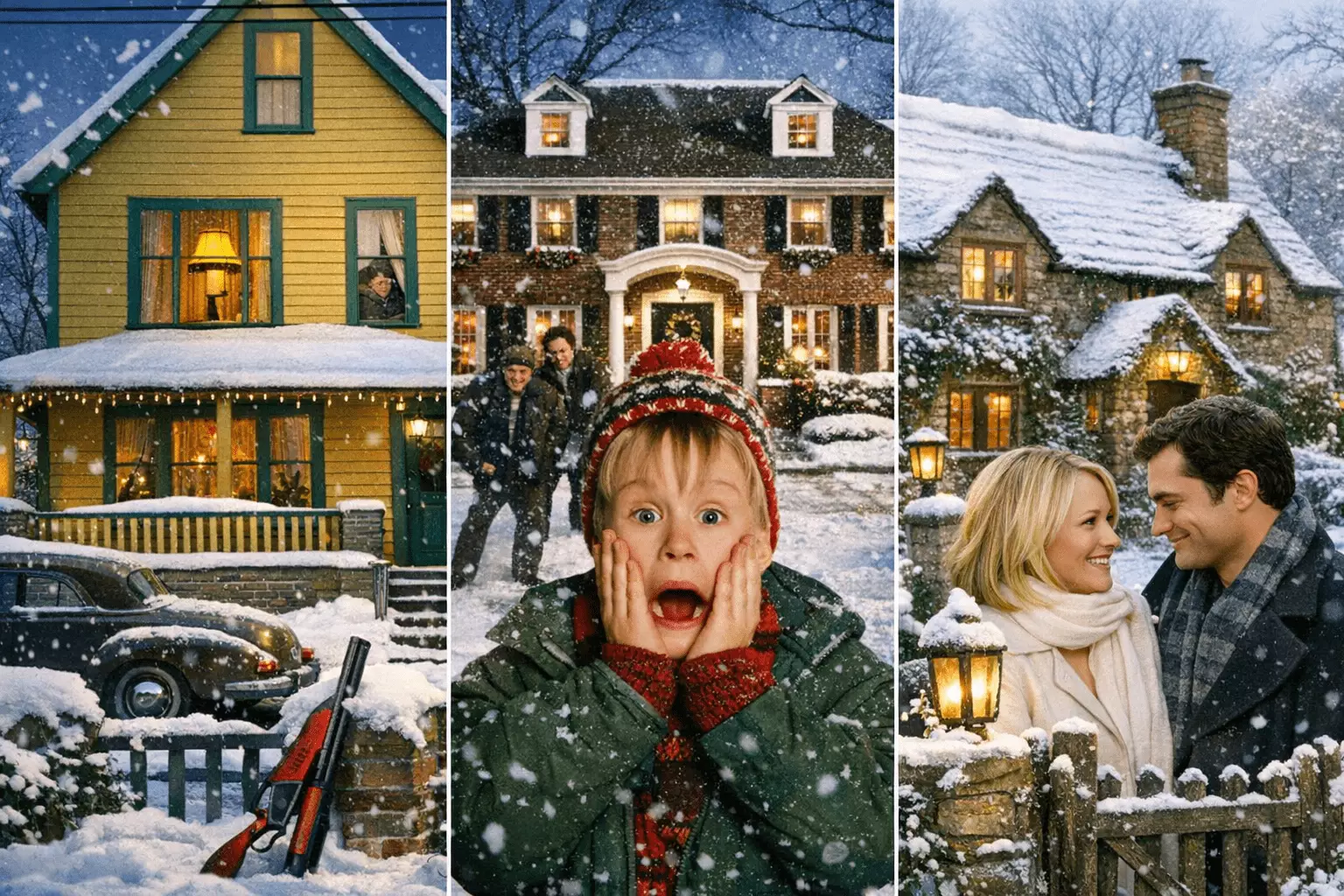
Table of Contents
- The Most Iconic Christmas Movie Houses
- “A Christmas Story” House
- “The Family Stone” House
- “Miracle on 34th Street” Dream House
- The “Home Alone” House
- “National Lampoon’s Christmas Vacation” House
- “Miracle on 34th Street” Main House Used in Film
- “It’s a Wonderful Life” House The Bailey Home
- “Elf” The Hobbs’ New York Apartment
- “The Holiday” Two Iconic Houses
Homes in Christmas movies often create unforgettable memories in our minds. This magical feeling exists not just because of the holiday decorations in the houses, but because the movies concentrate the stories, memories, and atmosphere into a single, lived-in place. Together, the homes evoke a sense of a place that many remember vividly.
Unknown to some, many of the homes in Christmas movies are real places you can visit or trace. The list below covers the houses used in Christmas movies, where the movies were filmed, how the set differs from reality, architectural style, key scenes, behind-the-scenes facts, history, visitor access, and cultural impact.
“A Christmas Story” House
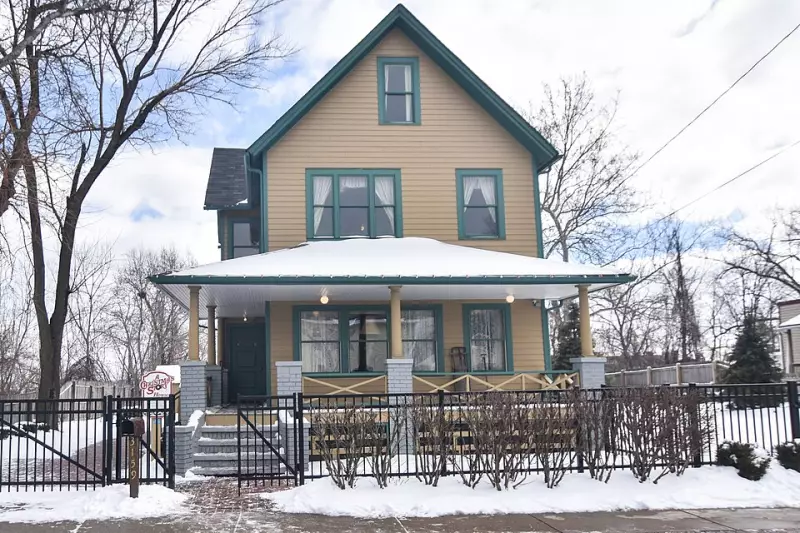
- Real Address/Filming Location: The house used for exterior and some interior scenes is located at 3159 W. 11th St., Cleveland, Ohio 44109.
- Real vs. Set Details: The exterior of the Parker family home (Ralphie’s house) was filmed at this address in the Tremont neighborhood of Cleveland. Some interior scenes in the film were shot on a sound stage (in Toronto) rather than inside the actual house.
- Architectural Style and Design: The house is a 19th-century Victorian home that was adapted to replicate the look from the 1940s era portrayed in the film.
- Key Scenes Filmed at the House:
- The iconic scene where the leg lamp is placed in the front window.
- Exterior shots of the Parker home and neighborhood.
- Behind-the-Scenes Facts: Director Bob Clark chose this specific neighborhood in Cleveland because the steel mills in the background provided the industrial, gritty aesthetic he wanted for the fictional town of Hohman, Indiana.
- History of the House: The house was built in the 19th century and has been designated a Cleveland municipal landmark. In 2004, a fan named Brian Jones bought it on eBay for $150,000 and spent nearly double that restoring it to movie-accurate condition.
- Public Access: The house is now operated as a museum (named “House from A Christmas Story”) and open for tours; it even offers overnight stays (museum-turned lodging) for a nostalgic experience.
- Cultural Impact: The house has become a pilgrimage site for fans of the film, featuring the iconic Leg Lamp in the front window year-round.
“The Family Stone” House
- Real Address or Filming Location: The movie was shot in various locations in New Jersey, New York, Connecticut, and California. However, the majority of the taping took place in a house located at 144 Riverside Avenue, Greenwich (Riverside), Connecticut.
- Real vs. Set Details: Unlike many holiday films, The Family Stone used both the real exterior and interior of the home.
- Architectural Style and Design: A Colonial Revival with a weathered stone facade and wrap-around porch.
- Key Scenes Filmed at the House: Nearly all the film’s family moments were shot inside the house.
- Behind-the-Scenes Facts: The snow outside was almost entirely made of biodegradable paper products because it didn't snow during filming. The cast actually lived in the house during rehearsals to build genuine family chemistry.
- History of the House: A long-standing private residence.
- Public Access: No, the house is privately owned and not available for tours.
- Cultural Impact: The house is often cited as the “ultimate” chaotic Christmas home, cluttered, cozy, and architecturally messy in a way that feels deeply realistic compared to polished sets.
“Miracle on 34th Street” Dream House
- Real Address or Filming Location: 24 Derby Road, Port Washington, Long Island, New York.
- Real vs. Set Details: The final exterior scene was shot on location at this actual house, which represented young Susan’s Christmas wish come true. No interior shots were filmed inside.
- Architectural Style and Design: Mid-century urban/suburban American home as seen in 1940s cinema.
- Key Scenes Filmed at the House: The film’s hopeful conclusion, where Susan excitedly recognizes her dream house, was filmed entirely on-site.
- Behind-the-Scenes Facts: The final scene where young Susan sees the dream house was filmed without telling Natalie Wood (who played Susan) that they would be using the real house. The director, George Seaton, reportedly kept it a surprise to capture her authentic reaction.
- History of the House: Built in 1943, it was practically brand new when the movie was filmed.
- Public Access: No, it is a private home, but film lovers sometimes stop by to view it from the street.
- Cultural Impact: The house/movie cemented the image of New York as the stage for Christmas miracles.
The “Home Alone” House
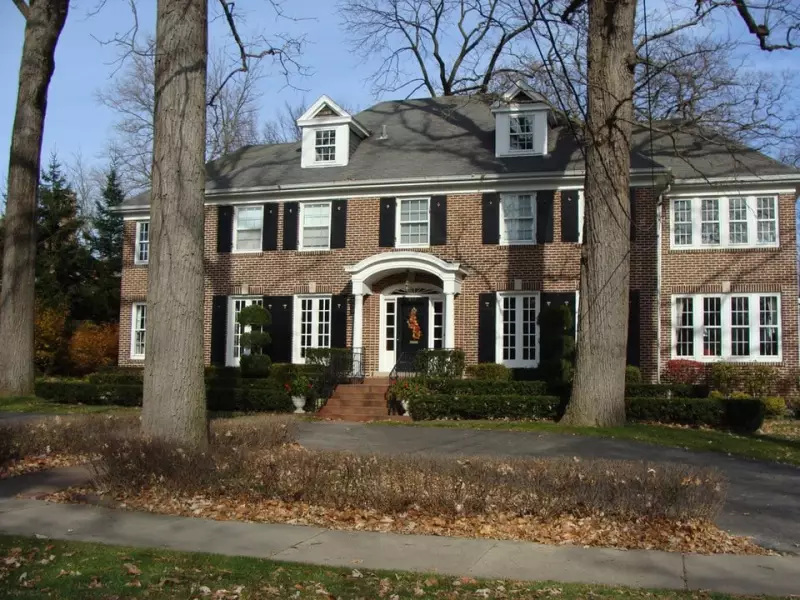
- Real Address or Filming Location: 671 Lincoln Avenue, Winnetka, Illinois.
- Real vs. Set Details: Exteriors and most first-floor scenes were filmed inside the actual home. The attic and basement, however, were custom-built sets inside a nearby gymnasium.
- Architectural Style and Design: A red-brick 1920 Georgian-style mansion with symmetrical windows, a steep gable, and classic colonial charm.
- Key Scenes Filmed at the House: Kevin decorating, the burglars’ traps, the front-door tarantula moment, and the emotional reunion on Christmas morning.
- Behind-the-Scenes Facts: The crew built a replica basement inside New Trier Township High School to shoot the stunts safely.
- History of the House: Built in the 1920s, the home remained a private residence spanning 4,200 square feet. It was owned by the Abendshien family during filming; they lived in the master suite while the crew used the rest of the house.
- Public Access: The house is privately owned. As a result, there are no tours, but many fans swing by for a quick photo from the street.
- Cultural Impact: One of the most iconic Christmas movie homes of all time, its brick façade and festive interior have become instantly recognizable symbols of childhood mischief and holiday spirit.
“National Lampoon’s Christmas Vacation” House
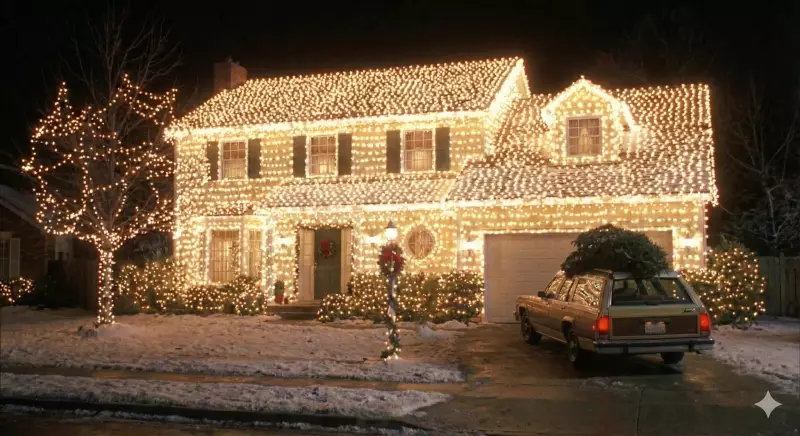
- Real Address or Filming Location: Warner Bros. Ranch, 411 North Hollywood Way, Burbank, California. The house is part of a studio backlot used in multiple films.
- Real vs. Set Details: The home exists only as a set façade and was never a real residence. All interior shots were filmed on nearby soundstages.
- Architectural Style and Design: Designed to resemble a middle-class 1980s suburban home, with exaggerated decorations and holiday chaos as its signature.
- Key Scenes Filmed at the House: Clark Griswold stringing thousands of lights, the squirrel disaster, and the arrival of Cousin Eddie’s RV.
- Behind-the-Scenes Facts: The house shares the backlot with homes seen in Lethal Weapon, American Beauty, and Bewitched.
- History of the House: Being a backlot set, the facade changes frequently. It has been repainted and remodeled for countless commercials, shows (such as WandaVision), and movies since 1989.
- Public Access: No public tours are allowed. Access is limited to studio personnel and private industry events.
- Cultural Impact: Being a symbol of the over-the-top, anything-that-can-go-wrong Christmas spirit, the Griswold home has become the visual shorthand for holiday mayhem.
“Miracle on 34th Street” Main House Used in Film
- Real Address or Filming Location: Believed to be 425 West 83rd Street, Upper West Side, Manhattan, New York City. This address is widely cited as the real exterior used for the apartment building where Doris and Susan Walker live in the film, although the studio never officially confirmed it.
- Real vs. Set Details: Only the building’s exterior was used in the film. All interior shots, including the living room, dining area, and hallway, were filmed on detailed studio sets at 20th Century Fox in Los Angeles.
- Architectural Style and Design: The building is a pre-war apartment in classic New York style: red-brick construction, subtle Art Deco elements, with a modest, practical look fitting a single working mother of the time.
- Key Scenes Filmed at the House:
- The Parade: The famous scene where Susan and Fred Gailey (John Payne) watch the parade from the living room window, and Kris Kringle directs the float driver from the street below.
- The Dinner: The scene where Kris stays for dinner, and Susan tests him by blowing a bubble gum bubble in his face.
- Fred’s Apartment: The neighboring unit where Kris stays as a roommate, leading to the romantic tension between Fred and Doris.
- Behind-the-Scenes Facts: The parade scenes were not staged; they were filmed live during the actual 1946 Macy's Thanksgiving Day Parade. The actors had to be in place and hit their marks perfectly because they could not ask the parade to stop or do it again.
- Furthermore, the actor Edmund Gwenn was actually the Santa in the real 1946 parade. Most of the crowd did not know they were watching a movie being filmed; they thought he was the Macy's Santa.
- History of the House: The building is still standing and in residential use. Its connection to the film has made it a quiet point of interest for classic film fans, though it has never been officially promoted as a tourist site.
- Public Access: No. The house is a functioning private apartment building. While not open to visitors, the entrance is visible from the street, and film enthusiasts sometimes walk by for a quick photo.
- Cultural Impact: By filming on real New York streets and blending them with crafted interiors, the 1947 movie cemented New York City as the quintessential stage for Christmas miracles. It made its streets, stores, and ordinary homes part of holiday movie iconography that endures in popular culture.
“It’s a Wonderful Life” House The Bailey Home
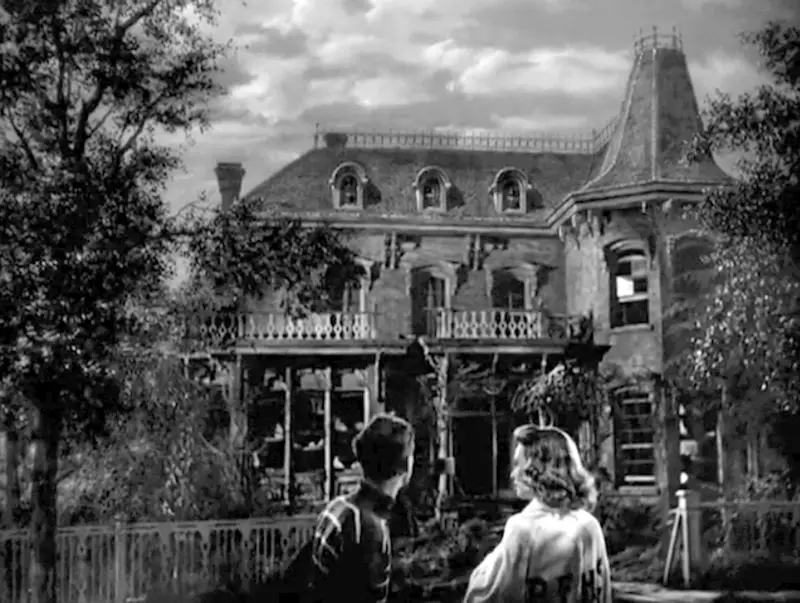
- Real Address or Filming Location: The Bailey home was an elaborate set built at RKO’s Encino Ranch in Los Angeles, California.
- Real vs. Set Details: The entire town of Bedford Falls, including the house, was a massive outdoor set spanning 4 acres. Interiors were filmed on studio soundstages.
- Architectural Style and Design: A Second Empire Victorian famed for the Mansard roof.
- Key Scenes Filmed at the House: George and Mary’s honeymoon; the loose banister knob gag; George’s desperate prayer and joyous return on Christmas Eve.
- Behind-the-Scenes Facts: Instead of using traditional fake snow, the film employed a new “chemical snow” made from a foam-based mixture to allow for better audio during filming.
- History of the House: The entire Bedford Falls set was dismantled in the 1950s, making the house a piece of lost Hollywood history.
- Public Access: No. The set no longer exists. However, fans can visit the town of Seneca Falls, NY, which claims to have inspired Bedford Falls.
- Cultural Impact: The Bailey home represents perseverance, family, and the quiet heroism of everyday life, making it one of the most meaningful Christmas houses ever imagined.
“Elf” The Hobbs’ New York Apartment
- Real Address or Filming Location: 55 Central Park West, Manhattan, New York. This Art Deco building sits right across from Central Park and has appeared in several films.
- Real vs. Set Details: The exterior was filmed on location, while the apartment interiors, like Buddy’s spaghetti breakfast and decoration scenes, were recreated on studio sets.
- Architectural Style and Design: Art Deco high-rise with ornate limestone detailing and a commanding city view.
- Key Scenes Filmed at the House: Buddy meets his father for the first time, decorates the entire apartment overnight, and shares maple syrup spaghetti with Michael.
- Behind-the-Scenes Facts: Will Ferrell actually ate the syrup-covered spaghetti on camera, and the scene required multiple takes.
- History of the House: The building is a New York City landmark and is best known as the "Ghostbusters building," although Elf gave it a festive twist.
- Public Access: It is a private residential building with no public tours, although fans often take photos from the sidewalk.
- Cultural Impact: The apartment reflects the contrast between the corporate, cynical world and Buddy’s unshakeable holiday spirit, reminding viewers of the joy in seeing Christmas through a child’s eyes.
“The Holiday” Two Iconic Houses
One of the most beloved aspects of The Holiday is how the film contrasts two very different homes to reflect the emotional journeys of its characters. Amanda’s sleek Los Angeles mansion and Iris’s cozy English cottage act as visual opposites, reinforcing the themes of escape, reinvention, and finding comfort in unexpected places.
Amanda’s Los Angeles Mansion
- Real Address or Filming Location: 1883 Orlando Road, San Marino, California.
- Real vs. Set Details: Only exterior shots were inspired by the real house. Interior scenes, including the expansive living room, bedroom, and media space, were built as custom sets on a soundstage to reflect Amanda’s polished and high-tech lifestyle.
- Architectural Style and Design: A Mediterranean-style mansion with arched doorways, tall palm trees, terracotta roofing, and manicured grounds.
- Key Scenes Filmed at the House: The opening scene where Amanda kicks her cheating boyfriend out of the house, and the house swap scene with Amanda scrolling online and finding Iris's cottage.
- Behind-the-Scenes Facts: The interior sets reportedly cost nearly $1 million to construct. The massive iron gate shown in the movie was a prop installed by the production team to make the house look more secure and private; the real house sits closer to the street.
- History of the House: The home was constructed in 1928 and designed by the legendary Wallace Neff, known for designing homes for golden age Hollywood stars like Douglas Fairbanks and Mary Pickford.
- Public Access: No, the property is not open to the public. Fans may only view it from the street.
- Cultural Impact: Amanda’s mansion became synonymous with West Coast luxury and serves as the visual metaphor for a life that looks perfect on the outside yet feels emotionally hollow.
Iris’s English Cottage (Rosehill Cottage)
The house was built specifically for the movie and demolished after filming was completed.
- Real Address or Filming Location: Filmed just outside the village of Shere in Surrey, England.
- Real vs. Set Details: The exterior cottage was a fully constructed facade in an open field. Interiors, such as the fireplace-lit lounge and winding staircase, were recreated on studio sets.
- Architectural Style and Design: Crafted to resemble an 18th-century stone cottage, it featured low ceilings, exposed wood beams, latticed windows, and a snow-dusted garden gate.
- Key Scenes Filmed at the House: Iris’s quiet domestic moments, the snowbound sequences, and the emotional reveal when Amanda arrives to swap lives are anchored to the cottage exterior and its immediate grounds.
- Behind-the-Scenes Facts: The interior sets were built slightly smaller than average scale to make the actors (especially Cameron Diaz) look taller and the space feel more claustrophobic compared to the spacious LA mansion.
- History of the House: Although the house is fictional, it helped boost the popularity of the nearby village of Shere, now a destination for romantic film lovers and holiday travelers.
- Public Access: The cottage itself is fictional and has been demolished, but Shere is real. Visitors can explore the village square, nearby trails, and pubs that appear briefly in the film.
- Cultural Impact: The film significantly boosted tourism to Surrey and the Cotswolds, with fans seeking the “quintessential English Christmas” experience. Additionally, Rosehill Cottage is often cited as a founding visual for the “cottagecore” aesthetic trend that exploded on social media in the 2020s, celebrating rural life, knitting, baking, and cozy interiors.
Whether built on bustling New York streets, snowy English villages, or recreated on Hollywood soundstages, Christmas movie houses continue to stir nostalgia and holiday cheer year after year. Although some of these houses are real places and can be visited, others were built just for filming. Still, they all have a special place in movie history as they remind us of the warmth, fun, and sometimes chaos that make Christmas unforgettable.

Elena Novak leads real estate research and analysis at PropertyChecker.com, where she digs into housing trends, tracks property data, and unpacks investment strategies across the U.S. With a background in flipping homes and a degree in Business and Real Estate Development, she brings a practical, hands-on approach to market analysis. Elena is especially skilled at uncovering hidden property value and guiding both homeowners and investors through shifting market conditions. She's also passionate about sustainable design and smart home innovation. When she's not analyzing the market, she's probably knee-deep in a DIY project, scouting vintage décor, or building something new in her workshop.
Search Property & Deed Records
Table of Contents
- The Most Iconic Christmas Movie Houses
- “A Christmas Story” House
- “The Family Stone” House
- “Miracle on 34th Street” Dream House
- The “Home Alone” House
- “National Lampoon’s Christmas Vacation” House
- “Miracle on 34th Street” Main House Used in Film
- “It’s a Wonderful Life” House The Bailey Home
- “Elf” The Hobbs’ New York Apartment
- “The Holiday” Two Iconic Houses