How to Find Your Property Survey Online

Table of Contents
- How to Find Your Property Survey Online
- Step 1: Check Your Own Records First
- Step 2: Search Your City or County’s GIS or Property Records Portal
- Step 3: Check the County Recorder, Assessor, or Land Records Website
- Step 4: Use Trusted Online Platforms (Pros & Cons)
- Step 5: Contact Your Title Company or Mortgage Lender
- Step 6: If All Else Fails, Hire a Licensed Surveyor
- When You Actually Need to Order a New Property Survey
- How to Confirm You Found the Right Document
- FAQs
- Where Should I Start If I Need to Find My Property Survey
- How Do I Know If My Survey Is Already Included in My Closing Documents?
- Can I Find My Property Survey Online for Free?
- What Is a GIS Portal and How Do I Use It?
- Is a Plat Map the Same as a Survey?
- My Survey Isn’t Online. How Can I Get It?
- How Will I Know I Have Found An Official Survey?
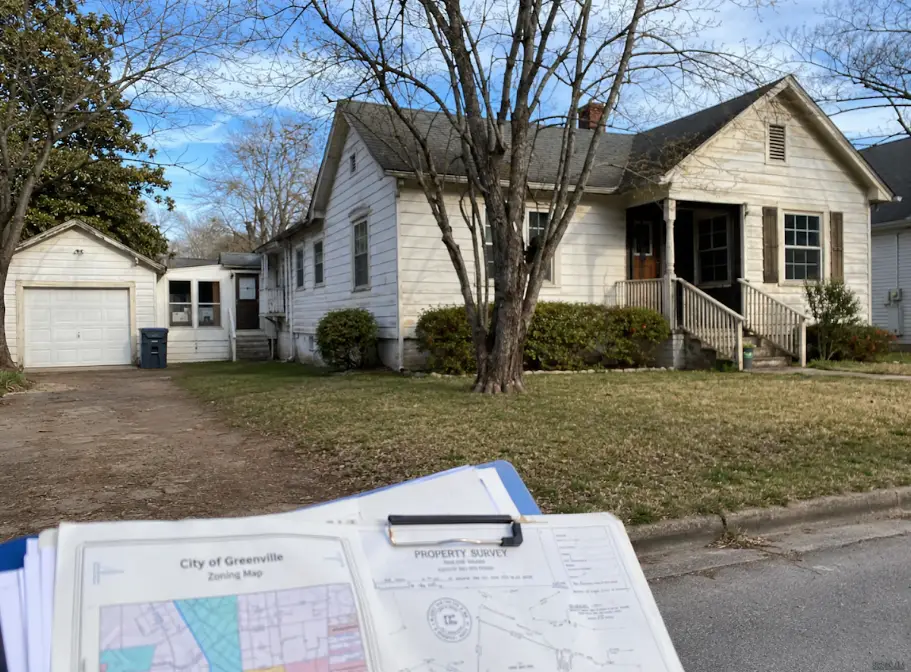
Before you spend hundreds of dollars and wait weeks for a new property survey, hit pause. Many people assume they need to hire a surveyor right away, without realizing that they might already have a copy or be able to get one online in minutes. The good news? You could get it for free or for a minimal fee (barely a fraction of the cost of commissioning a new survey).
So, looking for your property survey? Let’s walk you through how to find it online or through existing records and help you avoid wasted time, extra costs, and potential frustrations. Keep in mind that we will be focusing on how to find the survey, not on how to interpret it once you do so.
Step 1: Check Your Own Records First
Before diving into the internet for online searches, you should begin with the most obvious place: your own filing cabinet or digital folders. If you have ever purchased or refinanced your property, there’s a good chance you already have a survey in your closing documents. They are often included alongside the deed or mortgage paperwork and typically appear as a large-format, graphically detailed document that stands out from text-heavy forms.
Look for a document labeled “Property Survey,” “Boundary Survey,” or “Mortgage Survey.” If you saved digital copies, search your files for the word "survey" to instantly locate the PDF. You can also check email attachments or secure client portals from your lender, title company, or real estate agent.
If your property was built in the last 10 - 15 years, a survey might also be part of the builder’s plan set or homeowner’s association records. Even if it’s older, it’s worth verifying whether it still reflects the current boundaries, especially if no major changes have occurred. This 5 - 10 minute search could save you hundreds of dollars and weeks of waiting.
Step 2: Search Your City or County’s GIS or Property Records Portal
If your personal files come up empty, your local government's website should be your next stop. Most counties offer Geographic Information System (GIS) portals or online parcel viewers that let you explore land records and mapping layers. These tools are often free and easy to use, even for non-technical users. Searches typically work best by address or parcel number, but some systems offer additional criteria like owner’s name and property description. You will usually be able to view lot boundaries and dimensions and download recorded plats, subdivision maps, survey PDFs, and other related documents attached to specific parcels (if available).
When searching local GIS systems, keep in mind that not all counties upload full surveys online. Some only show a basic parcel outline or zoning overlays. However, even though these aren’t always as detailed, they often reference the same recorded plats used to prepare individual property surveys. If your county’s system doesn’t show a full survey, be sure to note the parcel ID (PIN or APN); you may need it for the next step.
Step 3: Check the County Recorder, Assessor, or Land Records Website
If your local GIS portal doesn’t have what you need, try the county Recorder (sometimes called the Register of Deeds) or Assessor’s website. These offices are great resources for property-related information and usually maintain online databases that you can use to access recorded surveys, subdivision plats, right-of-way maps, legal descriptions, land use maps, and other documents affecting property titles. Look specifically (on the website) for links like “Recorded Documents,” “Land Records,” “Official Records Search,” “Document Search,” or something similar.
You can typically search these databases by owner name, parcel ID, or subdivision name. Note that some counties require account creation or payment for full access to their databases. Also, not all surveys are officially recorded; in some areas, only subdivision plats appear in public archives, while private boundary or mortgage surveys stay with title companies or lenders.
Step 4: Use Trusted Online Platforms (Pros & Cons)
Third-party platforms like PropertyChecker can serve as useful alternatives when official sites prove challenging. These platforms use a combination of information aggregated from public land records, private databases, and proprietary software to provide property data, maps, and survey-like visuals. They are typically easy to use, free or low-cost, with the added convenience of providing access to a wide scope of information and boundary visualization through a single search interface.
However, you should note that these platforms’ databases may not be as complete or current as official county sources. Many of them display assessor parcel maps, not certified surveys, and may lack official measurements or legal descriptions. You should use these services cautiously, only after exhausting all free official methods, and always compare any fees against the cost of ordering documents directly from county (or city) offices. Also, if you find your survey using a third-party platform, confirm it includes a surveyor’s name, license number, and a seal or signature to ensure it’s an official survey.
Step 5: Contact Your Title Company or Mortgage Lender
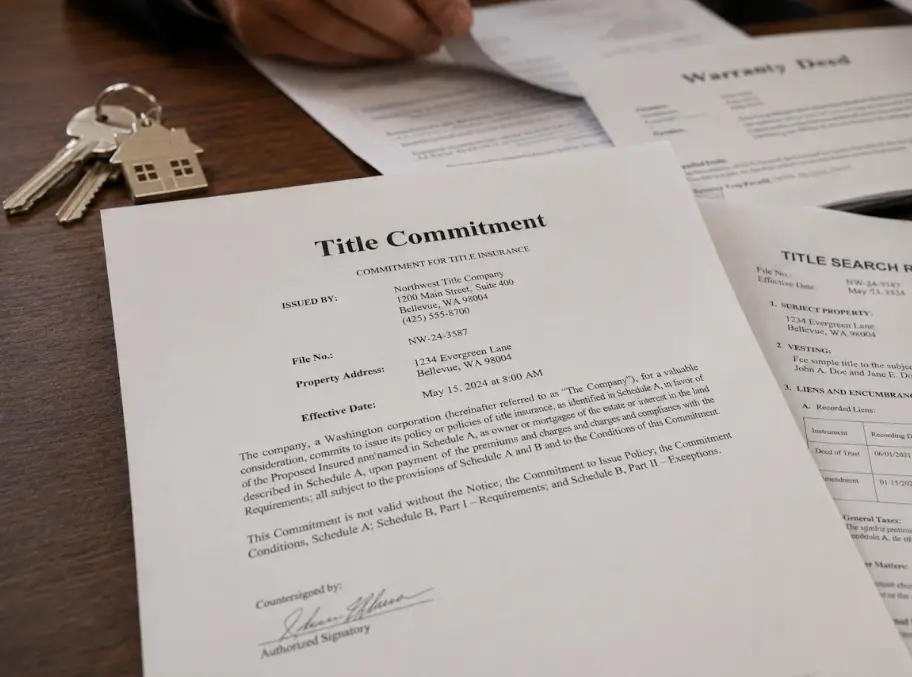
If online searches don’t work, you might need to turn to the professionals who handled your property transaction. If you financed or refinanced your home, your title company or mortgage lender almost certainly obtained a survey as part of the closing, and they might still have a copy on file even if you no longer have yours.
To start, check your closing statement to identify the relevant company and find their contact information. When you call or email, provide your name, address, and closing date, and specifically ask if they have a copy of the property survey from your file. Most companies retain digital archives for several years (for legal and insurance purposes) and will usually either email you a copy of your survey or point you to where it’s stored. Note that this may sometimes involve a small administrative fee, but it is still far easier and cheaper than commissioning a new survey.
Step 6: If All Else Fails, Hire a Licensed Surveyor
If none of the previous steps turn up results, then hiring a licensed surveyor is your final (and most reliable) option. You should always get quotes from at least two or three different surveyors. Ask if they can check state or county archives for prior surveys of your lot and if they can provide a digital copy (of the survey) along with the physical drawing. If you are able to contact the original preparer of the survey, they may be able to update it (known as “recertification”), which can save you both time and cost compared to ordering a brand new one.
When You Actually Need to Order a New Property Survey
Sometimes, despite your best efforts, you still can’t find a valid, official survey. In this case, it may be time to order a new one. You’ll likely need a new property survey if:
- The existing one is more than 10 years old
- You’ve added new structures to your property (like a pool, garage, or fence) since the survey was created
- The survey is missing a surveyor’s seal or lacks key reference points
- Your property boundaries have changed (through subdivision, new fencing, construction, etc.)
- You’re applying for a building permit that requires updated measurements
- You need the survey to resolve boundary disputes
Getting a new property survey costs significantly more than finding an existing document (usually around $400 to $1,500+, depending on the lot size and complexity). It is always a good idea to hire a licensed surveyor in your state of residence, and always ask for a digital copy and a stamped hard copy. You may need both for future transactions.
How to Confirm You Found the Right Document

Once you’ve located a potential survey document, double-check to make sure it’s actually a property survey, not an appraisal, title summary, or plat map. Look for:
- A title block with the surveyor’s name, company, license number, survey date, and scale
- A stamp or seal from a licensed surveyor
- Labels like “Boundary Survey,” “Mortgage Survey,” or “ALTA Survey”
- A drawing showing lot boundaries, dimensions, structures, fences, easements, or rights-of-way
If these key elements are missing, then what you have may not be a full survey.
Finding your property survey doesn’t have to be a hassle. By checking your own records, searching local GIS and land records databases, and reaching out to your title company or lender, you can often locate a valid copy quickly, and usually at no cost! So, before spending hundreds of dollars on a new survey, take the time to search - your official property survey may already be waiting for you online.
FAQs
Where Should I Start If I Need to Find My Property Survey
Always start with your own records. Check your closing documents, email attachments from your real estate agent or title company, and any digital folders from your home purchase. Many homeowners already have a copy of this document and don’t realize it.
How Do I Know If My Survey Is Already Included in My Closing Documents?
If you bought your home within the past 10 - 15 years, there’s a strong chance the survey is already in your closing packet. Check any folders or digital files labeled “Survey,” “Plot Plan,” “Mortgage Location Report,” “Title Documents,” or “Final Closing Documents.” You can also check your lender’s email attachments or secure client portal. If you worked with a title company, call or email them directly. They may still have your survey in their records and can send a copy.
Can I Find My Property Survey Online for Free?
Yes. Many local GIS portals and land records websites provide free access to plat maps and recorded surveys. Search by your address or parcel number to see what’s available.
What Is a GIS Portal and How Do I Use It?
A GIS (Geographic Information System) portal is an online map tool provided by your city or county that can be a valuable resource. These portals let you view property boundaries, download plat maps, and sometimes even access full surveys. You'll typically need to enter your address or parcel ID (if known) into a dedicated search bar to access this information.
Is a Plat Map the Same as a Survey?
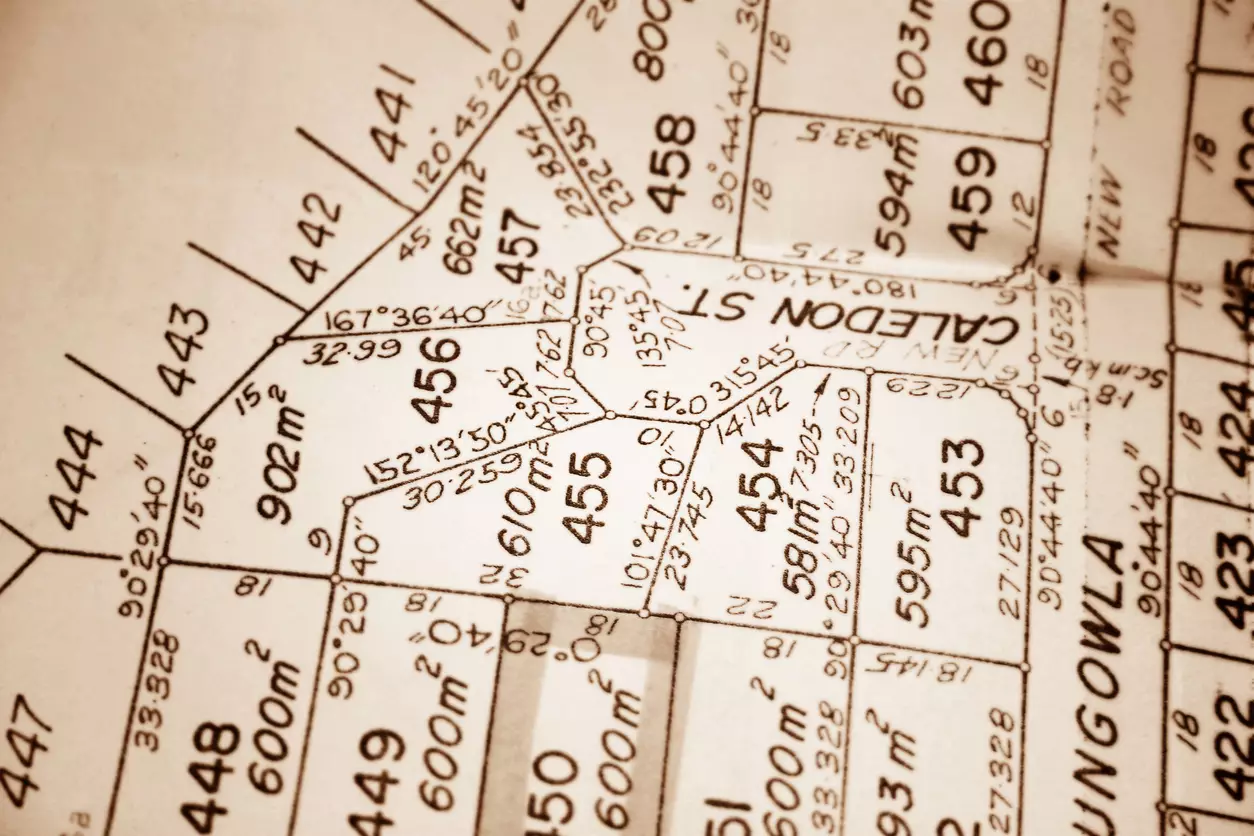
Not quite. A plat map shows general lot divisions in a neighborhood. A property survey is more detailed and specific to your lot, including measurements, structures, and legal features. Look for a surveyor’s stamp and title block to confirm that the document you have is an actual, official survey.
My Survey Isn’t Online. How Can I Get It?
If online searches fail, reach out to your title company, mortgage lender, or the original surveyor. If none of these sources have a copy of the survey, then you may have to get a licensed land surveyor to create or recertify one.
How Will I Know I Have Found An Official Survey?
An official survey will have a title block showing the surveyor’s name, license number, and date. It will also include measurements, bearings, and boundary lines, show structures, fences, and easements, and contain a stamp or seal/signature from the surveyor. If the document you have looks more like a map or assessor sketch with no surveyor information, then it’s very likely not a legal survey.

Elena Novak leads real estate research and analysis at PropertyChecker.com, where she digs into housing trends, tracks property data, and unpacks investment strategies across the U.S. With a background in flipping homes and a degree in Business and Real Estate Development, she brings a practical, hands-on approach to market analysis. Elena is especially skilled at uncovering hidden property value and guiding both homeowners and investors through shifting market conditions. She's also passionate about sustainable design and smart home innovation. When she's not analyzing the market, she's probably knee-deep in a DIY project, scouting vintage décor, or building something new in her workshop.
Search Property & Deed Records
Table of Contents
- How to Find Your Property Survey Online
- Step 1: Check Your Own Records First
- Step 2: Search Your City or County’s GIS or Property Records Portal
- Step 3: Check the County Recorder, Assessor, or Land Records Website
- Step 4: Use Trusted Online Platforms (Pros & Cons)
- Step 5: Contact Your Title Company or Mortgage Lender
- Step 6: If All Else Fails, Hire a Licensed Surveyor
- When You Actually Need to Order a New Property Survey
- How to Confirm You Found the Right Document
- FAQs
- Where Should I Start If I Need to Find My Property Survey
- How Do I Know If My Survey Is Already Included in My Closing Documents?
- Can I Find My Property Survey Online for Free?
- What Is a GIS Portal and How Do I Use It?
- Is a Plat Map the Same as a Survey?
- My Survey Isn’t Online. How Can I Get It?
- How Will I Know I Have Found An Official Survey?