Can a Jointly Owned Property Be Sold by One Owner?

Table of Contents
- Can a Jointly Owned Property Be Sold by One Owner?
- What Is Joint Tenancy?
- Time
- Title
- Interest
- Possession
- Joint Tenancy vs. Tenants in Common: What’s the Difference?
- Can a Jointly Owned Property Be Sold by One Owner?
- What Happens If One Owner Wants to Sell and the Other Doesn’t?
- Partition Lawsuits
- What Happens When One Joint Owner Dies?
Joint property ownership makes a lot of sense at the start. Two people share the hefty initial investment, mortgage, and responsibilities. This arrangement is useful for spouses buying their first home together, siblings inheriting an estate, or friends investing in the rental market.
But people’s situations always change. A couple may divorce, or one of the owners may need to relocate for work. Suddenly, the jointly owned property becomes a burden that must be addressed before moving on.
So, one of the owners tries to sell the property without the other’s permission. They may set up a listing online and schedule showings, but can they close the deal on a jointly owned property on their own?
What Is Joint Tenancy?
Joint tenancy is a type of property co-ownership in which two people share an undivided interest in the property. Both owners’ names appear on the deed, with each one owning the same number of shares in the property, regardless of who paid more toward the purchase.
Joint tenants maintain the full right to occupy and use the property. However, they are also equally liable for the financial aspects of ownership. Each owner is responsible for the mortgage payments, property taxes, and maintenance costs.
If one tenant fails to pay, the other must make up the difference.
In general, there are four conditions for the formation of a joint tenancy: time, title, interests, and possession. Laws vary by state, and some include additional requirements.
Time
One unique aspect of joint tenancy is that all tenants must acquire their ownership rights simultaneously. This typically occurs naturally when spouses or friends purchase a house together.
The owners do not have to sign their paperwork at the same time, but their ownership rights must become active together at closing. Joint tenancy does not occur if one person already owns the home and the other person is added afterward.
Title
All of the joint tenants’ ownership interests must appear on the same title. This requirement means that the same deed must list all joint tenants as co-owners. Joint tenancy is not limited to two people, but all names must be present on the document.
These names allow lenders and other institutions to track down all owners for their financial obligations. For example, a bank may use the deed to collect on defaulted mortgage payments. The title requirement assigns greater accountability to all owners.
Interest
A person’s “interest” in a property refers to their percentage of ownership. A 30 percent interest in a million-dollar home would be $300,000.
Joint tenancy requires that all owners hold an equal interest in the property. Married couples split their interest in half. If four friends buy a property together, each would have a 25 percent interest under joint tenancy.
Possession
All tenants in a joint tenancy have equal rights over the property. They can go wherever they want within the property, and major decisions that affect the property’s value cannot be made unilaterally.
Joint Tenancy vs. Tenants in Common: What’s the Difference?
Joint tenancy and tenancy in common are methods of co-ownership of a property. However, each one caters to different situations.
People file for joint tenancy to ensure equal distribution of property rights and financial obligations. Joint tenancy also comes with built-in Rights of Survivorship, meaning that a decedent’s shares of the property automatically transfer to the other owners without going through probate.
Tenants in common does not require that ownership shares be equal or that all parties obtain ownership at the same time. One owner can own 60 percent of the shares while the other two split the remaining 40 percent.
Additionally, an ownership agreement can begin as a joint tenancy and later transform into a tenants-in-common situation.
For example, a two-person joint tenancy may introduce a third owner to cover rising costs. The ownership agreement becomes tenants in common because the third owner joined after the first two owners.
Can a Jointly Owned Property Be Sold by One Owner?

In most cases, joint tenants cannot sell the entire property without the consent of all the other owners. Each owner has equal ownership rights, meaning major decisions, such as selling the property, require unanimous agreement.
However, a joint tenant may sell, gift, or transfer their ownership interest without the consent of the other joint tenants. This process is known as “Conveyance.”
The new buyer enters into the arrangement under a tenancy-in-common agreement and assumes the seller’s interest. A tenant may also choose to sell their interest to the remaining owners, if the remaining owners agree.
Finding a buyer for conveyance is challenging. Most buyers do not want to purchase a percentage of a house, particularly when the other owners are complete strangers. As a result, these sales may suffer from fewer and lower offers.
Lastly, while owners cannot completely block another from selling their interest, they may have the power to review potential buyers. The original purchase agreement may include a stipulation that new buyers must be vetted before the sale. This protection prevents the remaining owners from being forced into a partnership with an untrustworthy or undesirable buyer.
If there is a mortgage on the property, the lender’s approval may also be required before any ownership changes occur. The mortgage agreement may restrict transfers without consent.
What Happens If One Owner Wants to Sell and the Other Doesn’t?
Selling an interest is much more challenging than selling a complete property. It may not be feasible to sell your interest for a fair price, leaving selling the entire property as the only option.
A house can become contentious when one owner cannot convince the others to sell. There are also many reasons not to sell. They may want to wait for the property to appreciate or leverage it for future opportunities.
Before taking any formal action, candid communication is essential. While a conversation may not change someone’s mind, it will reveal their stance and reasoning, allowing you to find a middle ground.
One option is for the owner who wants to keep the property to buy out the other’s share. This allows one person to walk away with cash while the other becomes the sole owner. The owner pushing for the sale can also agree to take a smaller percentage, within reason.
If agreement cannot be reached, the matter may eventually require legal intervention.
Partition Lawsuits
Owners have two options to force the sale of the entire property. Partition lawsuits can compel resistant owners to agree to sell. The court also has the power to split a single property into multiple parcels, allowing one owner to sell their share.
- Partition by Sale: Forces a property sale and splits the earnings according to each person’s interest.
- Partition in Kind: Most common with undeveloped property. The court divides one lot into several smaller lots. Each owner can sell their assigned lots independently.
Partition lawsuits are most common among divorced couples who were unable to amicably split the estate. It is also useful in inheritance disputes when one beneficiary is emotionally attached to the property and unwilling to sell.
What Happens When One Joint Owner Dies?
In a typical situation, when someone passes away, their property is placed in probate as part of their estate. The estate is distributed according to the decedent’s Will or split among surviving family members if a Will is not present. Either option can take multiple months or years.
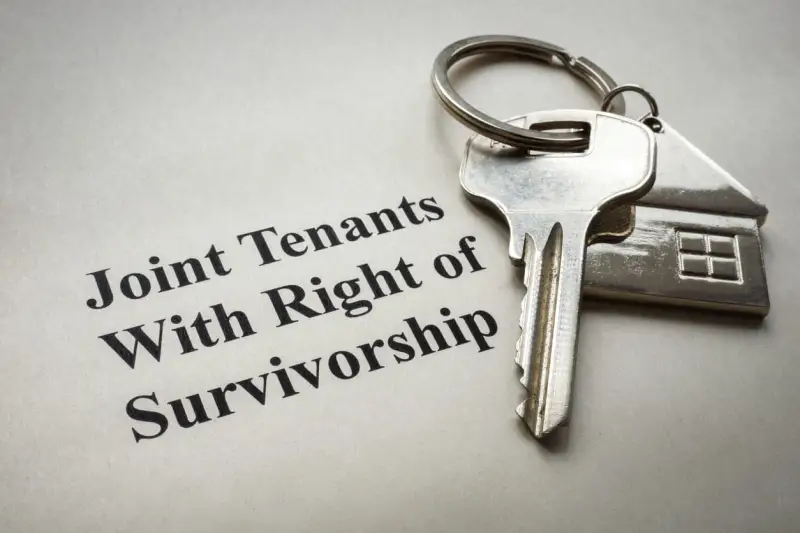
One of the greatest advantages of joint tenancy is that it allows the surviving owners to skip the probate process. Joint tenancy has a built-in right of survivorship, meaning that the decedent’s interest is automatically distributed between the other owners.
For example, if there are two names on the deed and one person dies, the surviving spouse automatically becomes the sole owner upon the death of their partner. The spouse does not have to contact heirs or get the probate court’s approval for the transfer.
Once the transfer is complete, the surviving owner can sell, refinance, or otherwise manage the property as the sole owner.
However, some joint tenant owners may see the right of survivorship as a downside. They may want to leave their shares to a family member upon their death, but cannot due to the joint tenancy. It is possible to remove the right of survivorship, but doing so requires consent from the other owners.
Joint tenancy offers a straightforward way for two or more people to share property equally, with the added benefit of the right of survivorship. It works well when owners are aligned in their goals and want to commit to an equal partnership.
However, when one owner wants to sell, and the other does not, things become more complicated. In most cases, a joint tenant cannot sell the entire property on their own. They may be able to sell their ownership interest, but doing so can change the ownership structure and create new challenges.
Clear communication and cooperative solutions are often the most effective ways to move forward when a joint tenancy runs its course.

Elena Novak leads real estate research and analysis at PropertyChecker.com, where she digs into housing trends, tracks property data, and unpacks investment strategies across the U.S. With a background in flipping homes and a degree in Business and Real Estate Development, she brings a practical, hands-on approach to market analysis. Elena is especially skilled at uncovering hidden property value and guiding both homeowners and investors through shifting market conditions. She's also passionate about sustainable design and smart home innovation. When she's not analyzing the market, she's probably knee-deep in a DIY project, scouting vintage décor, or building something new in her workshop.
Search Property & Deed Records
Table of Contents
- Can a Jointly Owned Property Be Sold by One Owner?
- What Is Joint Tenancy?
- Time
- Title
- Interest
- Possession
- Joint Tenancy vs. Tenants in Common: What’s the Difference?
- Can a Jointly Owned Property Be Sold by One Owner?
- What Happens If One Owner Wants to Sell and the Other Doesn’t?
- Partition Lawsuits
- What Happens When One Joint Owner Dies?