What Is a Quiet Title Action and When Do You Need One

Table of Contents
- What Is a Quiet Title Action and When Do You Need One
- What Is a Quiet Title Action?
- Title vs. Deed
- What Situations Require a Quiet Title Action?
- You Inherited the House, But Not Everyone Agrees Who Should Have It
- The Mortgage Is Paid Off, But the Lien Is Still on Record
- You Bought the House at a Tax Sale or Foreclosure, and the Old Owner Won't Fully Let Go
- Your Neighbor's Fence, Driveway, or Survey Doesn't Match Yours
- A Deed From Years Ago Was Never Properly Recorded
- How Does a Quiet Title Action Affect Buying or Selling a Property?
- How Long Does It Usually Take and What Does It Cost?
- FAQs
- What does “quiet title” mean?
- What situations usually require a quiet title action?
- What is the difference between a quiet title action vs a quitclaim deed?
- Do you need a quiet title action before selling a property?
- How do I know if a property has a title problem?
Many properties are owned by more than one person. On paper, title ownership can be muddied by lender disputes, adverse possession, or the presence of multiple heirs in probate. Any of these problems can make it difficult to sell the property or refinance.
However, you may believe these claims are unjustified. In these cases, a quiet title action can clear up title confusion. Executing a quiet title action can take a long time and comes with various costs, so property owners must be sure it is the right choice before proceeding.
What Is a Quiet Title Action?
A quiet title action is a legal action that removes other claims on a property and establishes clear ownership. The term “quiet” is used because the process silences competing claims and prevents future noise for the owner.
There are many ways to remove problematic claims on a title that do not require going to court, such as buying out a co-owner or paying off a lien. A quiet title action occurs only when one party files against another in a court of law, so it is typically a last resort.
Each state has different rules for quiet title actions, but there are two broad types: specific and “against the world” actions.
Specific actions are directed toward one or more individuals. These actions seek to remove claims from known entities, such as a money lender or a sibling.
An “against the world” action refers to quiet title actions that remove any competing claim on the title, whether known or not. In these cases, the title is protected even if someone later asserts a claim to the property.
Title vs. Deed
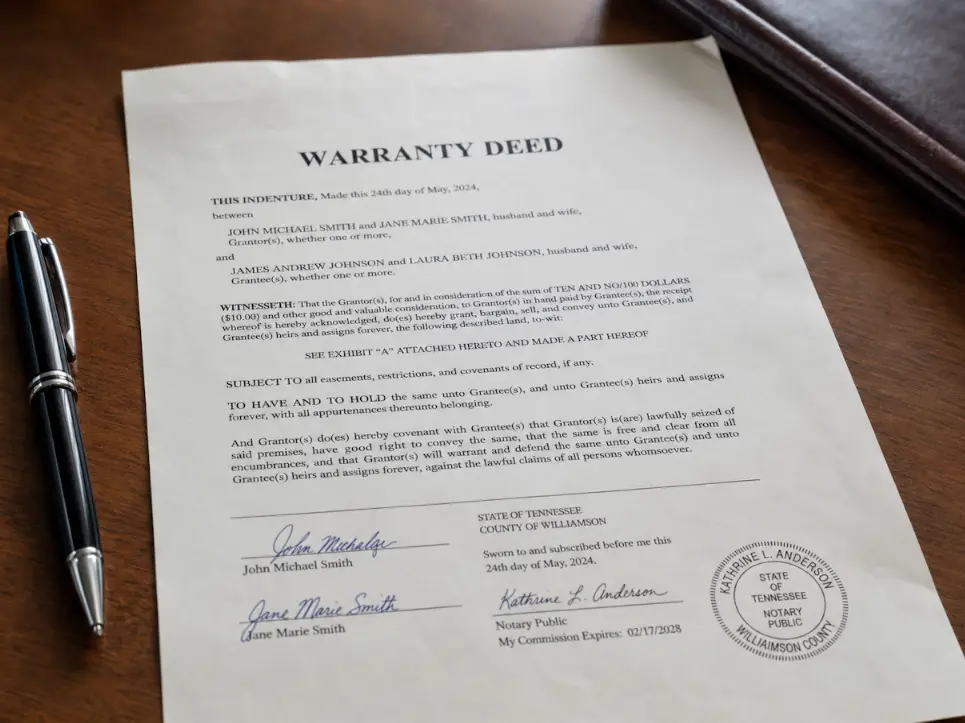
The terms title and deed are often used interchangeably, but they are not the same. A deed is a physical document naming the homeowner. It is used to transfer ownership between parties, but it does not cover every interest in the property.
A title is more like a “concept” of ownership. Titles include every claim on the property, including the homeowner, mortgage liens, encumbrances, and beneficiaries. A quiet title aims to remove all other forms of ownership over the property, aside from your own.
What Situations Require a Quiet Title Action?
Quiet title actions typically come up when an owner wants to sell their property. Additional title claims must be addressed before closing, as they make it difficult for buyers or sellers to obtain title insurance.
That said, a quiet title action is often used by homeowners who believe the competing interests are mistaken or misguided. These property owners go to court because they were unable to negotiate the other parties out of their claim.
The most common reasons for quiet title actions include the following:
You Inherited the House, But Not Everyone Agrees Who Should Have It
Say your parent passes away, and a sibling insists they were promised the house, even though the will names you as the sole beneficiary. Or maybe there was never a will at all, and now everyone has a different idea of who's entitled to what. A quiet title action can settle this, legally establishing who actually owns the property so the dispute can't resurface later.
Even when the family agrees on who should get the house, there's a separate, quieter version of this problem: the title itself was never legally transferred out of the parent's name. If the property never fully completed probate, the county's records will still show a clouded title, even if nobody in the family is actually fighting about it.
The Mortgage Is Paid Off, But the Lien Is Still on Record
Sometimes a loan is already paid off, but the lien was not properly removed from public records. This means insurance companies and banks will see the existing lien during their investigations of the property.
These unresolved debts can often be dealt with by working with the other party. However, problems may arise if you are on a tight schedule or the lender no longer exists. In these cases, it may be necessary to utilize a quiet title action to remove the false mortgage or lien.
You Bought the House at a Tax Sale or Foreclosure, and the Old Owner Won't Fully Let Go
Properties purchased through tax sales or foreclosures may experience trouble due to the previous owner’s rights or unknown financial claims. The banks reselling these houses often do not know the property’s full history and are rushing the sale to recoup their losses. A quiet title action can confirm the new owner's rights and eliminate claims tied to the previous owner, though investors buying at tax sales face a more layered process to get there.
Your Neighbor's Fence, Driveway, or Survey Doesn't Match Yours
Property surveys outline each lot’s precise boundaries. Unclear or conflicting surveys can create property disputes between neighbors. These disputes can get heated, particularly if one neighbor has built a structure or a fence that encroaches on the other’s land.
Additionally, there may be a historical easement that allows a neighbor to use your land as a driveway. These easements, and similar encumbrances, often expire when the previous owner moves away, but this expiration is not always reflected in official records. Quiet title actions can resolve these inconsistencies by clarifying boundaries and access rights.
A Deed From Years Ago Was Never Properly Recorded
Say the house was sold back in 2005, but for whatever reason, the deed was never actually filed with the county. Decades later, you go to sell or refinance, and the title search turns up a legal owner who isn't you, at least not on paper. This kind of gap in the chain of title, the property's chronological ownership history, can happen from one missed filing or a clerical error, and it's more common than people expect.
Most states will let you fix this by proving the previous owner willingly completed the original sale. But if that owner can't be found, or won't cooperate, a quiet title action becomes the only way to legally close the gap and confirm you're the rightful owner.
How Does a Quiet Title Action Affect Buying or Selling a Property?
In real estate, a clear title instills confidence in lenders, insurance companies, and buyers. They all want assurance that no one else will step forward and rope them into a troublesome ownership dispute. It is not impossible to sell a property with a clouded title, but it is drastically more difficult.
Properties with title problems are more likely to experience delays and canceled transactions. Lenders may refuse to finance sellers, significantly reducing the pool of potential buyers, and giving them negotiating leverage. The property may appeal only to cash buyers willing to accept the additional risk.
Clearing title through a quiet title action often turns a difficult-to-sell property into one that can qualify for traditional financing and standard market pricing. Without it, sellers may have to accept discounted offers due to uncertainty.
How Long Does It Usually Take and What Does It Cost?

Timelines and costs will vary depending on the complexity of the title issue.
Relatively simple cases can be handled in a month, while more complicated situations can drag out for years. The duration can depend on factors such as how many claims must be addressed, how long it takes to locate each party, and the extent of the errors in the public record.
A quickly handled case would be a boundary dispute between neighbors. One neighbor may reference a 2008 land survey, while the other uses a 2015 survey. One party will file with the court, and let the court decide which one is more valid. Some extra time may be allotted to conduct a new geographical survey, but the entire process is likely to be limited to a few months.
A more drawn-out quiet title action may involve a disgruntled family member fighting over a probate property. This person may take the longest to respond to each communication, causing the process to drag on for years.
Costs also vary widely, depending on how long the action lasts and what tasks are required to resolve it. Costs may include hiring an attorney, performing property inspections, court filing fees, title research, or consulting an accountant.
In general, the more tangled the ownership history, the more time and resources it takes to fully straighten it out.
A quiet title action is not something most property owners think about until a sale, refinance, or inheritance brings hidden problems to light. When ownership looks unclear on paper, this legal process helps restore certainty.
By clearing old claims and confirming rightful ownership, a quiet title action transforms a risky transaction into one that can move forward with confidence.
FAQs
What does “quiet title” mean?
A quiet title means that the title is free of problematic claims and that the courts have confirmed the property’s ownership.
What situations usually require a quiet title action?
Quiet title actions are used when competing claims cannot be resolved through conventional means or arise from an error. Some use cases for a quiet title action include broken chain of title, contentious boundary disputes, and improperly recorded liens.
What is the difference between a quiet title action vs a quitclaim deed?
No, a quitclaim deed transfers one party’s interest to another. A quitclaim deed is just one possible step to clearing a title.
Do you need a quiet title action before selling a property?
No, there are many ways to resolve title clouds without going to court. Homeowners can pay off liens, negotiate more acceptable easements, or fix clerical errors with the county office.
How do I know if a property has a title problem?
Title companies and lenders often catch title problems during their investigations. Homeowners can order their own title search or check public property records for warning signs, such as old liens, property owner names, and existing encumbrances.

Elena Novak leads real estate research and analysis at PropertyChecker.com, where she digs into housing trends, tracks property data, and unpacks investment strategies across the U.S. With a background in flipping homes and a degree in Business and Real Estate Development, she brings a practical, hands-on approach to market analysis. Elena is especially skilled at uncovering hidden property value and guiding both homeowners and investors through shifting market conditions. She's also passionate about sustainable design and smart home innovation. When she's not analyzing the market, she's probably knee-deep in a DIY project, scouting vintage décor, or building something new in her workshop.
Search Property & Deed Records
Table of Contents
- What Is a Quiet Title Action and When Do You Need One
- What Is a Quiet Title Action?
- Title vs. Deed
- What Situations Require a Quiet Title Action?
- You Inherited the House, But Not Everyone Agrees Who Should Have It
- The Mortgage Is Paid Off, But the Lien Is Still on Record
- You Bought the House at a Tax Sale or Foreclosure, and the Old Owner Won't Fully Let Go
- Your Neighbor's Fence, Driveway, or Survey Doesn't Match Yours
- A Deed From Years Ago Was Never Properly Recorded
- How Does a Quiet Title Action Affect Buying or Selling a Property?
- How Long Does It Usually Take and What Does It Cost?
- FAQs
- What does “quiet title” mean?
- What situations usually require a quiet title action?
- What is the difference between a quiet title action vs a quitclaim deed?
- Do you need a quiet title action before selling a property?
- How do I know if a property has a title problem?