How to Verify a House’s Legal Description on the Deed
Table of Contents
- How to Verify a House’s Legal Description on the Deed
- What Is the Legal Description of a Property?
- Where to Find the Legal Description of a Property
- The Deed
- Title Paperwork
- County Recorder or Land Records Office
- Property Tax Documents
- Common Types of Legal Property Descriptions
- Metes-and-Bound Descriptions
- Lot-and-Block Descriptions
- Rectangular Survey Descriptions
- How to Read a Legal Description Without Getting Lost
- Reading a Metes-and-Bounds Legal Description
- Reading a Lot-and-Block Legal Description
- Reading a Rectangular Survey Legal Description
- Common Mistakes
- How to Verify the Legal Description on the Deed
- Step 1: Pull the Most Recently Recorded Deed
- Step 2: Confirm You Have the Full Legal Description
- Step 3: Match It to At Least One Other Reliable Record
- Step 4: Compare It to the Property You Occupy
- FAQs
- What is the legal description of a deed?
- Who determines a legal description of property?
- What is a method of identifying the legal description of a property called?
- Is a parcel number the same as a legal description?
- Can the legal description change over time?
- What should I do if the legal description on my deed looks wrong?
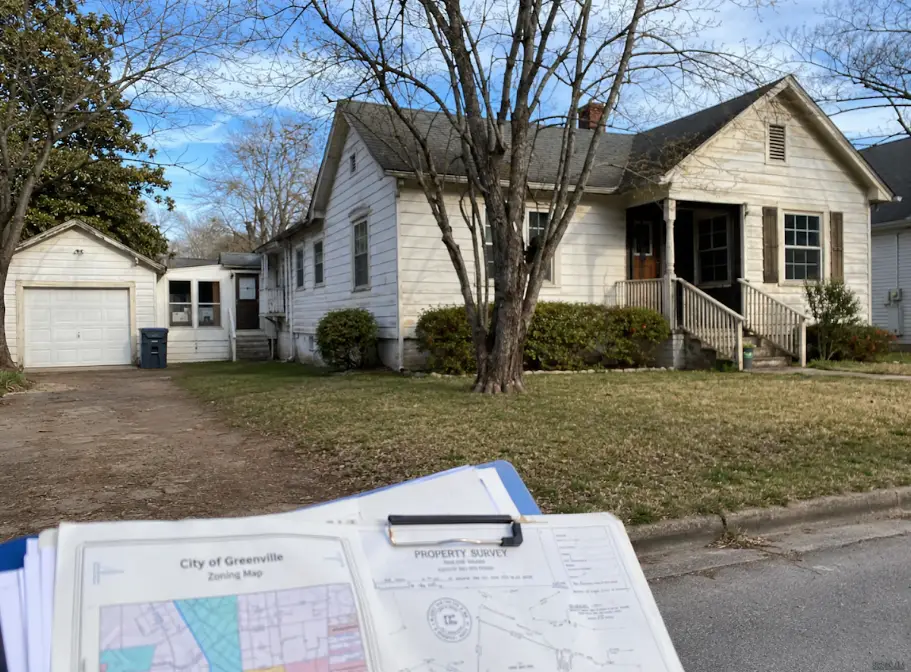
Looks can be deceiving when purchasing a home. The fence in front may surround a large yard, but that doesn’t necessarily mean the entire space belongs to the homeowner. It is possible that the fence encroaches on the neighbor’s land, creating a boundary dispute you’ll inherit after closing.
Buyers can avoid these types of problems by verifying the property’s legal description on the deed. It may look like an unnecessary and boring explanation, but the deed’s precise language is how the government defines land ownership and settles disputes.
Homeowners should also consult their legal description before planning expansions or outdoor renovations. Luckily, you don’t need to be a professional surveyor to understand it.
What Is the Legal Description of a Property?
The deed’s legal description refers to the precise language used to define the location and boundaries of a specific parcel of land. A legal description is not the same as a street address or other government-assigned designation.
The issue with relying on identifiers such as addresses or lot references is that these methods are too vague. Even metrics like acreage are not specific enough because they do not identify where the property starts and ends.
A legal description must be focused enough that there is no reasonable doubt about which property it is describing.
Where to Find the Legal Description of a Property
Legal descriptions are used when greater specificity is required than an address provides. Government agencies use these descriptions in the Public Land Survey System (PLSS), and title companies sometimes use them in policies.
The Deed
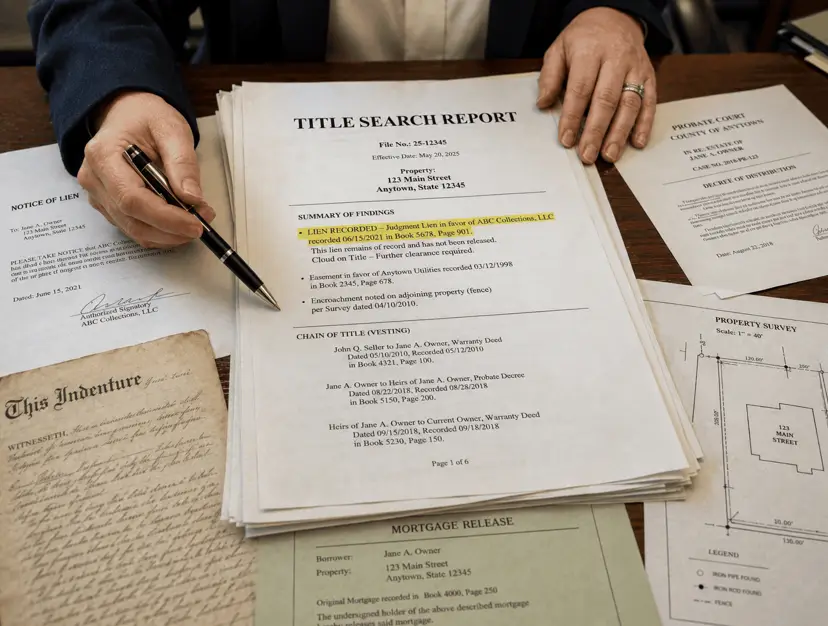
The recorded deed should be the first place to look for a legal property description. Part of transferring land ownership is confirming that both parties intend to buy and sell a specific piece of real estate. The legal description provides this confidence.
In most cases, the description appears directly on the deed but may also be referenced in a separate document. For example, “See Exhibit B.”
Title Paperwork
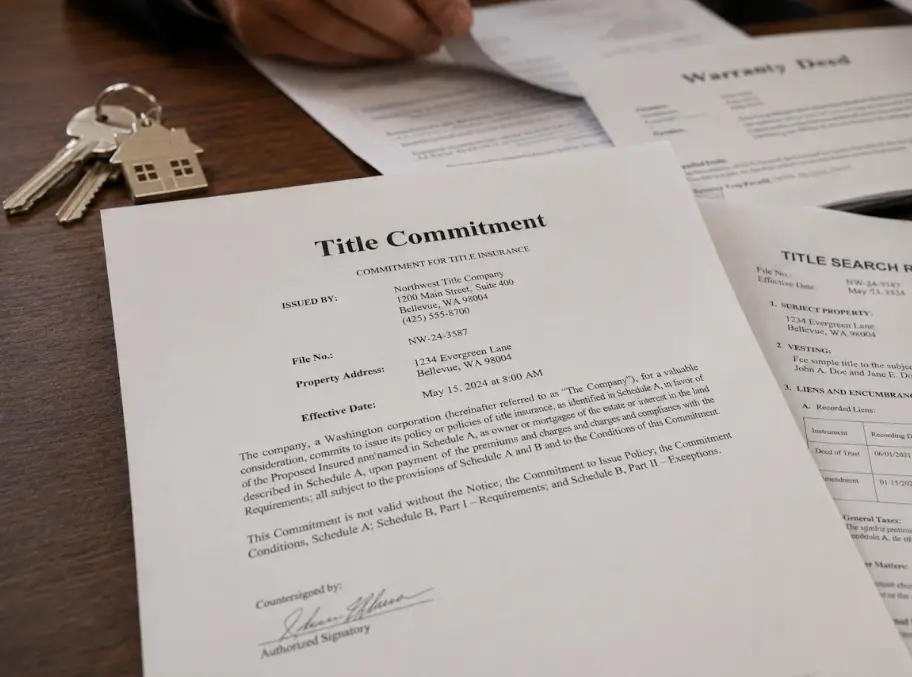
Title insurance is typically required to secure a mortgage. The issuing company wants to ensure they are inspecting and covering the correct property, often referring to it by its legal description at least once.
Most title insurance companies allow homeowners to view their policy documents through an online portal. Homeowners may also call the company to receive an email or paper copy.
County Recorder or Land Records Office

Copies of your deed can be obtained at the local county recorder’s office. Many jurisdictions also provide an online land record database that will let you print an unofficial copy of a deed for free. These databases are typically searchable with the homeowner’s name or plot ID.
Online sources will show most or all of the property’s previous owners. Ensure that you are viewing the most recently recorded deed, as boundary lines and descriptions may change over time.
Property Tax Documents
Property tax bills may include a shortened legal description to ensure the bill is sent to the correct lot. However, these documents are not reliable and should be used primarily for cross-checking against another source.
Common Types of Legal Property Descriptions
There are three primary methods for describing land, although most descriptions utilize elements from both. These methods are called “Metes-and-Bounds” and “Lot-and-Block” descriptions.
Metes-and-Bound Descriptions
A metes-and-bounds legal description measures a property’s boundaries based on a designated focal point. Each boundary line is precisely described through cardinal direction, angle, and distance from the focal point.
Example: Commence at the NE corner of the NW 1/2 of Section 14, Township 3 North, Range 2 West; thence South 210 feet; thence West 150 feet; thence North 210 feet; thence East 150 feet to the Point of Beginning.
Lot-and-Block Descriptions
A lot-and-block description breaks a named subdivision into numbered lots and blocks, thus the name. These numbers are used to more precisely reference the property on a large map, without the complexity of the metes-and-bounds method.
Example: Lot 12, Block 2, Westbrook Creek Estates Addition, Tarrant County, Texas.
Rectangular Survey Descriptions
The rectangular survey method uses the Public Land Survey System (PLSS) to describe properties across much of the United States. This system separates large areas into a grid composed of townships and sections.
Each section of the grid is referenced in relation to a vertical and horizontal line on the grid. The vertical line is called the Principal Meridian, and the horizontal one is called the Base Line.
Example: The Southwest ¼ of Section 9, Township 1 South, Range 1 East of the Principal Meridian.
How to Read a Legal Description Without Getting Lost
Legal descriptions are formatted for specificity rather than readability. At first glance, they look like gibberish, but recognizing their format and common acronyms makes them much easier to understand.
Reading a Metes-and-Bounds Legal Description
Metes-and-bounds legal descriptions are more challenging to read than lot-and-block types. These legal descriptions start by establishing a starting position on one corner of a boundary line.
This point can be marked by any grounded monument, such as a fountain or a marked pipe installed by the surveyor. Most descriptions will start with a phrase such as “beginning at…”
The description draws the first boundary line originating from this starting position. For example, the text may say “thence 60° North and 20° East for 170 feet.” The word “thence” indicates that a new boundary line is starting.
In many cases, these legal descriptions reference boundary lines established in previous surveys. So, a description might refer to one of your boundary lines as “the line common to the land of John Marburry.”
Descriptions for larger land properties may also reference land sections when setting a boundary line. These references use the Public Land Survey System (PLSS) format to describe separate parts of a larger plat.
Reading a Lot-and-Block Legal Description
Lot-and-Block legal descriptions are comparatively straightforward. When a developer subdivides land into blocks and lots, they must create a new plat map that defines each section. Each block and lot is numbered, allowing them to be easily identified in a legal description.
Example: Lot 12, Block 2, Westbrook Creek Estates Addition, Tarrant County, Texas.
The above example refers to Lot 12, which is within Block 2 of the Westbrook Creek Estates subdivision.
Reading a Rectangular Survey Legal Description
Rectangular survey legal descriptions are typically used for large chunks of rural or undeveloped land. Its multiple parts convey the property’s precise location, boundary lines, and size.
A township covers 6 square miles, and each township is made up of 36 sections, each measuring 1 square mile. Most private properties are described as a quarter or a quarter-quarter of a section.
Example: The Southwest ¼ of Section 9, Township 1 South, Range 1 East of the Principal Meridian.
This example refers to a property measuring ¼ square mile (160 acres) located in section 9 of a township. The township sits one row below the Base Line and one column to the right of the Principal Meridian.
Common Mistakes
The most common mistake when looking for a property’s legal description is to confuse the street address with the legal description. Street addresses are a convenient way to differentiate two properties, but do not include any measurements for their boundary lines.
Another easy mistake is to skim the description’s key identifiers. Misreading a block number or PLLS code can lead you to check the wrong property. These numbers and acronyms can be confusing, but it is worth taking the time to confirm you are looking at the correct area.
How to Verify the Legal Description on the Deed
There are many reasons to verify the legal description of a deed. You may want to confirm that your closing documents are referencing the correct property or make sure that your fence doesn’t encroach on a neighbor’s yard.
Verifying the legal description involves checking your deed and comparing your land to the description it contains. The most difficult type of description to confirm is metes-and-bounds.
Step 1: Pull the Most Recently Recorded Deed
Old deeds may contain outdated descriptions due to shifting boundary lines or nonexistent reference points. The most recently recorded deed should appear at the top of the results page on your county’s online database, with the name matching the current owner.
Step 2: Confirm You Have the Full Legal Description
The full legal description may not be immediately visible on the deed. Some properties reference the legal description in a separate document and provide only a summary on the deed.
Search for language on the deed referencing another ‘Exhibit’ or attachment. You may need to request these documents separately from the county recorder’s office.
Step 3: Match It to At Least One Other Reliable Record
The legal description may have been incorrectly recorded on the deed, creating a potential title issue. You can gain more certainty that the deed’s description is correct by cross-matching it against a prior deed in the chain of title, your title policy, or county GIS data.
Step 4: Compare It to the Property You Occupy
After cross-referencing other sources, you must ensure the description matches the physical land. Confirm whether the lot number and property sizes match. GIS data is typically an easy way to assess the accuracy of rectangular surveys and lot-and-block descriptions.
Physically confirming a metes-and-bounds description can be more challenging, particularly with larger properties. Homeowners may be able to “walk” smaller properties with boundary lines shorter than a hundred feet. However, measuring out multi-acre property lines on your own is unfeasible.
It may be necessary to hire a professional surveyor to renew the legal description. These professionals can be contacted through title companies, real estate attorneys, or directly.
Legal descriptions can look intimidating, but they serve a simple purpose: to clearly define which land a transaction refers to. Verifying these descriptions requires prior knowledge of various US surveying methods and formatting guidelines. However, once you understand the basics, even an amateur can correctly read their legal description.
FAQs
What is the legal description of a deed?
The legal description is the text on a deed that specifies the land’s exact boundaries, size, and location.
Who determines a legal description of property?
Legal property descriptions are typically drafted by a licensed surveyor and recorded with the county. These descriptions are created while referencing plats drawn by developers or government bodies.
What is a method of identifying the legal description of a property called?
There are three primary types of legal descriptions: lot-and-block, rectangular surveys, and metes-and-bounds descriptions.
Is a parcel number the same as a legal description?
No, a parcel number is not the same as a legal description, nor is it a physical address. Parcel numbers are names used to distinguish properties and do not inherently include any other specific identifiers.
Can the legal description change over time?
Yes, legal descriptions can be updated during title transfers, during land subdivision, or during court-ordered boundary corrections. Any change must be properly recorded.
What should I do if the legal description on my deed looks wrong?
Homeowners should not ignore an erroneous legal description. This problem could spiral into title issues, hindering a future sale. It can also cause boundary disputes with neighbors to drag on longer than necessary.

Elena Novak leads real estate research and analysis at PropertyChecker.com, where she digs into housing trends, tracks property data, and unpacks investment strategies across the U.S. With a background in flipping homes and a degree in Business and Real Estate Development, she brings a practical, hands-on approach to market analysis. Elena is especially skilled at uncovering hidden property value and guiding both homeowners and investors through shifting market conditions. She's also passionate about sustainable design and smart home innovation. When she's not analyzing the market, she's probably knee-deep in a DIY project, scouting vintage décor, or building something new in her workshop.
Search Property & Deed Records
Table of Contents
- How to Verify a House’s Legal Description on the Deed
- What Is the Legal Description of a Property?
- Where to Find the Legal Description of a Property
- The Deed
- Title Paperwork
- County Recorder or Land Records Office
- Property Tax Documents
- Common Types of Legal Property Descriptions
- Metes-and-Bound Descriptions
- Lot-and-Block Descriptions
- Rectangular Survey Descriptions
- How to Read a Legal Description Without Getting Lost
- Reading a Metes-and-Bounds Legal Description
- Reading a Lot-and-Block Legal Description
- Reading a Rectangular Survey Legal Description
- Common Mistakes
- How to Verify the Legal Description on the Deed
- Step 1: Pull the Most Recently Recorded Deed
- Step 2: Confirm You Have the Full Legal Description
- Step 3: Match It to At Least One Other Reliable Record
- Step 4: Compare It to the Property You Occupy
- FAQs
- What is the legal description of a deed?
- Who determines a legal description of property?
- What is a method of identifying the legal description of a property called?
- Is a parcel number the same as a legal description?
- Can the legal description change over time?
- What should I do if the legal description on my deed looks wrong?