How to Source and Evaluate High-Value Real Estate Investment Opportunities

One of the keys to successfully investing in real estate is accurately valuing the property and its potential return. High-value real estate opportunities are attractive because they offer significant potential for capital appreciation, wealth preservation, steady passive income, substantial tax benefits, and strong portfolio diversification. These properties, often in prime locations, tend to perform resiliently even during economic struggles.
Sourcing and evaluation of high-value real estate go hand in hand because effective evaluation depends entirely on having quality options to assess. In contrast, successful sourcing requires a clear understanding of what constitutes a "good" opportunity in the current market. Properly sourcing options helps filter out properties with hidden issues (e.g., title problems, environmental concerns, zoning restrictions, etc.) and mitigates risk early in the investment process. Ultimately, sourcing is the engine that finds potential value, and evaluation is the filter that determines its true worth, making them two inseparable components of a successful real estate investment strategy.
Some of the ways that sourcing and evaluation are linked are as follows:
-
Defining the Search Criteria: Evaluation criteria directly support the sourcing strategy. Before you can look for a property, you need to know what you are looking for (e.g., specific cap rates, development potential, location metrics). Without clear evaluation benchmarks, sourcing is unfocused and inefficient.
-
Ensuring Deal Flow Quality: The goal of sourcing is not just to find any property, but to generate a flow of potential high-value opportunities that meet initial evaluation thresholds. This first assessment prevents wasted time on unsuitable properties.
-
Iterative Refinement: The process is cyclical. Early evaluation of sourced properties provides feedback that refines the sourcing parameters. For example, if initial evaluations consistently show that properties in a specific zip code fail to meet return hurdles, sourcing efforts can be redirected to more promising areas.
-
Competitive Advantage: The ability to quickly and accurately evaluate potential deals as they are sourced allows an investor to act decisively. In competitive markets for high-value real estate, speed in evaluation can be the difference between winning and losing a deal.
Professional real estate investment companies seeking real estate investment opportunities rely heavily on trusted data sources and tools like PropertyChecker to succeed.
How Real Estate Investment Companies Source Opportunities

Real estate investment companies, groups, and private networks discover opportunities through a combination of professional networks, proprietary data analysis, brokers, auctions, off-market deals, partnerships, real estate investment banking, and market visibility tactics to find both on-market and highly valued off-market deals. Some of the most effective sources are private real estate investment channels. The following are ways real estate groups and investors source high-value real estate investment opportunities.
Relationship-Based Sourcing
-
Broker Relationships: Building strong relationships with commercial real estate brokers (from major firms) is a primary method, as brokers facilitate a large percentage of transactions. The best, or "off-market," deals are often shared within these trusted professional networks before they become widely available.
-
Direct Outreach: Investment firms often engage in direct outreach to property owners to gauge interest in selling, especially for desirable off-market properties.
-
Existing Networks: Leveraging existing contact lists of owners, investors, and potential partners is a foundational strategy for generating leads and joint venture opportunities.
-
"Driving for Dollars": A grassroots tactic where investors physically scout target neighborhoods for potential properties (e.g., fixer-uppers) and then research and contact the owners directly.
-
Auctions: Specialty and high-value real estate auctions are another standard way to find real estate investment opportunities. Auction houses can often provide a lot of data about the property before the auction, including photos, inspection documents, and deed history.
Data & Technology-Driven Sourcing
-
Commercial Listing Sites: Companies monitor public online listing platforms such as LoopNet, CoStar, and CREXi to identify opportunities that brokers have shared publicly.
-
Proprietary Databases and Software: Many firms use in-house data teams and specialized real estate software (such as Real Capital Analytics or Reonomy) to analyze ownership information and transaction histories, and to identify properties with specific characteristics that suggest a high likelihood of a future sale (predictive analytics).
-
Market Research: Analysts conduct ongoing market research and data mining to stay ahead of trends, identify emerging sub-sectors (e.g., life sciences, industrial properties), and support investment decisions.
Institutional & Partnership Sourcing
-
Industry Events and Forums: Participating in industry conferences and events helps build the professional and private networks necessary to find deals.
-
Partnerships: Real estate private equity firms often partner with developers or other investment groups to pursue large-scale projects like new developments or major property repositioning efforts. Even private investors partner with others in the industry to gain access to tips and early access to available properties.
-
Tracking News & Transactions: Monitoring commercial real estate news sites (like Bisnow or The Real Deal) helps firms stay informed about recent transactions, the teams involved, and potential future opportunities in a given area.
By combining these diverse strategies, real estate investment companies generate a robust pipeline of potential assets to meet their investment goals and manage their portfolios across various property types.
Methods for Evaluating High-Value Properties
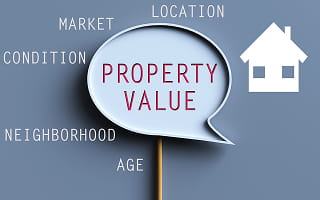
Evaluating high-value real estate involves a multi-faceted approach, combining Comparative Market Analysis (CMA) (comparing to recent sales), income approach metrics like Cap Rate and NOI for investment properties, and a thorough physical inspection to assess condition, along with analysis of location & market trends. Other methods include professional appraisals for an unbiased valuation, as well as examination of rental demand and renovation potential. You can also use helpful tools like a real estate investment calculator (e.g., PropertyChecker's Rental Value Calculator) and enter the appropriate criteria to get an opinion on the investment's viability.
Individual investors may use a quicker or simpler approach, whereas larger real estate investment groups or real estate investment banking organizations may have custom software or in-house teams to perform complex, deep analysis to find and select real estate investment opportunities.
Some key factors for evaluating high-value properties include:
-
Sales Comparison Approach (CMA): Compares your target property to similar ones ("comps") recently sold in the area (size, age, features, location). You then adjust for differences (upgrades, condition, date of sale) to justify the value.
-
Income Approach (for investment properties): Use Net Operating Income (NOI), Capitalization Rate (Cap Rate), and Gross Rent Multiplier (GRM) to evaluate the property's ability to generate ongoing income for current and future revenue.
-
Physical Inspection and Condition: Evaluate the structural integrity (foundation, roof, plumbing, electrical, etc.), updates/amenities (modern kitchens, baths, systems, etc.), and other things that impact value. A professional inspection is necessary to uncover hidden issues.
-
Location and Market Analysis: Carefully research micro-locations and consider crime rates, school quality, neighborhood vibes, and access to transportation and community amenities. Also factor in economic growth, new developments, and the local job market.
-
Professional Appraisal: Hire a reputable company for an unbiased, licensed professional's opinion of value, often required by lenders.
-
Risk Analysis: Anticipate market shifts, future maintenance, potential tenant issues (if rental).
-
Data-Driven Decisions: Use AVMs (Automated Valuation Models) for initial data, but verify with in-person analysis.
-
Consult Experts: Work with experienced real estate agents and property managers.
By combining these methods, you create a comprehensive valuation system that ensures you understand the property's potential, risks, and actual market value before investing significant capital.
Key Financial Metrics Every Investor Should Know

Real estate investors use specific financial metrics to evaluate opportunities, assess risk, and measure performance. The most important metrics every investor should know include Net Operating Income (NOI), Cash Flow, Capitalization Rate (Cap Rate), Cash-on-Cash Return, and Internal Rate of Return (IRR). Below is a snapshot of each core performance metric, along with an example of how it can help.
Net Operating Income (NOI)
This metric measures a property's profitability before accounting for financing costs. It is the total revenue (rent, parking fees, etc.) minus all operating expenses (maintenance, taxes, insurance, property management, and utilities).
The formula is Revenue - Operating Expenses.
Annual Income - $150,000
Operating Expenses - $75,000
Net Operating Income = $75,000
Cash Flow
The actual spendable money left over each month or year after all expenses, including mortgage payments and capital expenditures, have been paid. Positive cash flow is vital for sustainable, ongoing income.
The formula is Total Income - Total Expenses (including debt service)
Monthly Income - $50,000
Monthly Expenses (including mortgage payments) - $40,000
Monthly Cash Flow = $10,000
Capitalization Rate (Cap Rate)
The cap rate indicates the potential annual return on investment (ROI) if the property were purchased with all cash. It helps compare similar properties in the same market.
The formula is Net Operating Income ÷ Property Value
Formula: Cap Rate = NOI / Market Value
Cap Rate = $140,000 / $2,000,000 = 0.07
Cap Rate = 7.0% (0.07 x 100)
Cash-on-Cash Return:
This metric focuses on the actual cash invested (down payment, closing costs, renovation costs), not the total property value. It measures the annual pre-tax cash flow relative to the initial cash outlay.
The formula is Annual Pre-Tax Cash Flow ÷ Total Cash Invested x 100
Pre-Tax Cash Flow - $6,000
Total Cash Invested - $60,000
Cash-on-Cash Return = ($6,000 ÷ $60,000) × 100 = 10%
Return on Investment (ROI)
A comprehensive profitability metric that calculates the total net profit relative to the total cost of investment. It can factor in both ongoing cash flow and property appreciation over time.
The formula is (Net Return on Investment ÷ Cost of Investment) × 100
Total Cash Invested - $70,000
Total Annual Return - $18,000
Total ROI = 18,000/70,000 = $25.7%
Internal Rate of Return (IRR)
A more sophisticated metric that accounts for the time value of money, assessing the annualized effective compounded return over the entire life of the project. This is particularly useful for long-term real estate projects, as it accounts for future cash flows and the eventual sale proceeds.
Some additional metrics include Debt Service Coverage Ratio (DSCR), Gross Rent Multiplier (GRM), Loan-to-Value (LTV) Ratio, and Occupancy/Vacancy Rate.
By tracking these key performance indicators (KPIs), investors can make informed decisions, mitigate risks, and maximize returns from their real estate investments.
Use PropertyChecker's suite of real estate investment calculators to determine the taxes, value, mortgage payment, and rental value of a specific property.
Common Risks and Roadblocks in Property Evaluation

Common risks when evaluating property include data errors (outdated information, unpermitted renovations), market volatility, appraiser bias/subjectivity, physical defects (structural integrity, pests, condition), location issues (zoning, neighborhood trends), and financial/legal complexities (income miscalculation, regulations, etc.). Roadblocks often stem from relying too heavily on flawed data (like AVMs), neglecting unrecorded renovations, overlooking external factors, or failing to account for changing economic conditions, leading to inaccurate valuations and investment risks.
Common Risks When Investing in High-Value Real Estate
-
Data & Information Gaps: Incomplete records, unpermitted additions, inaccurate square footage, and outdated comparable sales data. A common mistake is overestimating rental income, which can significantly skew all your metrics. Failing to factor in vacancy rates can also considerably impact value.
-
Market Risks: Economic downturns, interest rate changes, localized market fluctuations, and liquidity issues.
-
Appraiser/Valuer Bias: Unintentional or intentional bias toward a neighborhood or property features that influences value.
-
Property Condition: Undetected structural issues (foundation, roof), pests (termites), or hidden damage from mold, fire, or floods.
-
Location & External Factors: Zoning changes, environmental risks (flood zones), and neighborhood decline. Misjudging market cycles could hurt you and cause you to overpay just before a market downturn.
-
Financial & Legal Risks: Miscalculating income/expenses, tax issues, regulatory hurdles, and title problems.
Common Roadblocks and Pitfalls
-
Over-reliance on AVMs: Automated models miss unique features or local nuances.
-
Ignoring the Physical: Failing to inspect beyond the surface for maintenance issues or concealed defects.
-
Emotional Involvement: Subjectivity clouding judgment, especially for personal residences.
-
Ignoring Unrecorded Renovations: Additions/improvements not in official records skew the value.
-
Poor Comparables: Using irrelevant or outdated sales data (comps).
-
Unforeseen Costs: Underestimating repair costs or future property management challenges.
Tips to Mitigate Risk
-
Due Diligence: Thorough inspections, review of permits, and verification of property details.
-
Multiple Data Sources: Combine AVMs with professional appraisals and local market reports. Don't rely on just one source for all your information; consult numerous resources for the complete picture.
-
Professional Expertise: Use qualified appraisers, inspectors, and legal advisors.
-
Factor in All Risks: Consider market, physical, financial, and legal risks beyond the basic valuation.
PropertyChecker Helps Mitigate Risk and Inform Real Estate Investing Decisions
Whether public or private real estate investment, balancing your sourcing strategies with thorough evaluation can help ensure a better outcome. Understanding the financial metrics and risks is key to long-term success. The more you can learn about potential real estate investment opportunities, the less risk you take. The trick is using the right tools, strategies, and informed analysis to make the right decisions.
PropertyChecker was explicitly designed for real estate investors to help you perform quick and easy research and delve deeply into specific properties. Our unique, innovative analysis tools, ROI calculations, and property verification platform can help you evaluate high-value properties before buying. Check out all we have to offer today.
Table of Contents
- How to Source and Evaluate High-Value Real Estate Investment Opportunities
- How Real Estate Investment Companies Source Opportunities
- Methods for Evaluating High-Value Properties
- Key Financial Metrics Every Investor Should Know
- Common Risks and Roadblocks in Property Evaluation
- PropertyChecker Helps Mitigate Risk and Inform Real Estate Investing Decisions
Table of Contents
- How to Source and Evaluate High-Value Real Estate Investment Opportunities
- How Real Estate Investment Companies Source Opportunities
- Methods for Evaluating High-Value Properties
- Key Financial Metrics Every Investor Should Know
- Common Risks and Roadblocks in Property Evaluation
- PropertyChecker Helps Mitigate Risk and Inform Real Estate Investing Decisions
Investors Properties Resources
- How to Buy Probate Real Estate Properties
- How to Profit from Fixer Upper Homes
- What Is a Deed-in-Lieu of Foreclosure
- Government and Seized Property Auctions
- How Property Auctions Work
- How to Buy Bank-Owned Properties
- How to Buy Tax Lien Properties
- How to Choose a Property Investment Company
- How to Finance an Investment Property
- How to Find and Buy FSBO Homes
- How to Find Investment Properties
- How to Find Off-Market Properties
- How to Find Vacant Homes in the US
- What Is a Cloud on Title
- How to Wholesale Real Estate
- Restrictive Covenants and Deed Restrictions
- Types of Warranty Deeds
- What Are Easements
- What Are Encumbrances in Real Estate
- What Are HOA Liens
- What Are Real Estate Investment Trusts
- What Are REO Properties
- How to Find Tax Delinquent Properties
- What Are UCC Liens
- What Is a Bargain and Sale Deed
- What Is a Deed of Reconveyance
- What Is a Judgment Lien
- What Is a Lis Pendens
- What Is a Mechanic's Lien
- What Is a Quiet Title Action
- What Is a Quitclaim Deed
- What Is a Short Sale in Real Estate
- What Is a Special Warranty Deed
- What Is a Statutory Warranty Deed
- What Is Adverse Possession
- What Is Skip Tracing in Real Estate
- How to Use the BRRRR Method
- What Is Vacant Home Insurance