What Are UCC Liens and How Does Business Debt Impact Property Ownership?

UCC liens are public, legal notices filed under the Uniform Commercial Code (UCC) that establish a lender's security interest in a borrower's business assets. UCC liens apply to assets such as inventory, equipment, real property, and accounts receivable. They serve as formal notice to other creditors, establishing repayment priority if the debtor defaults or files for bankruptcy.
UCC Liens protect lenders by securing collateral, ensuring that, in the event of default, the secured lender has a higher claim to assets than unsecured creditors. They also signal to potential lenders that assets are already leveraged, so owners cannot borrow against them using them as collateral.
In acquisitions, hidden, or "blanket," UCC liens can cloud the ownership of a target company's assets. A purchaser might unknowingly acquire a company with debt that gives a secured creditor the right to seize assets, making pre-acquisition UCC searches critical.
Although most often used for personal/business property, UCC filings can apply to fixtures on real estate, potentially creating superior claims to specific equipment attached to a building, which impacts the asset's valuation and ownership.
Properly filed, a UCC lien lasts for five years and establishes a strict "first-to-file" priority system among creditors.
What Is a UCC Lien?

What are UCC liens? A UCC lien is a legal claim filed by a creditor under Uniform Commercial Code Article 9, notifying the public of a security interest in a debtor's personal or business property. It acts as a public record, allowing lenders to seize collateral, such as inventory, equipment, or receivables, if the borrower defaults on the loan.
Filing Mechanics and Components
The process involves filing a UCC-1 financing statement with a state's Secretary of State office (usually where the debtor is located). The UCC financing statement includes the following information:
-
Debtor/Secured Party Names: The exact legal name of the debtor and the secured party (lender) must be included, as errors can render the lien unenforceable.
-
Collateral Description: The statement must describe the collateral, which can range from specific assets to a blanket lien on all business assets.
-
Purpose: This filing "perfects" the security interest, establishing the lender's priority over other creditors in case of bankruptcy or default.
UCC-1 filings remain active for a specified period, usually five years, and can be continued or terminated upon repayment.
Types of UCC Liens

UCC liens are legal notices filed by creditors to secure interests in a debtor's personal property. They are primarily categorized as blanket liens or specific collateral liens. These filings prioritize creditor claims in bankruptcy and are used in business financing to reduce lender risk.
Types of UCC Liens
-
Blanket Lien (All-Asset): This type gives the lender a security interest in almost all of the borrower's business assets, including inventory, equipment, accounts receivable, and sometimes future property. It provides maximum protection for the creditor but limits the borrower's flexibility.
-
Specific Collateral Lien: This targets one or more specific, identified assets (e.g., a single piece of equipment, a vehicle, or specific inventory). If the borrower defaults, the lender can only claim the specific assets listed in the filing.
-
Purchase Money Security Interest (PMSI): A particular type of lien used when a lender provides funds specifically to purchase the collateral being secured (e.g., financing a new machine).
UCC Filing Documents
-
UCC-1 (financing statement): The initial filing that creates the lien and establishes the creditor's priority.
-
UCC-3 (Amendment/Continuation): A filing used to change, terminate, or renew an existing UCC-1 statement (usually valid for 5 years).
-
UCC-11 (Information Request): A search conducted to check for existing liens and determine priority among creditors.
Common Uses of UCC Liens
-
Equipment Financing: Secured by the equipment purchased.
-
Inventory Financing: Often uses a PMSI to secure goods for resale.
-
Accounts Receivable/Factoring: A lien on money owed to the business.
-
SBA Loans/Bank Loans: Frequently use blanket liens for maximum security.
UCC liens are consensual, meaning the debtor agrees to them as part of a financing arrangement, unlike tax or judgment liens.
Consensual vs. Statutory/Judgment Liens
-
Consensual Liens: Voluntarily agreed to in a contract (Security Agreement) between the debtor and creditor to secure a loan, commonly filed as UCC-1s.
-
Statutory/Judgment Liens: Involuntary liens created by law or court judgment. While many are not UCC filings, certain statutory liens (such as artisan liens or tax liens) may be recorded in the UCC system to notify other creditors of a superior claim.
Differences Between Types
Feature |
Blanket Lien |
Specific Lien |
PMSI |
|---|---|---|---|
Scope |
All assets |
Particular asset/class |
Specific goods purchased |
Priority |
First-in-time |
First-in-time |
Super-priority (over blanket) |
Use Case |
General financing |
Specialized lending |
Vendor financing |
How Business Debt Creates UCC Liens
Business debt creates UCC liens when lenders secure loans by establishing a legal, public claim on a company's assets. The bank/lender files a UCC-1 financing statement with the Secretary of State to perfect this interest, providing priority over other creditors. Typical scenarios include bank loans, lines of credit, and equipment financing. Defaults trigger enforcement actions, including repossession, sale of collateral, or lawsuits.
Typical Lending Scenarios That Create UCC Liens
-
Bank Loans & Lines of Credit: These loans are often secured by a "blanket lien," which means they cover all business assets (inventory, accounts receivable, equipment).
-
Equipment Financing/Leasing: The lender holds a lien specifically on the purchased or leased machinery/vehicles, preventing it from being used as collateral elsewhere.
-
Factoring: Factoring companies file a UCC to secure their interest in the accounts receivable (invoices) they have purchased.
-
Merchant Cash Advances (MCAs): High-risk lenders often file blanket liens to secure the business's future receipts.
Borrower Obligations and Enforcement
Borrowers must ensure all UCC-1 filings are authorized, accurately describe the collateral, and are released by the lender (using a UCC-3 form) once the debt is fully repaid. If a borrower defaults, the creditor can invoke Article 9 rights to repossess or foreclose on the assets, often without a court order, to satisfy the debt. The first creditor to file a UCC generally has priority. Other creditors, such as vendors with a Purchase Money Security Interest (PMSI), must follow strict procedures to get priority over existing, broad blanket liens.
UCC Liens and Property Ownership

UCC liens are public notices establishing a creditor's secured interest in a debtor's personal property and fixtures, rather than direct ownership of land. While they do not initially attach to real estate, "fixture filings" specifically target items attached to property (e.g., HVAC systems, solar panels), allowing creditors to claim priority over real estate lenders. These filings can cloud titles, delay sales, and complicate refinancing by asserting superior rights to property improvements.
A UCC-1 financing statement is a legal document filed to publicly record a creditor's interest in a debtor's assets as collateral for a loan. A UCC lien on real property does not directly attach to the land itself, but to personal property (machinery, equipment) or "fixtures." A fixture filing is a specialized UCC filing made when personal property becomes attached to real estate. These are recorded in real estate records (at the county level) to provide constructive notice to future buyers or mortgagees that a creditor has a superior claim to that specific fixture.
How UCC Liens Complicate Property Transactions
-
Sale and Refinancing Hurdles: Because UCC liens appear on title reports, they can create a cloud on the title, making it difficult to sell or refinance a property until the lien is terminated (via UCC-3).
-
Title Insurance Issues: Title insurance companies often exclude items covered by UCC filings from coverage, or require that they be removed, because the fixture creditor has the right to remove the item upon default.
-
Priority Disputes: A properly filed fixture filing gives the creditor priority over existing mortgage holders regarding the specific fixture, potentially limiting the equity available to the property owner.
-
Common Examples: Solar panel financing, commercial HVAC systems, and built-in equipment often involve UCC filings that lenders must discover during due diligence.
Fixture Filings & Real Estate Impacts
A fixture filing is a specialized Uniform Commercial Code (UCC) financing statement (Form UCC-1) recorded in county land records, rather than with the Secretary of State, to secure a creditor's interest in goods that have become or will become attached to real estate. These filings are specifically used for items that are not quite permanent, such as HVAC systems, solar panels, machinery, and trade fixtures.
Fixture Filings & Encumbrances
A fixture filing is legally authorized under the UCC to protect a lender's interest in items that become "so related to particular real property that an interest in them arises under real property law". By filing in the local county recorder's office, the UCC-1 acts as a public notice of a security interest, effectively placing a lien against the specific property and, by extension, the real estate it is attached to. These filings create a "cloud on the title," which appears in property records and prevents the sale or refinancing of the home until the debt is satisfied. To be effective, the filing must contain the debtor's name, the secured party's name, a description of the collateral, and a legal description of the related real estate.
Survival of Foreclosure
A properly recorded fixture filing can survive a mortgage foreclosure because it establishes a priority interest in the fixture itself rather than only in the underlying land. If a creditor files a fixture filing within 20 days of the item being installed (e.g., a new HVAC unit), they hold a Purchase Money Security Interest (PMSI). This allows the creditor to take priority over a first-lien deed of trust (mortgage) that was already in place. If the mortgage holder forecloses upon the home, the new owner of the property (often the bank) takes the title subject to the fixture filer's interest. The secured creditor may retain the right to remove the equipment from the property. There is one exception to this rule. A PMSI in fixtures is subordinate to a construction mortgage if that mortgage was recorded before the goods became fixtures and the goods were installed before construction was completed.
Impact on Real Estate Transactions
-
Property Transfer Delays: A fixture filing must be paid in full and terminated before a property can be sold or refinanced.
-
Due Diligence Requirements: Title searches must include a UCC lien search of local records, not just state records, to identify potential fixture liens.
-
Removability: Creditors may remove fixtures upon default, but they may be required to reimburse homeowners for any damage to the property during removal.
Examples of Items Subject to Fixture Filings:
-
Solar panels that are attached to the roof.
-
HVAC units (heating and air conditioning).
-
Commercial machinery bolted to the floor.
-
Restaurant equipment (walk-in coolers, ovens, hoods).
-
Signs affixed to a building.
How UCC Liens Are Recorded and Searched
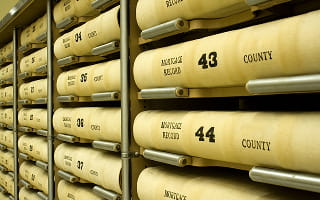
UCC liens are public notices that establish lender priority. They are primarily recorded with the Secretary of State (SOS) in the debtor's state of organization (for businesses) or residence (for individuals). Filings for physical property attached to real estate (fixtures) are made with the local County Recorder.
How UCC Liens Are Recorded
For most business assets (inventory, equipment, accounts receivable), a UCC-1 financing statement is filed online with the Secretary of State in the state where the entity is registered. If the collateral is permanently attached to land, such as timber, minerals, or fixtures (e.g., HVAC units, installed equipment), a UCC-1 is filed in the land records of the county where the property is located. Most filings are done electronically via the state's official website, although some, especially county filings, may require paper forms.
How to Conduct a UCC Lien Search
A UCC lien search reveals existing liens, helping determine priority in case of default. Some of the most common ways to search for UCC liens include:
-
SOS Online Databases: The most common method is to search the Secretary of State's website for the business's registration or the individual's residence.
-
County Index: A search of the county recorder's office is necessary to find liens on fixture-related property.
-
UCC Search Services: Professional third-party services (e.g., EntityCheck) are often used to conduct comprehensive, multi-jurisdictional searches, reducing the risk of missed filings.
-
Title Company Searches: When the UCC relates to real estate, a title company will search to identify any liens attached to the property.
-
Professional Services: Use PropertyChecker to quickly and easily search for UCC liens on real property, along with dozens of other property-related data points.
Search Tips
You must use the debtor's exact legal name, as listed on their articles of incorporation or driver's license. Beyond UCCs, many creditors perform a "four-part search" that includes federal tax liens, state tax liens, and judgment liens to get a full picture of a debtor's financial health. A UCC-1 filing is generally valid for five years.
Risks of UCC Liens for Buyers, Lenders, and Investors

Uniform Commercial Code liens, particularly UCC-1 financing statements, are critical, often overlooked instruments that publicly document a creditor's security interest in a borrower's assets. For buyers, lenders, and investors, failing to manage these filings properly can lead to significant financial, legal, and operational risks.
Risks of UCC Liens
-
Hidden Debt Obligations: UCC liens can be filed against specific assets or as "blanket liens" covering all of a business's assets. Uncovering these through due diligence is vital because a buyer may acquire assets or a lender may extend credit without realizing a third party has a superior claim.
-
Priority Issues ("First to File"): UCC liens establish a "first-come, first-served" system. The first creditor to file a UCC-1 statement generally has priority in the event of bankruptcy or default, leaving subsequent lenders with little to no chance of recovering their investment.
-
Collateral Repossession and Enforcement Sales: If a borrower defaults, a secured creditor with a properly filed UCC lien can repossess assets (such as equipment, inventory, or accounts receivable) and sell them to satisfy the debt, often without a court order.
-
Surprise Claims on Fixtures: Specific "fixture filings" are required for equipment attached to real property. These can create unexpected issues for real estate investors if specialized machinery, solar panels, or, in some cases, kitchen equipment, are claimed by a creditor, even after the property has been purchased.
-
Inability to Secure Further Financing: An active UCC lien, especially a blanket lien, can be a "silent killer" of credit, preventing a business from obtaining new loans because lenders refuse to accept a secondary position.
-
Lingering Liens: UCC filings remain active for five years. If a previous loan is paid off but the lender fails to file a UCC-3 termination statement, the lien remains on the assets, resulting in a "clouded" title and delaying future transactions.
Importance of UCC Searches in Due Diligence
A thorough UCC search (often as part of a "four-part search" including tax and judgment liens) is the primary defense against inheriting debt or losing assets. Searches show lenders where they stand in the queue for payment, allowing them to assess risk. Searches must use the debtor's exact legal name (usually from their state-registered, organizational charter) because even minor errors can render a search invalid. UCCs are typically filed in the state of incorporation, but searches must account for different jurisdictions, past names, DBAs, and specific local, county-level, or federal searches to be truly thorough.
Mitigation Strategies
To manage these risks, lenders and buyers should:
-
Perform "Search-to-Reflect" Reports: After filing a new UCC, conducting a second search ensures the new, senior lien was recorded correctly.
-
Ensure Proper Termination: Before closing a transaction, ensure that any old, paid-off loans have corresponding UCC-3 termination statements on file.
-
Use Third-Party Specialists: Due to the complexity of filing locations and naming requirements, the best option is to hire professional search firms to avoid missing critical data.
Clearing or Terminating UCC Liens

Clearing a UCC lien involves confirming debt satisfaction, demanding a UCC-3 termination from the secured party, and filing it with the Secretary of State (or county for real estate) to remove the record. If the lender fails to file within 20 days of a written demand, the borrower can file the UCC-3 themselves, often using the original filing number to terminate "stale" or forgotten liens.
UCC Lien Termination Process
-
Verify Debt Satisfaction: Confirm the loan, lease, or credit line is fully paid, leaving no remaining obligation.
-
Request Termination: Send an authenticated (signed) demand letter to the secured party, requesting them to file a UCC-3 termination statement.
-
Lender Action: The secured party is legally required to file or send a termination statement within 20 days.
-
Debtor Self-File (Optional/Necessary): If the lender fails to act, the debtor may file the UCC-3 termination directly.
-
Submit to Filing Office: File the UCC-3 amendment (marking the "Termination" box) with the Secretary of State where the original UCC-1 was filed.
-
Verify Removal: Obtain a stamped acknowledgement from the filing office and run a new UCC search to confirm the lien is cleared.
Handling Stale and Problematic Liens
Stale liens ("Zombie Liens") are liens remaining on record after the debt is satisfied. Use the same process: send a demand letter, then file a UCC-3 if the lender is unresponsive or defunct.
If a UCC filing contains errors, use a UCC-3 amendment to correct debtor names, secured party names, or collateral descriptions rather than a full termination. Under Revised Article 9, debtors can file terminations on their own if the secured party fails to do so, as signatures are not always required. If multiple parties are listed, all may need to be addressed to fully clear the record.
Filing fees for UCC-3 typically range from $0 to $30. Termination usually takes 1-5 business days. After filing, monitor credit reports (e.g., Dun & Bradstreet) and dispute any remaining entries by providing the stamped UCC-3 termination.
State-Specific & Federal Considerations

UCC liens are state-governed, consensual security interests filed primarily with Secretary of State offices to establish creditor priority. Although Article 9 provides a uniform framework, filing procedures, fees, and search systems vary widely, and most filings are valid for five years. Federal tax liens, which are non-consensual, take priority over certain UCC filings and must be searched separately, often at the county level.
UCC liens follow state-specific filing procedures and systems. Most UCC financing statements (Form UCC1) are filed with the Secretary of State in the state where the debtor is organized (for entities) or resides (for individuals). When searching, you must use the exact legal name listed on the debtor's public record or driver's license. While most states follow a 5-year, non-extendable (after lapse) rule, some exceptions apply to utility debtors or use different expiration timelines.
Fixture Filing Rules
-
Definition: Fixtures are goods attached to real property (e.g., HVAC units).
-
Filing Location: Unlike standard UCCs, fixture filings must be filed in the local county office where the real estate records are maintained, not just at the state level.
-
Priority: A properly filed fixture filing establishes priority over later-filed real estate mortgage liens.
Federal Tax Liens and Interactions
A federal tax lien (FTL) takes priority over a UCC lien if the FTL is filed before the UCC filing becomes perfected. Unlike UCC liens, federal tax liens do not require the debtor's consent and may be filed at the county level. Due diligence requires searching for federal and state tax liens, which can be filed against the same collateral.
Filing Best Practices
-
Exact Name: Filings may be rendered ineffective if the debtor's name is incorrect.
-
Continuation: UCC-3 continuation statements must be filed at least 6 months before the 5-year expiration date.
-
Electronic Filing: Many states now encourage or require electronic filing to reduce errors.
Common Pitfalls & How to Avoid Them

UCC-1 financing statements are essential for securing loans on personal property, but they are prone to errors that can result in lost priority or derailed transactions. Common pitfalls include failing to manage the lien lifecycle, using improper terminology, and ignoring the distinction between personal property and real property filings. Some pitfalls are as follows:
1. Borrowers Failing to Request Termination (Lingering Liens)
Even after a loan is paid off, the UCC-1 filing remains in the public record for five years unless a UCC-3 termination statement is filed. Old, "stale" liens appear on searches, causing new lenders to freeze financing, demand subordination, or deny credit.
How to Avoid:
-
Demand Termination: Upon loan payoff, borrowers must send an authenticated demand to the lender to file a termination statement.
-
Monitor Records: If the lender fails to act within 20 days of the demand, the borrower can file the termination themselves (if the debt is fully satisfied).
-
Check Post-Closing: Verify on the Secretary of State's website that the termination has been recorded.
2. Stale Blanket Liens Blocking Financing
A "blanket lien" gives a lender a security interest in all of a borrower's assets (inventory, equipment, accounts receivable). A previous lender may have filed a broad, lingering lien that covers new assets acquired years later, preventing the borrower from using those assets as collateral for new loans.
How to Avoid:
-
Negotiate Scope: Negotiate narrower, specific collateral descriptions rather than "all assets".
-
Pre-file & Terminate: Before closing new financing, confirm that all old, paid-off blanket liens are terminated.
3. Lenders Relying Only on Real Estate Title Searches
A common, dangerous mistake is to search only for real estate mortgages and ignore UCC searches, or to rely solely on a title insurance policy for commercial transactions. UCC liens cover personal property (machinery, computers, inventory), which are not included in a standard real estate title search.
How to Avoid:
-
Run Comprehensive Searches: Always conduct a UCC search in the debtor's state of incorporation and in the county where the property is located.
-
Search Variations: Search all variations of the debtor's name, including past names and DBAs.
4. Inadequate Collateral Descriptions
Vague or overly broad descriptions can make a lien unenforceable or create legal disputes. Descriptions like "all equipment" or "all inventory" may be too ambiguous or, worse, miss specific, valuable assets (such as intellectual property or high-value machinery).
How to Avoid:
-
Be Specific: List particular items, including serial numbers, VINs, or model numbers for equipment.
-
Match Documents: Ensure the collateral description in the UCC-1 exactly matches the Security Agreement.
5. Ignoring Fixture Filings
Fixtures are personal property attached to real estate (e.g., HVAC systems, conveyor belts, solar panels). A regular UCC filing in the Secretary of State's office may not protect a creditor against a subsequent buyer or mortgagee of the real estate.
How to Avoid:
-
File Locally: File a "fixture filing" in the local real estate recording office (county clerk) where the property is located.
-
Include Real Property Description: A fixture filing must include a description of the real estate to which the property is attached.
PropertyChecker Your Due Diligence Partner

While UCC liens are indispensable tools for securing credit and establishing priority, they can also be a double-edged sword, easily becoming a hidden trap for the unwary buyer or investor. Failing to look beyond the surface can turn a promising acquisition into a liability-filled nightmare, as old, unreleased liens can disrupt financing and jeopardize asset ownership.
Ultimately, protecting your interests requires a proactive, rigorous approach, including due diligence, precise drafting, and diligent follow-up. Conduct comprehensive UCC and title searches to uncover not only UCC-1 filings but also tax liens and pending litigation. Ensure that security agreements and UCC filings specifically define collateral to avoid overbroad "blanket" liens that handcuff future operations. Never assume a lien terminates automatically upon loan payoff. Demand, track, and verify the filing of UCC-3 termination statements, ensuring that "paid in full" actually means "clear title".
In the complex world of commercial transactions, knowledge is your strongest collateral. By treating UCC compliance as a critical, ongoing aspect of risk management, investors and buyers can ensure that their assets remain truly theirs, unencumbered by the past.
Before lending, investing in real estate, or assisting legal clients, always rely on PropertyChecker to thoroughly investigate a property, including any attached UCC filings/liens, as well as other encumbrances that can complicate deals. Our robust property reports detail ownership history, liens, loans, foreclosures, building permits, and so much more.
Table of Contents
- What Are UCC Liens and How Does Business Debt Impact Property Ownership?
- What Is a UCC Lien?
- Types of UCC Liens
- How Business Debt Creates UCC Liens
- UCC Liens and Property Ownership
- Fixture Filings & Real Estate Impacts
- How UCC Liens Are Recorded and Searched
- Risks of UCC Liens for Buyers, Lenders, and Investors
- Clearing or Terminating UCC Liens
- State-Specific & Federal Considerations
- Common Pitfalls & How to Avoid Them
- PropertyChecker Your Due Diligence Partner
Table of Contents
- What Are UCC Liens and How Does Business Debt Impact Property Ownership?
- What Is a UCC Lien?
- Types of UCC Liens
- How Business Debt Creates UCC Liens
- UCC Liens and Property Ownership
- Fixture Filings & Real Estate Impacts
- How UCC Liens Are Recorded and Searched
- Risks of UCC Liens for Buyers, Lenders, and Investors
- Clearing or Terminating UCC Liens
- State-Specific & Federal Considerations
- Common Pitfalls & How to Avoid Them
- PropertyChecker Your Due Diligence Partner
Investors Properties Resources
- How to Buy Probate Real Estate Properties
- How to Find Investment Properties
- How to Profit from Fixer Upper Homes
- What Is a Deed-in-Lieu of Foreclosure
- Government and Seized Property Auctions
- How Property Auctions Work
- How to Buy Bank-Owned Properties
- How to Buy Tax Lien Properties
- How to Choose a Property Investment Company
- How to Finance an Investment Property
- How to Find and Buy FSBO Homes
- How to Find Investment Properties
- How to Find Off-Market Properties
- How to Find Vacant Homes in the US
- What Is a Cloud on Title
- How to Wholesale Real Estate
- Restrictive Covenants and Deed Restrictions
- Types of Warranty Deeds
- What Are Easements
- What Are Encumbrances in Real Estate
- What Are HOA Liens
- What Are Real Estate Investment Trusts
- What Are REO Properties
- How to Find Tax Delinquent Properties
- What Is a Bargain and Sale Deed
- What Is a Deed of Reconveyance
- What Is a Judgment Lien
- What Is a Lis Pendens
- What Is a Mechanic's Lien
- What Is a Quiet Title Action
- What Is a Quitclaim Deed
- What Is a Short Sale in Real Estate
- What Is a Special Warranty Deed
- What Is a Statutory Warranty Deed
- What Is Adverse Possession
- What Is Skip Tracing in Real Estate
- How to Use the BRRRR Method
- What Is Vacant Home Insurance