What Is a Warranty Deed? Types and How They Work in Real Estate

A warranty deed is an essential legal document in real estate that conveys title to real property while providing the highest level of protection to the buyer. With a warranty deed, the seller guarantees a clear, defect-free title. Attorneys, brokers, and investors trust these types of deeds to mitigate risk. This deed promises that the seller is liable for any title issues. Unlike restrictive quitclaim deeds, a warranty deed offers maximum protection, minimizing ownership risks for the buyer.
When purchasing property, you want assurance that no unexpected liens, tax debts, or ownership disputes will emerge later. A warranty deed guarantees that the seller has the legal right to sell the property and that it is free of encumbrances. For buyers, it offers peace of mind and legal recourse. For sellers, it warrants a title that clearly establishes ownership.
Whether you are a seasoned investor or a first-time homebuyer, to enjoy a worry-free transaction, you must understand the protection a warranty deed offers.
What Is a Warranty Deed?

What is the warranty deed definition in real estate? A warranty deed is an official legal document used in real estate transactions to transfer property ownership from a seller (grantor) to a buyer (grantee). They provide the highest level of protection available regarding the property's title. It guarantees that the seller holds a clear title, has the legal right to sell the property, and that the property is free from undisclosed liens, encumbrances, or third-party claims.
Legal Nature of a Warranty Deed
The warranty deed is a written contract that includes specific guarantees, known as covenants, made by the grantor to the grantee. These covenants hold the seller legally responsible if a title defect arises after the transfer.
The components and legal promises (covenants) of a general warranty deed include:
-
Covenant of Seisin: The grantor warrants they actually own the property and have the legal right to convey it.
-
Covenant Against Encumbrances: The grantor promises that the property is free of liens, mortgages, or other restrictions, except those explicitly disclosed in the deed.
-
Covenant of Quiet Enjoyment: The grantor guarantees that the buyer's ownership will not be disturbed by third-party claims.
-
Covenant of Warranty Forever: The grantor promises to defend the buyer against all future, valid claims to the property's title.
Roles of Grantor and Grantee
-
Grantor (Seller): The party transferring ownership. In a warranty deed, the grantor assumes liability for any title issues, including those that occurred before they owned the property. They must ensure the deed is signed and legally executed.
-
Grantee (Buyer): The party receiving ownership. The grantee receives the maximum protection and has the right to take legal action against the grantor if a hidden defect in the title is discovered later.
To be legally valid and recordable in public records, a warranty deed must be signed by the grantor and acknowledged by a notary public. The notary verifies the grantor's identity to prevent fraud and ensures the signing is voluntary. The notarized deed is then filed with the county recorder's office or register of deeds to provide public notice of the change in ownership.
Scope of Protection
A general warranty deed provides comprehensive, "gold standard" protection by covering the entire history of the property.
-
Title Quality: Guarantees a "clear and marketable" title, meaning no one else has a valid, hidden claim to ownership.
-
Encumbrances: Protects against hidden liens (mechanic's liens), unpaid property taxes, or undisclosed easements.
-
Claims: If a third party asserts ownership or a lien on the property, the grantor is responsible for defending title and covering costs.
Warranty deeds come in two main flavors: general and special. While a warranty deed is powerful, it is commonly paired with title insurance to provide further protection against unknown defects.
How Does a Warranty Deed Work?

A warranty deed is a legal document used in real estate transactions that guarantees that the seller (grantor) holds a clear title to the property and has the right to sell it, protecting the buyer (grantee) against undisclosed liens, encumbrances, or ownership disputes. It provides the highest level of protection, ensuring the seller defends the buyer against future claims.
It guarantees the title's integrity. The seller promises they own the property, have the right to sell it, and that it is free from debts or liens (except those listed). It covers the history of the title. It warrants against title defects that occurred not just during the seller's ownership, but also throughout the property's history. It provides legal protection. If a title issue arises (e.g., a hidden easement or an unpaid tax lien), the buyer can sue the seller for damages for breaches of covenants in the deed. The deed includes the grantor and grantee's names, a legal property description, and is signed/notarized.
It is usually prepared by an attorney or title company and signed at closing, after which it is recorded in public records to provide notice of the new ownership. While a warranty deed provides legal recourse, it is typically accompanied by title insurance to ensure funds are available if the seller cannot pay for a title dispute.
A warranty deed acts as a legal promise, giving the buyer peace of mind that they are receiving a clean, marketable title to the property.
Types of Warranty Deeds

Warranty deeds offer varying levels of protection to the buyer (grantee) regarding potential title defects, such as undisclosed liens, claims, or disputes. The level of security depends on whether the warranty covers the entire history of the property or is limited to the period the seller owned it. There are three types of warranty deeds: general, special, and statutory.
General Warranty Deed
Considered the "gold standard" of real estate deeds, a general warranty deed offers the highest, most comprehensive level of protection to the buyer. The grantor (seller) guarantees that they hold a clear title to the property and that there are no defects or encumbrances, even if they originated from prior owners. This means the seller warrants the entire chain of title, from the property's origin to the present. General warranty deeds are commonly used in traditional residential real estate transactions. Although they are great for buyers, they create liability for sellers, which is why title insurance is so necessary.
Special Warranty Deed
A special warranty deed, also known as a limited warranty deed, provides less protection than a general warranty deed. The seller only guarantees that no title issues or encumbrances occurred during their own period of ownership. They do not warrant against defects that may have existed before they took possession of the property. These deeds are often used in commercial transactions, by bank sellers, in REO transactions, or in foreclosure situations. Institutional sellers prefer these and may carve out negotiated limitations to protect themselves.
Statutory Warranty Deed
A statutory warranty deed is a type of general warranty deed whose language is defined by state statute, making it a shorter, more streamlined document. While it offers similar protection to a general warranty deed (warranting the title against all defects), its scope can sometimes be more limited by specific state laws. It is legally binding and considered a reliable way to transfer property.
Legal Covenants in Warranty Deeds (present & future covenants)

Legal covenants in warranty deeds are the grantor's promises ensuring a clear title and possession, divided into present (breached at closing) and future (breached upon disturbance) covenants. Key covenants include seisin, right to convey, against encumbrances, quiet enjoyment, warranty/defense, and further assurances. Damages are typically measured by purchase price or the cost to cure. Statutes of limitations begin at conveyance for present covenants and eviction for future ones.
Present Covenants (Breached at Conveyance)
These covenants do not run with the land; only the immediate grantee can sue.
-
Covenant of Seisin: The grantor promises they own the property and possess the exact estate (title and possession) they are conveying.
-
Covenant of Right to Convey: The grantor asserts they have the legal authority and capacity to transfer title.
-
Covenant Against Encumbrances: The grantor guarantees that there are no undisclosed liens, easements, or physical restrictions that diminish the property's value.
Future Covenants (Run with the Land)
These covenants run with the land, allowing subsequent purchasers to sue.
-
Covenant of Quiet Enjoyment: The grantor guarantees the grantee's possession will not be disturbed by a third party with superior/paramount title.
-
Covenant of Warranty/Defense: The grantor agrees to defend the grantee against lawful claims of superior title and compensate for losses.
-
Covenant of Further Assurances: The grantor promises to perform necessary future acts (e.g., signing corrected deeds) to perfect the title.
Remedies and Damages
-
Damages Measurement: For breaches of seisin, right to convey, and quiet enjoyment, damages are typically the purchase price paid, plus interest.
-
Encumbrance Damages: Damages are the cost to remove the encumbrance or the reduction in property market value.
-
Specific Performance: The covenant of further assurances may be enforced through specific performance to compel the grantor to fix title issues.
-
Statute of Limitations: Generally, the statute of limitations begins to run at the time of conveyance for present covenants (e.g., 6 years in many jurisdictions), while for future covenants, it begins upon actual eviction or disturbance of possession.
Statutory vs. Common Law Warranty Deeds

Warranty deeds vary by state, and some states use statutory forms with implied covenants while others rely on common law. Both types serve the same purpose of transferring real estate with promises regarding the quality of title, but they differ significantly in their creation, form, and the extent of the implied covenants. Statutory deeds are concise, legislatively authorized forms that imply comprehensive covenants. In contrast, common law deeds are derived from long-standing judicial precedent and often require full written expression of those covenants.
Characteristics of Each
-
Common Law: Historically, these six covenants were required to be expressly written into the deed to be enforceable.
-
Statutory Law: Many states (e.g., Michigan, Massachusetts) have statutes where certain words in a deed (like "convey and warrant") automatically imply all six covenants, even if not explicitly written out.
-
Enforceability: Statutory covenants may have different, shorter, or longer limitations periods than common law covenants.
Statutory Warranty Deeds (Implied Covenants)
Many states (e.g., Washington, Florida, Alabama) have enacted statutes that authorize "short-form" deeds. By using specific statutory language, the grantor automatically includes all standard title covenants without having to write them out in full.
-
Implied Covenants: A statutory warranty deed typically implies five to six covenants:
-
Seisin: Grantor owns the property.
-
Right to Convey: Grantor has the authority to sell.
-
Freedom from Encumbrances: No undisclosed liens or defects.
-
Quiet Enjoyment/Possession: Buyer will not be disturbed by lawful claims.
-
Defense of Title: Grantor will defend against lawful claims.
-
-
Required Phrases: The "magic words" vary by state but generally include "conveys and warrants," "statutory warranty deed," or, in Florida, "grant, bargain, and sell".
-
Short-Form Deeds: These are simplified, often one-page documents in which the statutory reference serves as a placeholder for full, detailed covenants (e.g., RCW 64.04.030 in Washington).
Common Law Warranty Deeds
In states relying on common law, the covenants of title are not automatically implied by the type of deed. Instead, they must be expressly written into the document to be fully enforceable.
-
Reliance on Text: To provide the same protection as a statutory deed, a common law general warranty deed must explicitly detail the covenants (seisin, quiet enjoyment, etc.) in the text of the deed.
-
Types: Common law distinguishes between general warranty deeds (the highest protection) and special warranty deeds (limited to the seller's period of ownership).
-
"Grant" and "Convey": In some jurisdictions, the use of words like "grant" or "convey" may imply limited covenants (e.g., that the grantor hasn't encumbered the property), but not the full, historic, five-or-six-covenant warranty.
Incorporation by Reference
To shorten the document while keeping full protection, practitioners can use incorporation by reference. This means the deed explicitly mentions the statutory code section that defines the covenants.
-
Example Language: "The Grantor conveys the property with statutory warranty covenants, as defined in [Insert State Statute Reference], which are incorporated herein by reference".
-
Effect: This renders the statutory language legally binding on the grantor as if it were written in full.
Practical Drafting Points for Enforceability
To ensure covenants are properly attached and enforceable:
-
Check Local Statutes: Determine if the state is a "statutory form" state (e.g., WA, FL, AL) or relies on common law, as this dictates whether to use a specific form or write out the covenants.
-
Clearly State Exceptions: To avoid liability, explicitly list any encumbrances (e.g., easements, taxes) that are exceptions to the warranty.
-
Use Precise Language: Even in statutory states, avoid ambiguity. Explicitly use the phrase "Statutory Warranty Deed" to invoke the full protection of the statute.
-
Consider "Long Form" for Complex Deals: In complex, high-stakes transactions, consider writing out the covenants in full rather than relying solely on the short-form, even in states that permit it, to avoid any ambiguity regarding the scope of the warranty.
-
Do Not Misuse Quitclaim: A quitclaim deed is not a substitute for a warranty deed and provides no covenants of title.
-
Verify Title Insurance: Because statutory covenants do not guarantee the physical condition of the property, always rely on a title insurance policy to protect against hidden defects.
Real estate laws vary significantly by state. Always consult local counsel or state statutes for the specific language and requirements.
After-Acquired Title & Estoppel by Deed (advanced doctrines)

The After-Acquired Title doctrine, a subset of Estoppel by Deed, holds that if a grantor conveys land and does not yet own it via a warranty deed, but later acquires that title, the title automatically inures (passes) to the grantee. This prevents the grantor from denying the validity of the original transfer. It applies in most jurisdictions and operates automatically to protect the grantee's interest.
Principles
-
Automatic Transfer (After-Acquired Title): When a grantor attempts to transfer land they do not own, but subsequently acquires legal title to it, that title passes to the grantee immediately, often without requiring a new deed.
-
Estoppel by Deed: The grantor is legally "estopped" or prevented from arguing that they did not own the property at the time of the original conveyance. It is considered unfair for a grantor to recover land they later acquired after already accepting payment for it.
-
Scope: This typically applies to warranty deeds (general or special) because they contain covenants promising that the grantor has the title. It generally does not apply to quitclaim deeds, as they only transfer whatever interest the grantor currently has, if any.
Common Litigation Scenarios & Fact Patterns
-
The "Wild Deed" Scenario: A seller (A) sells property they do not own to a buyer (B) using a warranty deed. Years later, A inherits the property. The doctrine automatically vests title in B, even if A tries to sell it to someone else (C) later.
-
Mortgage on After-Acquired Property: A borrower executes a mortgage on land they do not yet own. Once the borrower acquires title, the mortgage instantly attaches to the property by operation of estoppel.
-
Inheritance Issues: A child sells their expected inheritance of a home via a warranty deed before their parent passes away. Upon the parent's death, the child inherits the title, which immediately passes to the purchaser.
-
Disputed Land Transfers: A grantor conveys land to a grantee that actually belongs to a neighbor. The grantor later purchases that same land from the neighbor. The original grantee, not the grantor, becomes the legal owner.
Limitations
-
Non-Applicability to Quitclaim: As noted, if the grantor uses a quitclaim deed, there is no promise of title to "estop" them from later acquiring it.
-
Recording Act Conflicts: In some situations, if the grantor sells the property to a second purchaser after acquiring title, and the second purchaser is a "bona fide purchaser for value" who had no notice of the first, invalid deed, the recording acts might protect the second purchaser over the first.
How Warranty Deeds Work in a Transaction (process)

A warranty deed operates by having the seller (grantor) legally guarantee a clear title to the buyer (grantee), covering the property's entire history (general) or only the period of ownership (special). The process involves ordering title, examining records for liens or encumbrances, clearing issues, drafting, executing, and recording the deed to establish priority.
The Warranty Deed Process
-
Intake and Title Order: Following a purchase agreement, a title company or attorney is engaged to handle the transaction. A title order is placed to initiate the search.
-
Search and Examination: A title examiner reviews public records (county recorder/clerk) to establish the chain of title, ensuring the grantor has the legal right to sell, and identifying defects such as undisclosed liens, mortgages, or easements.
-
Requirements and Clearance: If defects are found (e.g., an old mortgage that has not been released or tax liens), the title company issues a commitment outlining the requirements. The seller must clear these "clouds" (clearance to close) to ensure a marketable title.
-
Drafting and Review: The seller's attorney or title company drafts the warranty deed, including the legal description, the names of the parties, and specific covenants (e.g., the covenant of seisin and the warranty forever). Both parties review the document for accuracy.
-
Execution and Acknowledgment: The seller signs the deed in front of a Notary Public to acknowledge the transfer, which is required for recording.
-
Closing Mechanics and Delivery: At closing, funds are exchanged, and the signed deed is delivered to the buyer. Delivery and acceptance act as the legal transfer of ownership.
-
Recording (Constructive Notice and Priority): The title company records the deed with the county recorder, providing public "constructive notice" of the change in ownership. This establishes priority:
-
Race: First to record wins.
-
Notice: A purchaser who buys without notice of a prior unrecorded deed wins.
-
Race-Notice: A purchaser who buys without notice and records first wins.
-
-
Post-Recording and Policy Issuance: After confirmation of recording, the title company reconciles funds, pays off necessary liens, and issues the final title insurance policy.
Legal Description & Boundary Precision

The legal description in a warranty deed is the precise, legally binding definition of a property's boundaries, distinguishing it from all others. It is essential for determining ownership, as the courts and title companies do not use the street address or tax ID to define what is being conveyed.
Main Forms of Legal Descriptions
-
Metes and Bounds: The oldest system, commonly used for non-subdivision or large rural tracts. It traces a parcel's perimeter using distances ("metes") and directions ("bounds") from a Point of Beginning (POB) back to the same point.
-
Lot and Block (Recorded Plat): Used primarily for residential subdivisions. It references a specific lot and block number on a subdivision map (plat) recorded with the county.
-
Public Land Survey System (PLSS/Government Survey): Divides land into townships, ranges, and sections. It is common in the Midwest and the West for large, rural parcels.
-
Condominium Declarations: Describes a unit by referencing a specific declaration of condominium, which includes the unit number and its percentage of interest in the common elements.
Common Errors in Legal Descriptions
-
Scrivener's Mistakes: Typographical errors in deeds, such as wrong numbers, omitted words, or incorrect compass directions.
-
Gaps and Overlaps: Occur when the legal descriptions of adjacent properties do not align perfectly, creating unowned slivers of land (gaps) or overlapping boundaries where both parties claim ownership.
-
Misleading Metes and Bounds: Incorrectly identifying natural landmarks (e.g., "the old oak tree") that have since moved or disappeared.
-
Wrong Parcel Entirely: The deed description points to a completely different parcel than the intended one.
Resolving Boundary Issues
Some ways to resolve boundary issues are surveys, affidavits of correction, corrective deeds, and court actions. A boundary survey is essential for confirming that the legal description matches the physical property and for identifying gaps, overlaps, and encroachments. Affidavits of correction are used for minor clerical, non-substantive errors, such as a typo in a name or a simple error in a call. Corrective deeds are new, recorded deeds that amend the errors in the original deed. It must reference the original, incorrectly recorded document. For significant errors that affect the parties' intent or ownership rights, a lawsuit to reform the deed or a quiet title action may be required.
If a legal description issue is found post-closing, it can negatively affect the chain of title. Title insurance can protect property owners and lenders from financial loss resulting from these defects.
Title Search, Examination & Curative Steps

A warranty deed, which provides the highest level of protection by guaranteeing the seller holds a clear title, relies entirely on a thorough title search and examination to verify that the seller has the legal right to transfer the property free from encumbrances. This process involves searching public records to build a "chain of title," identifying potential liens, taxes, and restrictions, and utilizing "curative" measures to clear any defects before closing.
Title Search and Examination
The title search involves investigating public records (deeds, mortgages, tax records, court documents) to establish a clear, uninterrupted chain of ownership.
-
Chain of Title Review: The examiner traces ownership back to a specific point to ensure there are no breaks (e.g., missed heirs, invalid transfers).
-
Liens and Encumbrances: Identifies outstanding debts tied to the property, such as:
-
Mortgages: Existing, unreleased loans.
-
Tax Liens: Unpaid federal, state, or municipal taxes.
-
Mechanic's Liens: Liens filed by contractors for unpaid work.
-
Judgment Liens: Legal claims resulting from court judgments against the owner.
-
-
Easements and CCRs: Identifies recorded restrictions, such as easements (rights for others to use the land) or Covenants, Conditions, and Restrictions (CCRs) that limit property use.
-
UCC Fixture Filings: Uncovers security interests in personal property that has become attached to the real estate (fixtures), often found in county records.
Consider using PropertyChecker to trace the ownership history (chain of title) and identify liens, loans, taxes, and other encumbrances that could affect the property's title.
Identifying Unrecorded Interests
Not all interests are in the public land records. Hidden (unrecorded) interests are often discovered through:
-
Possession Inquiries: A physical inspection to determine whether someone other than the seller is living on or using the property (indicating an unrecorded lease or adverse possession).
-
Municipal Lien Searches: A search specifically for outstanding, unrecorded utility bills, building code violations, or special assessments not yet filed with the county recorder.
-
Estoppel Certificates: Documented statements from tenants confirming lease terms, rent payments, and the absence of offsets, used to reveal agreements not reflected in public records.
-
Affidavits of Ownership: Signed statements from the seller declaring no unrecorded liens, improvements, or other tenants.
Common Curative Tools
Once defects are found, you must take the following curative actions to ensure the title is marketable. Some of the options are as follows:
-
Releases/Satisfactions: Documents, such as a Mortgage Satisfaction or Release of Lien, that prove a previous debt has been paid in full.
-
Corrective Deeds: A new deed filed to fix errors in the original deed, such as a misspelled name or incorrect legal description.
-
Subordinations: An agreement in which a lienholder agrees to lower their priority position, often used when an existing easement or mortgage cannot be removed, but must not hinder a new lender's priority.
-
Quitclaim Deeds: Often used to remove potential interest holders, such as a divorced spouse or heirs, from the chain of title.
-
Gap Indemnities: A protection mechanism where a seller or borrower indemnifies the title company against losses caused by a "gap" in time, the period between the search and the actual recording of new documents, ensuring no new liens (like a sudden judgment) are filed in that timeframe.
-
Quiet Title Action: A lawsuit used to resolve serious, long-term ownership disputes or to remove stale claims.
These steps are crucial for insuring the title, as title insurance policies often exclude matters that are not properly cleared or recorded before closing.
Title Insurance & Its Interaction with Warranty Deeds
Title insurance and warranty deeds work in tandem to secure real estate ownership, but they protect against different risks. While a warranty deed is a legal promise from the seller that the title is clear, title insurance is a contractual indemnity policy that defends the owner and/or lender against losses arising from title defects. Warranty deeds often have limited coverage, while title insurance bridges those gaps by covering both pre-existing, undiscovered, and sometimes post-policy issues.
Limits of Deed Warranties

A warranty deed (specifically a general warranty deed) provides the strongest assurance, but it has some significant limitations, such as:
-
Seller's Financial Capacity: If a hidden issue arises (e.g., a long-lost heir) years later, the buyer can sue the seller for breach of warranty. However, if the seller has no money, is deceased, or is otherwise unavailable, the warranty is worthless.
-
Hidden Defects: Warranties only promise that the seller believes the title is clear. They do not protect against unknown, hidden defects in public records, such as forgeries or fraud.
-
Time Limitation (Special Warranty Deeds): A special warranty deed protects only against issues that occurred during the seller's ownership, leaving the buyer exposed to all prior issues.
-
Costs of Defense: A warranty deed does not cover the cost of a lawyer to defend the buyer's title in the event of a dispute.
Title insurance offers a "backstop" for the warranty deed. If a title defect arises, the insurance company pays for the legal defense and, if the claim is valid, compensates for the loss up to the policy amount.
Owner's vs. Lender's Policies
Owner and lender's policies differ significantly.
-
Lender's Policy (Loan Policy): Almost always required by lenders when a mortgage is involved. It protects the lender's financial interest in the property (the loan amount). It does not protect the buyer's equity.
-
Owner's Policy: Optional, but highly recommended for buyers. It protects the buyer's equity in the property for the full purchase price. Unlike the lender's policy, which decreases as the loan is paid off, the owner's policy lasts as long as they (or their heirs) own the property.
Standard vs. Enhanced Coverage
-
Standard Coverage (e.g., CLTA/ALTA): Covers known and unknown defects in the recorded title history, such as fraud, forgery, or, crucially, unrecorded liens.
-
Enhanced Coverage (e.g., ALTA Homeowner's Policy): Provides broader, "wetsuit" level protection compared to a "rain poncho" standard policy. It covers many issues that arise after the policy is issued, including:
-
Post-policy fraud or forgery: Someone impersonating you to sell your home.
-
Permit/Zoning Violations: If a prior owner added a structure without a permit, you are forced to remove it.
-
Inflation Protection: Coverage amount increases automatically with property value (up to 150%).
-
Encroachments: Neighbor building on your land.
-
Common Title Insurance Exceptions and Endorsements
Title policies have exceptions (items not covered) that are listed in the title commitment. Buyers can often remove these via endorsements (add-ons to the policy).
-
Common Exceptions: Unrecorded easements, taxes not yet due, and encroachments/boundary issues that a survey would show.
-
ALTA 9 (Restrictions, Encroachments, Minerals): This endorsement protects against violations of restrictive covenants, damage from mineral extraction, and encroachments.
-
Access/Survey Endorsements: These provide specific coverage for legal access to the property (e.g., that it touches a public road) and ensure the survey accurately reflects boundaries.
Typical Claims Process
If a title issue arises, the policyholder must take the following steps to file a claim:
-
Notify the Title Company: Immediately contact the company that issued the policy.
-
Submit Documentation: Provide proof of the claim and the policy documents.
-
Investigation: The title insurer investigates the claim to determine if it is covered under the policy terms.
-
Defense or Payment: If covered, the title company will hire attorneys to defend the title in court or pay to settle the issue (e.g., paying off an old lien).
If a legal description issue is found post-closing, it can negatively affect the chain of title. Title insurance exists to protect property owners and lenders from financial loss resulting from these defects.
Warranty Deed vs. Other Deeds (comparative practice)

Warranty deeds provide the highest buyer protection, guaranteeing a clear title, whereas quitclaim deeds offer zero guarantees, transferring only the interest the grantor currently holds. The choice depends on risk: warranties are essential for market sales, while quitclaims are suitable for low-risk transfers (family, entities) or corrective actions.
Comparative Analysis of Deeds
-
Warranty Deed (General): Offers maximum protection; the grantor warrants the title against defects covering the entire property history.
-
Quitclaim Deed: No warranties; the grantee assumes all risk if the title is flawed. It only transfers whatever interest, if any, the grantor has.
-
Grant Deed (West Coast): Common in California, this offers a middle ground. It implies that the grantor owns the property and hasn't encumbered the title, but it doesn't warrant against defects caused by prior owners.
Risk Allocation and Use Cases
-
Intra-family/Divorce: Quitclaim deeds are standard for transferring property between family members or divorcing spouses.
-
Corrective Actions: Used to fix "clouds" on the title (e.g., misspelled names or clearing up ownership).
-
Entity Transfers: Used for transferring property from an individual to a trust or an LLC where ownership is not changing hands.
Transaction Examples
-
Institutional/Residential Sale: Warranty Deed. Lenders and buyers require the highest assurance of a clear title.
-
Distressed/REO/Foreclosure: Quitclaim or special warranty deed. Banks often refuse to provide general warranties, shifting all risk to the buyer.
-
Private/Trust Transfers: Quitclaim. Used for no-money transfers with a low-risk relationship.
If you are the buyer, seek a warranty deed for security. If you are a grantor in a low-risk, trusted, or corrective transfer situation, a quitclaim deed offers protection against future liability.
Warranty Deed vs Quit Claim Deed
Feature |
Warranty Deed |
Quitclaim Deed |
|---|---|---|
Title Guarantee |
Guarantees clear title, no liens/defects |
No guarantee of clear title or ownership |
Protection Level |
Highest; covers ownership history |
Lowest; buyer assumes all risk |
Seller Liability |
High; seller liable for title defects |
None/Very Low |
Best Usage |
Traditional sales, mortgages |
Divorce, gifts, family transfers, clearing titles |
Legal Recourse |
Buyer can sue for title issues |
Generally, no legal recourse |
Warranty Deed vs Grant Deed
A grant deed, common in California and the West Coast, is a sort of middle-ground, conveying property with limited implied covenants (no prior conveyances, no undisclosed encumbrances by the grantor). Unlike a general warranty deed, which provides full protection, it covers only the grantor's ownership period, falling between a quitclaim (no protection) and a general warranty deed.
Differences in Protection
-
Quitclaim Deed (Lowest Protection): Transfers whatever interest the grantor might have, with no guarantees of ownership or clear title.
-
Grant Deed (Medium/Limited Protection): Used in CA for most sales, it implies, but does not explicitly state, that the seller hasn't sold the property before or hidden debts (encumbrances). It warrants title only during the grantor's ownership.
-
General Warranty Deed (Highest Protection): Provides broad, express guarantees covering the entire chain of title, promising to defend against any defects in the property's history.
Why Grant Deeds are Common in CA/West Coast:
Grant deeds are preferred because they offer sufficient protection for buyers to feel comfortable, particularly when paired with standard title insurance. The "grant" language simplifies real estate transfers without the heavy liability of a full general warranty.
Negotiating & Drafting Warranty Deed Terms (practical)

Negotiating and drafting a warranty deed requires careful attention to detail to align the legal document with the agreed-upon risks in the Purchase and Sale Agreement (PSA). While a general warranty deed guarantees title back to its origin, and a special warranty deed limits liability to the seller's period of ownership, both can be tailored to manage risk through specific carve-outs, qualifications, and entity-specific language.
Negotiating Carve-outs and Exceptions
Sellers typically seek to restrict their liability, while buyers want maximum protection. Some areas for negotiation include:
-
Known Encumbrances (Permitted Exceptions): The deed should expressly list exceptions, commonly referencing the title commitment (e.g., "subject to easements, restrictions, and covenants of record"). Avoid broad "subject to all matters of record" language; instead, specify only those that do not impair the intended use of the property.
-
Environmental Issues: Sellers often insert language limiting their warranty regarding environmental conditions, particularly if the property is sold "as-is". The deed should exclude environmental issues specifically covered by separate indemnities in the PSA, or clearly state that the warranty does not cover pre-existing or unknown contamination.
-
Mechanics' Lien Periods: Because mechanics' liens can relate to the start of construction, even if filed after closing, the seller should expressly exclude liens arising from work initiated by the buyer, or if the seller does not have final lien waivers. A common fix is to carve out any liens "for which the seller has provided a lien waiver or for which title insurance is provided".
-
"As-Is" and Non-Recourse: In commercial transactions, sellers may negotiate "as-is" language that overrides implied warranties, converting a general warranty deed into a limited warranty of title only.
Knowledge Qualifiers and Survival Language
-
"To the best of Grantor's knowledge": This, or similar language ("to the current actual knowledge of seller"), is critical for sellers to avoid liability for unknown issues, such as latent environmental defects or unrecorded, forgotten encumbrances. Buyers should, if possible, limit this to "knowledge, without duty of inquiry" to avoid the seller claiming they didn't know because they didn't look.
-
Survival Language: The warranties in a deed typically merge into the deed upon recording. To keep liability alive, the PSA should explicitly state that the warranties "shall not merge but shall survive the closing for a period of [X] months".
-
Indemnities: If a seller refuses to broaden the warranty language, the buyer should negotiate specific indemnities in the PSA rather than relying on the deed's warranties, especially for third-party claims arising before closing.
Entity Authority and Capacity
When the grantor is an entity (LLC, Corporation, or trust), the deed must establish that the person signing has the authority to do so. Include a "WHEREAS" clause stating that the sale has been authorized by all necessary company action (e.g., "Grantor is a [State] limited liability company and has full power and authority to convey..."). The deed should explicitly state that the signatory is a Manager, Member, or Officer, or refer to a separate certificate of authority signed at closing. For complex transactions, the buyer may require an opinion from the seller's counsel affirming that the entity is in good standing, has the power to sell, and that the execution is valid.
Coordination with PSA and Title Proformas
Deed representations must be perfectly aligned with the PSA to avoid post-closing disputes.
-
Consistency Check: The "Permitted Exceptions" listed in the deed must precisely match the "Schedule B" exceptions in the final owner's title insurance policy/proforma.
-
Representations & Warranties (R&W): If the PSA contains a representation that "no labor has been performed in the last 90 days," the deed should not contain a general warranty that might contradict that (e.g., if a small project was, in fact, done).
-
Title Proforma: Review the proforma with the deed in hand. If the title company refuses to insure against a specific lien, the deed must contain a specific carve-out for that lien to avoid breaching the warranty immediately upon recording.
Recording & Public Notice Requirements
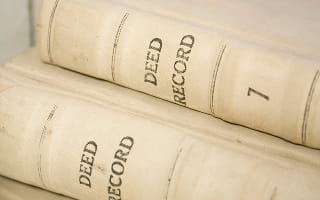
Recording a warranty deed is the most important final step in a real estate transaction, providing constructive notice to the public of a change in ownership and protecting the grantee (buyer) against subsequent claims. While a deed may be valid between the parties upon signing, failing to record it promptly leaves the buyer vulnerable to ownership disputes, liens, or fraud.
Recording Timelines, Fees, and Taxes
-
Timelines: While there is rarely a strict statutory deadline for recording, it should be done immediately after closing to avoid any risks.
-
Fees: Recording fees are paid to the county recorder or registrar of deeds and are typically based on the number of pages, ranging from $10 to over $100.
-
Transfer Taxes: Also called a deed tax or stamp tax, this tax is based on the property's sale price, with rates varying by state and municipality.
-
E-Recording (Electronic Recording): Many jurisdictions now accept e-recordings through third-party vendors. This method is faster (often same-day), more secure, and allows the original document to remain in the closing agent's possession at all times.
Recording Priority Systems and Risks
The United States uses recording acts to establish priority among competing claims, generally adhering to the principle that the first to record wins.
-
Priority System: The order of recording establishes the hierarchy of interests; a recorded warranty deed takes priority over unrecorded interests or subsequently recorded interests.
-
Risks of Delayed Recording:
-
Intervening Liens: A creditor of the seller could place a judgment lien on the property, or the seller could take out a second mortgage, if the deed is not recorded before these actions.
-
"Gap" Period Hazards: The time between closing and recording is a "gap" during which new, unexpected encumbrances can arise. Long delays increase the risk that the title company will be unable to provide gap coverage.
-
Double Sale: A fraudulent seller could potentially sell the same property to another party who records first.
-
Chain Integrity and Title Issues
A "chain of title" must be unbroken to be marketable, meaning each transfer must legally connect to the previous one.
-
Consistent Names: The grantor (seller) on the new deed must exactly match the grantee (buyer) from the previously recorded deed. Misspellings or variations (e.g., "John Smith" vs. "John A. Smith") can cause title defects.
-
Name Changes: If a seller changes their name (e.g., through marriage or divorce), the deed should reference both names, such as "Jane Doe, now known as Jane Smith".
-
Corporate Name Changes & Mergers: If a corporate entity holds title and changes its name, the deed must reflect this and often requires recording a certificate of merger or name change in the land records to complete the chain of title.
-
Result of Poor Integrity: Gaps or discrepancies in the chain can result in a "clouded" title, making the property difficult to sell or mortgage until corrected with quitclaim deeds or affidavits.
General Recording Requirements
-
Original Document: Must be an original document with "wet" ink signatures; copies are generally not accepted.
-
Notarization: The grantor's signature must be notarized.
-
Formatting: Documents must meet specific margin requirements (e.g., a 3-inch top margin for recorder stamps), paper-size standards, and be clearly legible.
-
Legal Description: Must include an accurate legal description of the property, not just a street address.
Tax & Financial Considerations (flag for counsel/CPA)

There can be real and complex tax and financial implications of transferring real property via a warranty deed. Tax laws are complex, subject to change, and vary by jurisdiction. You must consult with a qualified tax counsel or CPA before executing any transfer. Some issues you may encounter are as follows:
Transfer and Recording Taxes (Documentary Stamp Taxes)
A warranty deed almost always triggers, at a minimum, a recording fee. Depending on the state and municipality, it may trigger a Documentary Stamp Tax (also known as a deed transfer tax, excise tax, or conveyance tax).
-
Trigger: These taxes are generally imposed on deeds that convey an interest in real property for consideration (money, debt assumption, or exchange of value).
-
Calculation: Often calculated based on the purchase price or the total value of the consideration, such as $0.70 per $100 of value.
-
Responsibility: Typically paid by the seller, but this is negotiable in the purchase and sale agreement.
-
Exemptions: Some transfers, such as between spouses, to a revocable trust, or as a true gift, may be exempt, but this requires specific documentation to prove.
Basis and Capital Gains
The tax basis, which is the property's value for tax purposes, is crucial for determining future tax liability.
-
Sale via Warranty Deed: If sold, the seller's capital gain is the difference between the sale price and their adjusted basis (original cost + improvements - depreciation).
-
Gift via Warranty Deed: If property is gifted, the recipient generally takes the donor's original basis (a "carryover basis"). If the property has appreciated, the recipient inherits the potential capital gains tax liability upon a future sale.
-
Gain Recognition: A transfer might trigger recognition of gain even if no cash changes hands (e.g., if the transferor is relieved of a mortgage).
Related-Party Transfers
The IRS strictly scrutinizes transfers between family members or related entities (e.g., LLCs or corporations).
-
Gift Tax: If the transfer is for less than fair market value, it is considered a gift. In 2024, the annual exclusion is $18,000 per recipient ($19,000 in 2025). Amounts exceeding this must be reported on IRS Form 709, though no tax may be due if under the lifetime exemption ($13.61M in 2024, set to decrease in 2026).
-
Ordinary Income Treatment: Sales between related parties can result in a gain being treated as ordinary income (at a higher tax rate) rather than capital gain if the property is depreciable to the recipient.
Gift and Inheritance Contexts
As noted above, the recipient takes the donor's basis (carryover basis). Property passed through a will or trust usually receives a "stepped-up basis" to the fair market value at the time of the owner's death. This eliminates capital gains tax on appreciation that occurred during the owner's lifetime. Transferring property via a warranty deed before death (instead of through a will or Trust) can cause the recipient to lose the "stepped-up basis" benefit.
Property Taxes (Local/County)
Recording a new warranty deed can trigger a reassessment of the property for local property tax purposes. In many jurisdictions, this can lead to a significant increase in annual property taxes.
Risk Management for Grantors & Grantees

Warranty deeds manage risk by defining the seller's (grantor) liability for title defects, with general warranty deeds covering the entire property history and special warranty deeds limiting liability to the grantor's ownership period. Grantors face higher liability with general warranties, while grantees gain stronger protection. Grantees secure further protection via title insurance, PSA representations, and escrows.
With a general warranty deed, the grantor guarantees a clear title against defects arising throughout the property's entire history, even those created by predecessors. The grantor is liable for any breaches, regardless of whether they knew about them. Under a special warranty deed, the grantor warrants only against title defects that occurred during their specific ownership period. This limits liability, often used in commercial or foreclosure transactions. Grantors prefer special warranty deeds to limit liability exposure.
Grantee's Protections Beyond the Deed
-
Title Insurance: The primary protection, insuring against losses from title defects (liens, easements, forgery) that might be discovered later.
-
Purchase & Sale Agreement (PSA) Representations: Contractual guarantees about the property's condition, such as zoning, environmental issues, or pending litigation, allowing the buyer to sue for breach of contract if breached.
-
Escrows/Holdbacks: A portion of the sale proceeds is held back to secure the seller's performance, such as fixing a known title issue or satisfying a lien post-closing.
Risk Mitigation Tools
-
Disclosures: Mandatory seller disclosures help identify potential issues, allowing the buyer to evaluate all the risks before closing.
-
Seller Knowledge Qualifiers: Phrases such as "to the best of the seller's knowledge" in the PSA limit the seller's liability, protecting them from unknown or hidden defects.
-
Estoppel Certificates: Common in commercial deals, these confirm lease terms and that there are no landlord defaults, preventing future disputes.
Common Pitfalls & How to Avoid Them

With a warranty deed, errors in the document or the title chain can lead to significant financial loss and legal battles, making it essential to avoid common pitfalls during the conveyance process.
Here are the most common pitfalls associated with warranty deeds and how to avoid them.
Common Deed Errors & Omissions
-
Description Errors: Incorrect legal descriptions, such as incorrect lot numbers, parcel ID errors, or typos in metes-and-bounds descriptions, can invalidate the transfer or transfer the wrong property.
-
Solution: Use the legal description from the previous deed and verify it against the current survey.
-
-
Missing Signatures or Acknowledgments: A deed without the grantor's signature is usually void. Lack of notarization (acknowledgment) prevents the deed from being recorded, rendering it ineffective against subsequent purchasers.
-
Solution: Ensure all grantors sign, and a notary public signs and seals the document.
-
-
Capacity Errors: The grantor must be of sound mind and legal age to transfer property. If a grantor is incapacitated, under duress, or lacks the legal authority (e.g., in a trust/probate, they cannot sign), the deed can be voided.
-
Solution: Verify the signer's authority (Power of Attorney, Trust documents) beforehand.
-
-
Recording Errors: Filing in the wrong county, improper formatting, or failing to pay the correct recording fees can also delay or void the transfer.
-
Solution: Verify the correct county and local recording requirements (e.g., margins, font size).
-
Title Defects & Chain of Title Issues
-
Unreleased Liens & Stale Mortgages: Old mortgages that were never officially released, tax liens, or contractor mechanics' liens can survive the transfer and become the new owner's liability.
-
Solution: Conduct a comprehensive title search (with PropertyChecker) and require a title insurance policy to clear or insure against these risks.
-
-
"Wild" Deeds: These are deeds recorded outside the main chain of title, which can create uncertainty about the actual owner.
-
Solution: A thorough title search by a professional title company will identify and clear these discrepancies.
-
-
Breaks in the Chain of Title: Missing links in the chain of title, such as an unrecorded deed, can render the title unmarketable.
-
Solution: Perform a "quiet title" action or obtain a corrective deed if a break is discovered.
-
How to Avoid Pitfalls: Pre-Close Checklist
Utilizing a pre-close checklist can help avoid these issues before they become a permanent record.
-
Review the Title Commitment: Carefully examine it for any exceptions the title company will not cover.
-
Verify Legal Descriptions: Match the deed's legal description exactly to the preliminary title report.
-
Confirm Signer Authority: Check that everyone on the title is signing and that their names match exactly.
-
Check for Prior Liens: Ensure all prior mortgages are paid off and that the releases are recorded.
-
Use a Title Agent/Attorney: Do not try to draft a deed without professional help, as errors in the language can lead to "merger" or loss of protection.
If a mistake is discovered after recording, a correction deed or a scrivener's affidavit (for minor errors such as typos) can be used to correct the document. However, these are limited in scope; significant errors may require a new, properly executed deed.
When a Warranty Deed Is Not the Best Fit

A general warranty deed is not the best fit when the seller cannot or will not warrant the entire chain of title, as is common in foreclosures, estates, or trusted, non-arm's-length transfers. Special warranty, grant, or quitclaim deeds are a better option to limit seller liability, speed up closing, or handle transfers between related parties, shifting title risk to the buyer.
When Other Deeds Are Preferable
-
Special Warranty Deed (Seller warrants title only during their ownership): Ideal for commercial transactions, REO (Real Estate Owned/foreclosures), and executor sales (estates) where the seller cannot guarantee actions by previous owners.
-
Quitclaim Deed (No warranties; transfers whatever interest exists): Best for low-risk, non-arm's-length transfers such as adding a spouse, placing property in a trust, divorce, or gifting property to family members.
-
Grant Deed (Warrants ownership, but limited warranty against prior defects): Common in many states (like California) to transfer title while limiting liability compared to full warranty deeds.
Trade-offs With Deed Selection
-
Liability: Warranty deeds offer the maximum buyer protection (unlimited seller liability). Special warranty and quitclaim deeds reduce or eliminate seller liability for historical title issues.
-
Certainty: Quitclaim deeds offer the least assurance of a clear title, while general warranty deeds offer the most.
-
Speed: Quitclaim deeds are faster to execute as they require minimal title searching, whereas warranty deeds often require comprehensive, time-consuming title searches.
Constraints Affecting Deed Choice
-
Financing: Lenders typically require general warranty deeds to ensure a clear title secures their mortgage.
-
Trust/Risk: In family transfers (quitclaim), when trust is high, less protection is needed. Whereas, in commercial or unknown-party sales, buyers should insist on at least a special warranty deed to mitigate risk.
-
Institutional Policies: Banks selling foreclosed properties almost exclusively use special warranty or quitclaim deeds to avoid assuming liability for title issues inherited from previous owners.
Make Due Diligence Easier with PropertyChecker

Ultimately, warranty deeds serve more than just a transfer document; they are a strategic tool for allocating risk and reflect a seller's confidence in their title. Choosing the appropriate deed type is not merely a legal formality, but a crucial decision that must align precisely with the purchase and sale agreement (PSA) and the findings of the title commitment. By pairing a carefully selected deed with thorough title due diligence and robust insurance, parties can ensure a secure and confident real property transaction.
Rely on PropertyChecker for thorough due diligence. We provide robust property reports including ownership history, loan records, deeds, tax records, property values, building permits, liens, foreclosures, and so much more.
Table of Contents
- What Is a Warranty Deed? Types and How They Work in Real Estate
- What Is a Warranty Deed?
- How Does a Warranty Deed Work?
- Types of Warranty Deeds
- Legal Covenants in Warranty Deeds (present & future covenants)
- Statutory vs. Common Law Warranty Deeds
- After-Acquired Title & Estoppel by Deed (advanced doctrines)
- How Warranty Deeds Work in a Transaction (process)
- Legal Description & Boundary Precision
- Title Search, Examination & Curative Steps
- Title Insurance & Its Interaction with Warranty Deeds
- Limits of Deed Warranties
- Warranty Deed vs. Other Deeds (comparative practice)
- Negotiating & Drafting Warranty Deed Terms (practical)
- Recording & Public Notice Requirements
- Tax & Financial Considerations (flag for counsel/CPA)
- Risk Management for Grantors & Grantees
- Common Pitfalls & How to Avoid Them
- When a Warranty Deed Is Not the Best Fit
- Make Due Diligence Easier with PropertyChecker
Table of Contents
- What Is a Warranty Deed? Types and How They Work in Real Estate
- What Is a Warranty Deed?
- How Does a Warranty Deed Work?
- Types of Warranty Deeds
- Legal Covenants in Warranty Deeds (present & future covenants)
- Statutory vs. Common Law Warranty Deeds
- After-Acquired Title & Estoppel by Deed (advanced doctrines)
- How Warranty Deeds Work in a Transaction (process)
- Legal Description & Boundary Precision
- Title Search, Examination & Curative Steps
- Title Insurance & Its Interaction with Warranty Deeds
- Limits of Deed Warranties
- Warranty Deed vs. Other Deeds (comparative practice)
- Negotiating & Drafting Warranty Deed Terms (practical)
- Recording & Public Notice Requirements
- Tax & Financial Considerations (flag for counsel/CPA)
- Risk Management for Grantors & Grantees
- Common Pitfalls & How to Avoid Them
- When a Warranty Deed Is Not the Best Fit
- Make Due Diligence Easier with PropertyChecker
Investors Properties Resources
- How to Buy Probate Real Estate Properties
- How to Find Investment Properties
- How to Profit from Fixer Upper Homes
- What Is a Deed-in-Lieu of Foreclosure
- Government and Seized Property Auctions
- How Property Auctions Work
- How to Buy Bank-Owned Properties
- How to Buy Tax Lien Properties
- How to Choose a Property Investment Company
- How to Finance an Investment Property
- How to Find and Buy FSBO Homes
- How to Find Investment Properties
- How to Find Off-Market Properties
- How to Find Vacant Homes in the US
- What Is a Cloud on Title
- How to Wholesale Real Estate
- Restrictive Covenants and Deed Restrictions
- What Are Easements
- What Are Encumbrances in Real Estate
- What Are HOA Liens
- What Are Real Estate Investment Trusts
- What Are REO Properties
- How to Find Tax Delinquent Properties
- What Are UCC Liens
- What Is a Bargain and Sale Deed
- What Is a Deed of Reconveyance
- What Is a Judgment Lien
- What Is a Lis Pendens
- What Is a Mechanic's Lien
- What Is a Quiet Title Action
- What Is a Quitclaim Deed
- What Is a Short Sale in Real Estate
- What Is a Special Warranty Deed
- What Is a Statutory Warranty Deed
- What Is Adverse Possession
- What Is Skip Tracing in Real Estate
- How to Use the BRRRR Method
- What Is Vacant Home Insurance