How to Find the Best Investment Properties for Sale and Calculate ROI

Successful real estate investment requires a perfect balance: the art of finding value in the market must be paired with the science of financial analysis to ensure a robust and reliable path to wealth creation. Finding good properties is the essential first step, as a great deal is the primary element driving potential profit. It involves identifying properties that are undervalued, have high demand in their location, or offer opportunities for significant value addition (e.g., renovations). Without a quality asset, even the most meticulous financial planning cannot generate positive returns.
Accurately calculating ROI is the discipline that turns a potential deal into a sound financial decision. This step accounts for all associated costs, such as purchase price, renovation expenses, ongoing maintenance, taxes, investment property insurance, and management fees, as well as the project's potential income streams.
The key to accurately calculating potential ROI is to use resources like an investment property calculator and to factor in everything from closing fees to insurance.
Understanding Investment Properties for Sale

Plenty of people have discovered that one path to wealth is buying investment property for sale. Real estate tends to appreciate in value, and even economic downturns don't affect the value for too long.
An investment property for sale is any real estate (residential, commercial, or land) bought to generate income through rent or resale. Generally, investors seek assets for strategies such as buy-and-hold, fix-and-flip, commercial investing, short-term rentals (Airbnb rental properties), and wholesaling.
What Qualifies as an Investment Property?
-
Purpose: The core qualification of an investment property is the intent to earn a financial return (rental income or capital appreciation), not personal use.
-
Types:
-
Residential: Single-family homes, condos, duplexes, multi-family units, vacation rentals.
-
Commercial: Office buildings, retail spaces, shopping centers, hotels, warehouses, and medical centers (leased to businesses).
-
Land: Raw land, farmland, or developed lots, held for future development or appreciation.
-
-
Exclusions: Properties used by the owner or held for sale in the ordinary course of business (like a developer's inventory) generally aren't investment properties.
How Investors Search for Them
Investors use many different methodologies and systems to search for desirable investment properties. Most use a variation of the steps below.
-
Define Strategy: Investors choose between "buy-and-hold" (long-term rental income/appreciation) or "flipping" (short-term profit from renovations).
-
Location, Location, Location: Key factors investors consider include the local economy, job growth, school quality, crime rates, and transportation, all of which affect property value and rental demand.
-
Property Metrics: Analyzing potential cash flow, cap rates, vacancy rates, and operating expenses to calculate ROI and other metrics.
-
Property Classes: Commercial properties are often classified (Class A, B, C, D) by age, location, and quality, influencing an investor's risk and return.
-
Search Channels: Investors use many resources when searching for investment properties. Some of the more popular include:
-
Online Platforms: Websites like LoopNet (commercial), Zillow (residential), and specialized investment sites.
-
Real Estate Agents/Brokers: Specialized agents for residential or commercial properties.
-
Networking: Connecting with other investors, wholesalers, and property managers.
-
Direct Outreach: Contacting owners of potential properties directly.
-
Investors also consider property loans for investment properties, which have stricter requirements (higher down payments and higher credit scores) than primary residences. Another key factor is deciding between self-management (landlording) or hiring a property management company to run the property after purchase.
How to Find the Best Investment Properties

Finding the best investment properties for sale involves a multi-pronged approach, combining traditional MLS searches with proactive off-market strategies like networking with agents/investors, direct outreach (driving for dollars, mailers), and exploring auctions. Investors also use online platforms to uncover deals before they hit the broader market, which requires persistence and building strong professional relationships.
How Investors Use MLS Listings (The Traditional Route)

Investors partner with investor-friendly agents who understand their criteria (cash flow, rehab potential) and are amenable to reaching out when something interesting comes up. In some cases, you can configure search alerts on MLS portals (via your agent or sites like Zillow/Redfin) for specific criteria (e.g., multi-family, distressed properties, certain price points) to receive specialized alerts so you can act fast.
Off-Market Deals (Less Competition)

Most investors network by connecting with agents, wholesalers, property managers, and other investors who often know about quiet listings or motivated sellers. Some also attend local investor meetups (REIAs). Investors also cultivate relationships with estate attorneys, contractors, and property management companies, so they are at the top of the list when a property comes up for sale.
-
Direct Outreach: Another way investors find valuable properties.
-
Driving for Dollars: Drive targeted neighborhoods to find distressed or vacant homes and obtain owner info via public records.
-
Direct Mail: Send personalized mailers (postcards/letters) to absentee owners, inherited properties, or pre-foreclosures.
-
Public Records: Check probate, tax delinquent, or code violation lists for motivated sellers.
-
Auctions

Savvy investors know how to use all the resources at their disposal, including exploring government auctions (HUD, local tax sales), foreclosure auctions, and online auction platforms for distressed properties. To be successful, you must fully understand the process, due-diligence requirements, and cash-deposit rules before bidding.
Online Platforms & Tools

-
General Real Estate Sites: Zillow, Realtor.com, Redfin (filter for investment potential).
-
Investor-Specific Sites: BiggerPockets (forums, marketplace, deal finders).
-
Wholesaler Platforms: Sites like PropStream or DealMachine help find motivated sellers and off-market leads.
-
Social Media: Use LinkedIn and Facebook groups to connect and find off-market opportunities.
-
Specialized Investor Platforms: Use PropertyChecker to research properties, find investment deals, and use helpful real estate calculators to make analysis easier.
Key Factors to Evaluate Before Buying
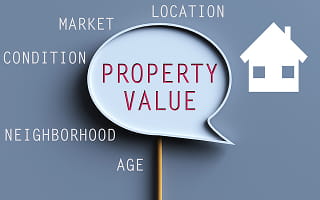
Key factors for evaluating an investment property include location (demand, growth, amenities), financials (cash flow, expenses, financing, ROI), property condition, the local real estate market (trends, values, vacancies), and your investment goals/strategy, all while considering ongoing costs like taxes, insurance, and management. A solid investment generates positive cash flow (income exceeds expenses), offers potential appreciation, and aligns with your risk tolerance and time frame.
Start by defining your goals for what type of property, the location, and price range you are looking for. Make deal-finding a regular habit, not a sporadic effort, and be prepared to make quick offers on good deals, especially off-market ones. Some details to consider include:
-
Location & Market: Look for areas with strong tenant demand, low unemployment, and economic growth to ensure steady rental income and appreciation. Consider safety, crime rates, nearby amenities (schools, transport, jobs), and future development plans. Research local rental rates, property values, vacancy rates, and recent sales (comparative market analysis) to assess feasibility.
-
Property Condition/Type: Evaluate the property's physical state; factor in repair and renovation costs to avoid surprises. Decide if you want residential (single-family, multi-family) or commercial, as this affects management and financing.
-
Financials and Profitability: Calculate potential income vs. all expenses (mortgage, taxes, insurance, maintenance, vacancy) to ensure positive returns. Be sure to factor in investment property insurance and use an investment property calculator to help you make calculations. Account for property taxes, utilities, HOA fees, maintenance, and potential capital expenditures. Understand that larger down payments (20-25%), mortgage options, and interest rates will be affected. Project your possible return on investment (ROI) and capital appreciation.
-
Long-Term Growth Potential: Define your purpose (long-term income, quick flip, appreciation) to guide your choices. Decide whether you'll self-manage or hire a property manager, and factor in the associated costs and effort. Have an exit strategy/plan for selling or refinancing in the future.
-
Economic Factors: Be aware of how interest rates and inflation will affect borrowing costs and property values. Research potential deductions and depreciation benefits.
How to Calculate ROI on an Investment Property

One of the most crucial performance measures is your ROI (return on investment). There are two standard methods for determining ROI: the Cost Method and the Out-of-Pocket Method.
To calculate the ROI for a property, use the basic formula: (Net Profit / Total Investment Cost) x 100, where Net Profit is Rental Income minus Expenses (mortgage, taxes, insurance, maintenance, etc.), and Total Cost includes Purchase Price, closing costs, and renovations.
Cost Method

The cost method measures return on the property's total cost, often ignoring financing. The formula is (Net Profit / Total Investment Cost) x 100.
Total Investment Cost: Purchase Price + Closing Costs + Renovation/Improvement Costs.
This method is best for properties bought with cash or for assessing a property's inherent earning power before leveraging.
Example
Property: Buy for $100k, $20k down, $50k repairs (Total Cost $170k). Sell for $200k (Profit $30k).
Cost Method: $30,000 / $170,000 = 17.6% ROI.
Out-of-Pocket Method

The out-of-pocket method measures return on the actual cash you invested, factoring in debt.
The formula is (Net Profit / Total Cash Invested) x 100.
Total Cash Invested: Down Payment + Closing Costs + Renovation Costs (your actual cash outlay).
This method is preferred by investors using financing (leverage) as it typically yields a higher, more favorable percentage return.
Example
Property: Buy for $100k, $20k down, $50k repairs (Total Cost $170k). Sell for $200k (Profit $30k).
Out-of-Pocket Method: $30,000 / $20,000 (down payment + repairs) = 150% ROI.
You can also use a cash-on-cash return method for determining your ROI. Other key metrics include the Cap Rate and Internal Rate of Return (IRR). To make calculating your ROI quicker and easier, use an investment property calculator.
Costs That Can Affect ROI

Your property investment ROI is affected by various upfront, ongoing, and eventual sale-related costs. Accurately accounting for these expenses is vital for determining the true profitability of an investment and the overall viability of the deal. Below are some costs to be aware of:
Initial Acquisition Costs
These are expenses incurred when purchasing the property and setting it up for use.
-
Purchase Price: The primary investment amount. Buying at a lower price can significantly increase potential ROI.
-
Closing Costs: Various fees associated with finalizing the sale, including legal fees, title insurance, appraisals, and loan origination fees.
-
Renovation and Repair Costs: Initial expenses required to make the property habitable, "rent-ready," or attractive to buyers. Unexpected or underestimated repair costs can quickly erode profits.
-
Financing Fees: Costs associated with obtaining a loan, including points and mortgage insurance.
Ongoing Operating Expenses
These are recurring costs necessary to maintain and manage the property over time.
-
Property Taxes: Annual taxes set by local governments based on the property's value.
-
Property Insurance: Coverage to protect against damage, liability, and other risks.
-
Maintenance and Repairs: Funds for routine upkeep, preventative care, and unexpected emergency repairs (e.g., roof or HVAC replacement).
-
Utilities: Costs for services like water, electricity, and gas, if covered by the landlord.
-
Property Management Fees: The expense of hiring a professional manager, typically 8-12% of the monthly rent.
-
Vacancy Costs: Lost rental income during periods when the property is unoccupied, as fixed expenses still accumulate.
-
Advertising/Marketing Costs: Expenses related to finding and screening new tenants.
Financing and Market-Related Costs
These external factors can influence costs and affect ROI calculations.
-
Interest Rates: High or adjustable mortgage interest rates increase monthly debt obligations, reducing cash flow and ROI.
-
Debt Obligations: Principal and interest payments on any loans.
-
Market Fluctuations: Economic downturns or high supply can lead to lower property values or stagnant rental rates.
Costs at Sale
When an investor decides to sell the property, additional costs are incurred.
-
Broker/Agent Commissions: Fees paid to real estate agents involved in the sale.
-
Marketing Costs: Expenses incurred to advertise the property to potential buyers.
-
Closing Costs for the Seller: Legal and administrative fees associated with the sale transaction.
What Is a Good ROI in Real Estate?
A good return on investment (ROI) in real estate is typically considered to be 8% to 12% or higher, though the ideal figure is highly subjective and depends on your investment goals, risk tolerance, property type, and location.
Many investors use the historical average annual return of the S&P 500 index (around 10%) as a benchmark; an ROI that meets or exceeds this is generally seen as strong for real estate.
ROI by Property Type

Average ROI varies depending on the type of property you invest in:
-
Residential Rental Properties: Generally, aim for an ROI of 8% to 12%. The U.S. average has been around 10.6% in recent years.
-
Commercial Real Estate: A good ROI is typically considered to be between 8% and 10%, with average returns often falling between 6% and 12%.
-
Real Estate Investment Trusts (REITs): These can offer average returns of around 11% or higher, though they can be more volatile because they trade on an exchange.
-
Fix-and-Flip Investments: Because they involve higher risk and more active management, investors typically expect much higher returns than from stabilized rental properties.
Factors that influence a "good" ROI are your risk tolerance, investment strategy, location and market conditions, financial leverage, and your ultimate management involvement.
Ultimately, a good ROI aligns with your personal financial goals and is competitive with other investment opportunities after accounting for all associated risks and costs.
Smarter Investing with Tools and Data
Accurately calculating your ROI can significantly increase your success when investing in real estate. Leverage all the tools and resources available to you, such as PropertyChecker, which can provide insights into the market, property details, and more. Use the built-in investment property calculator to track your ROI over time, test scenarios, and compare potential properties. PropertyChecker is an investor's best friend.
Table of Contents
Investors Properties Resources
- How to Buy Probate Real Estate Properties
- How to Find Investment Properties
- How to Profit from Fixer Upper Homes
- What Is a Deed-in-Lieu of Foreclosure
- Government and Seized Property Auctions
- How Property Auctions Work
- How to Buy Bank-Owned Properties
- How to Buy Tax Lien Properties
- How to Choose a Property Investment Company
- How to Finance an Investment Property
- How to Find and Buy FSBO Homes
- How to Find Off-Market Properties
- How to Find Vacant Homes in the US
- What Is a Cloud on Title
- How to Wholesale Real Estate
- Restrictive Covenants and Deed Restrictions
- Types of Warranty Deeds
- What Are Easements
- What Are Encumbrances in Real Estate
- What Are HOA Liens
- What Are Real Estate Investment Trusts
- What Are REO Properties
- How to Find Tax Delinquent Properties
- What Are UCC Liens
- What Is a Bargain and Sale Deed
- What Is a Deed of Reconveyance
- What Is a Judgment Lien
- What Is a Lis Pendens
- What Is a Mechanic's Lien
- What Is a Quiet Title Action
- What Is a Quitclaim Deed
- What Is a Short Sale in Real Estate
- What Is a Special Warranty Deed
- What Is a Statutory Warranty Deed
- What Is Adverse Possession
- What Is Skip Tracing in Real Estate
- How to Use the BRRRR Method
- What Is Vacant Home Insurance